Muscle, bone and balance
Exercise with osteoporosis: what is safe
Most women with osteoporosis or osteopenia can exercise safely, and the bone charities and health services recommend it. The safe mix is strength training, weight-bearing activity and balance work, built up slowly, with sit-ups and toe touches swapped for moves that keep the back straight.
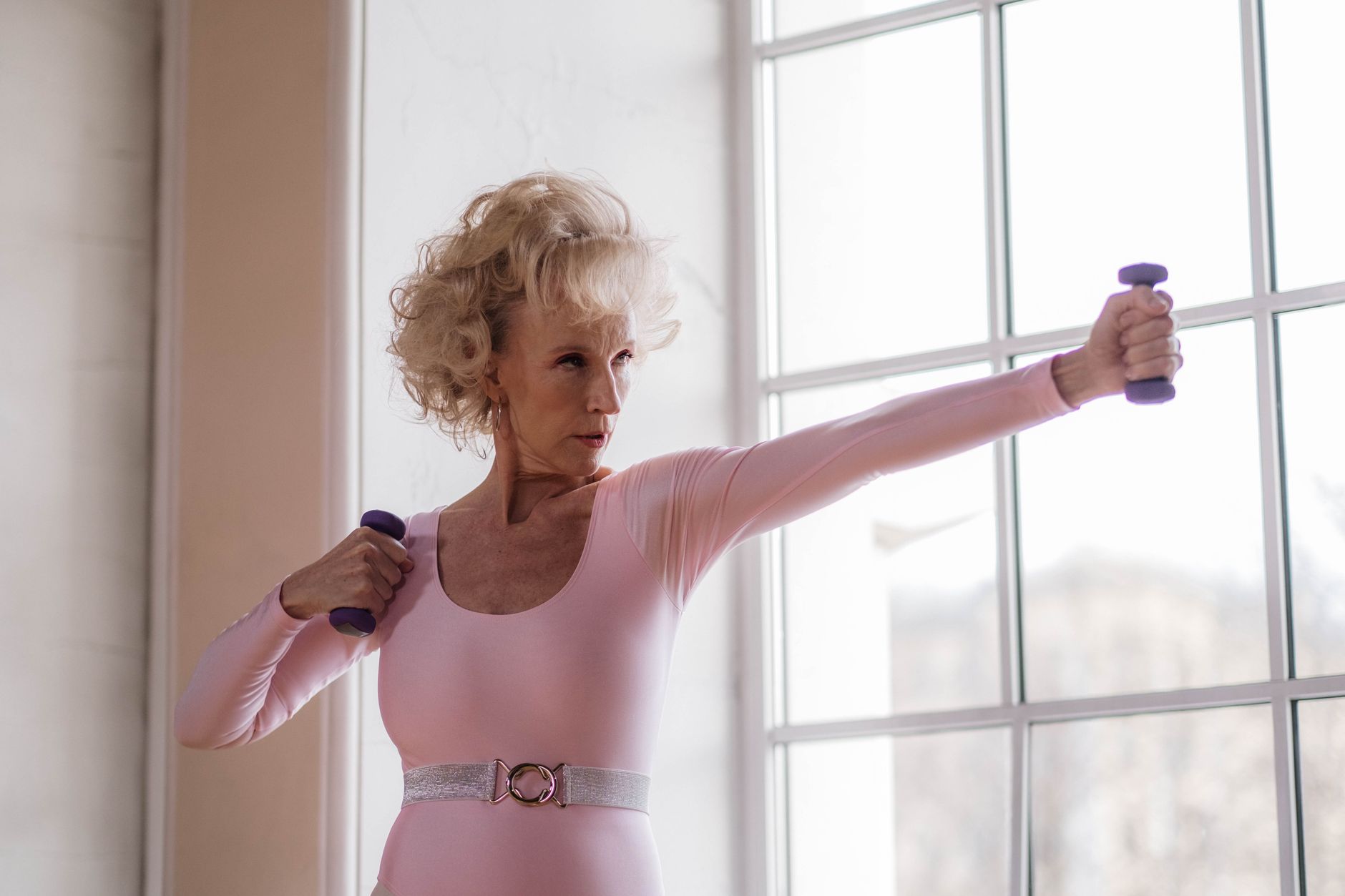
A diagnosis of low bone density tends to make people move less, out of fear of a break. The UK's Royal Osteoporosis Society puts it the other way round: "Most people with osteoporosis can exercise safely", and bones lose strength when you are not active (Royal Osteoporosis Society, Exercise for bones). The US National Institute of Arthritis and Musculoskeletal and Skin Diseases (NIAMS) adds one step before you begin: if you have low bone density, osteoporosis or another physical limit, talk to a health care provider, who can help you pick the activity that is safe for you (NIAMS, Exercise for your bone health).
Osteopenia, osteoporosis and exercise
NIAMS describes osteoporosis as a disease that makes bones weak and brittle, which raises the risk of fractures. Low bone density that has not reached that point is sometimes called osteopenia. Both are common after menopause, and the advice on exercise is largely the same for both. The difference is how carefully you build up, and that depends far more on whether you have already broken a bone than on the number on your scan.
Exercise does two jobs here. Loading the skeleton helps keep bone from thinning, and stronger legs and better balance make a fall, the usual cause of a break, less likely in the first place. NIAMS points out that older adults also lose muscle, a condition called sarcopenia, and that strong muscles are what keep us balanced.
The three kinds of exercise bones need
NIAMS says a combination works best for building and keeping healthy bones and preventing falls:
- Weight-bearing exercise, where your feet and legs carry your weight: brisk walking, climbing stairs, dancing, racket sports, jogging.
- Resistance training, using weight machines, free weights, resistance bands or bodyweight moves such as press-ups. As the muscles work they pull on the bones, which is why this helps bone as well as muscle.
- Balance training, which NIAMS calls especially important for older adults: tai chi, step-ups, walking backwards, shifting your weight from foot to foot.
The amounts are the general adult guidelines. NIAMS quotes the US Department of Health and Human Services: at least 150 minutes of moderate activity a week, plus muscle-strengthening work on at least two days. For older adults, those 150 minutes should include balance, aerobic and strength work every week.
Weight-bearing exercise for bone density
The Royal Osteoporosis Society sorts impact by level (How to exercise safely for bones):
- Low impact: walking and stair-climbing.
- Moderate impact: small jumps and hops, jogging, dancing.
- High impact: star jumps, jumping down from a height, basketball.
For most people, the charity says, impact exercise is unlikely to cause a broken bone. If you do none at the moment, start with low impact and build gradually towards moderate. You never need to reach high impact for your bones, because moderate impact has been shown to help and there is not enough evidence that high impact adds anything. Women who already play basketball or do jump training and feel comfortable doing it can usually carry on, after talking it through with a doctor or physiotherapist.
Two groups should stay with low impact: women who have had spinal fractures and women who have broken several bones. Painful arthritis in the knees can also rule impact work out, in which case strength exercise takes its place.
Strength training with osteopenia
Lifting weights with weak bones sounds risky, and the Society's answer is precise: there is no specific weight that is safe or unsafe, and how you lift matters more than how much. Its guidance for strength work:
- Start with a weight you can lift easily, which can be your own body weight.
- Add load gradually as the moves get easier.
- Put the weight down if you feel strain in your back, then go lighter or fix your technique.
- Leave a day's rest between strength sessions.
- Ask a qualified exercise instructor to show you the technique if you are unsure, especially with bands and free weights.
The strongest evidence that heavier lifting can be done safely comes from the LIFTMOR trial in Australia (Watson and colleagues, Journal of Bone and Mineral Research, 2018). It took 101 postmenopausal women with low bone mass, average age 65, and gave half of them two supervised 30-minute sessions a week of heavy lifting and impact work for eight months: five sets of five repetitions at more than 85% of the most they could lift once. The other half did a light home programme. The heavy-lifting group gained about 2.9% bone density in the lower spine while the home group lost about 1.2%, and they did better on every test of strength and function. Only one adverse event was reported, a minor lower back spasm.
Read that carefully before copying it. Every session was closely supervised, and the women had been screened for conditions and medicines that affect bone. A 2025 review by researchers including one of the trial's authors calls this kind of training safe and well tolerated in postmenopausal women with osteoporosis or osteopenia, and says it is still uncertain how long the gain lasts and whether it is safe after a recent fracture (Kumar and colleagues, Current Osteoporosis Reports, 2025). I take it as proof that low bone density does not mean light weights for life, and as a reason to build up to heavy lifting with a professional watching, never alone from a video.
Movements to adapt
Bending forward is part of everyday life, and nobody needs to fear picking up a sock. Some exercises, though, round the spine under load and put pressure on it, which matters because of the risk of spinal fractures. The Society names sit-ups, touching your toes, and the Pilates roll-down and curl-up.
The adaptation it suggests is the hip hinge: bend forward from the hips with your back kept straight, as if pushing your bottom back towards a wall. That one pattern covers deadlifts, picking things off the floor and lifting shopping out of the car boot. For your middle, choose moves that hold the trunk still, such as a plank against a kitchen worktop, over moves that curl it.
When to see a professional first
Most people can start without a physiotherapist, and you do not usually need a spine X-ray before you begin. The Society advises seeing a physiotherapist first if you:
- have spinal fractures that cause pain or other symptoms,
- have broken many bones,
- have had many falls,
- find other medical conditions make exercise hard.
Back pain, height loss or a newly curved back can be signs of a spinal fracture, and are worth raising with your doctor. After any broken bone, wait until it has healed before building up strength work. The Society says healing can take up to three months.
During a session, stop if you feel sick, dizzy or light-headed, clammy, tight in the chest or very short of breath, and stop for any pain. Being stiff and sore for a few days after a new kind of exercise is normal, and it eases as you keep going.
Exercise after menopause, alongside treatment
The Society is plain that exercise does not replace an osteoporosis medicine. For someone at high risk of a break, it describes medicine and healthy habits together as the way to keep bones strong. Whether you need a medicine is a decision for you and your doctor, and this site gives no advice on it.
Preventing falls deserves as much attention as the lifting. The NHS suggests securing rugs, clearing trailing wires, keeping rubber mats by the sink and in the bath, and having regular sight and hearing tests (NHS, Living with osteoporosis). If you are over 50 and have already broken a bone, ask your GP surgery whether there is a fracture liaison service near you.
Where I would start this week
With a new diagnosis of osteopenia and no fractures, I would begin with two short strength sessions a week and a daily brisk walk, then add balance moves at the end of each strength session. The chair-and-wall routine in our home workout for women over 50 covers strength and balance with no equipment, and the 4-week strength training plan spreads it over a first month. Once those feel easy, I would pay for a few sessions with a qualified instructor to learn the squat and hip hinge with weights.
With spinal fractures or several breaks behind you, the first call is to a physiotherapist, and the same routines can follow once they have looked at you. For how strength work fits around the other changes of these years, read strength training during menopause: how to start, and for the food side of muscle, protein after menopause.
Comments
No comments yet. Questions and your own experience are welcome.
Thank you. Your comment will appear once it has been reviewed.