Weight and body changes
Waist-to-height ratio checker for women in midlife
Measure your waist and your height, enter both, and see how your waist compares with half your height, the line UK guidance asks adults to stay under.
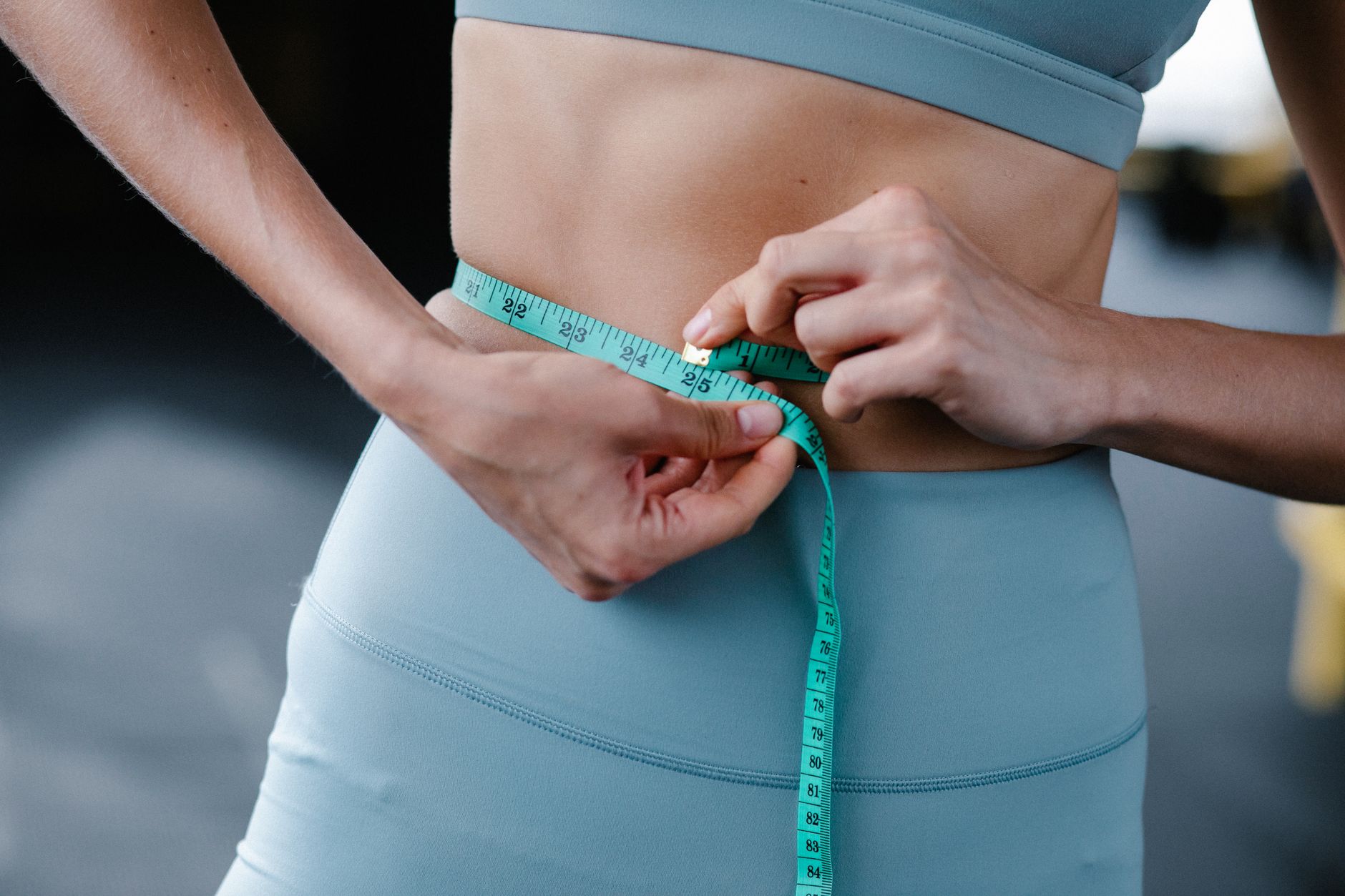
Your waist-to-height ratio is your waist measurement divided by your height, both in the same unit. The NHS advice is to keep your waist to less than half your height, which means a ratio under 0.5 (NHS, overweight and obesity in adults). The bands behind that line come from the National Institute for Health and Care Excellence (NICE), whose 2022 recommendations put a ratio of 0.4 to 0.49 at no increased health risk, 0.5 to 0.59 at increased risk and 0.6 or more at further increased risk (NICE guideline NG246, recommendations 1.9.14 and 1.9.15).
The checker below does the same division as the NHS waist to height ratio calculator, accepts centimetres or inches, and shows which NICE band your result falls in.
Check your ratio
Example: a 96.5 cm waist at 170 cm tall
0.57
96.5 divided by 170 is 0.57, which falls into NICE's increased-risk category. To get under 0.5, this waist would need to measure less than 85 cm.
| Ratio | NICE band | What NICE says it indicates |
|---|---|---|
| 0.40 to 0.49 | Healthy | No increased health risks |
| 0.50 to 0.59 | Increased | Increased health risks |
| 0.60 or more | High | Further increased health risks |
An estimate from two measurements. It does not diagnose anything, and nothing you enter leaves this page.
How to measure your waist
NICE gives a short method for measuring yourself at home, and the NHS page on overweight and obesity has a video showing it:
- Find the bottom of your ribs and the top of your hips.
- Wrap a tape measure around your waist midway between the two. For most people that is just above the belly button.
- Breathe out naturally, then read the tape.
This is often higher than where your trousers sit, and it is not the narrowest point of your body either. Measuring at the trouser line gives a different number from one month to the next, depending on what you wear. If you are going to track it, I'd take the reading on the same morning each month, before breakfast and standing in front of a mirror so you can see the tape stays level all the way round.
Height and waist have to be in the same unit. If you know your height in feet and inches, NICE's example is to convert it all to inches first, so 5 feet 7 inches becomes 67 inches.
A worked example
NICE uses the same person twice in its guideline. A waist of 38 inches and a height of 67 inches gives 38 ÷ 67 = 0.57. In metric, 96.5 cm ÷ 170 cm also comes to 0.57. Both results sit in the increased-risk category, which runs from 0.5 to 0.59.
Half of 170 cm is 85 cm, so for this woman a waist under 85 cm would bring the ratio below 0.5. Working out half your own height gives you a single number to compare the tape with, which is easier to remember than a ratio.
What the NHS and NICE say about the ratio
NICE writes the guidance that NHS staff in England work from, and its obesity guideline added the waist-to-height ratio in 2022. That guideline is now NG246, published in January 2025, and the waist recommendations kept their 2022 wording. NICE asks clinicians to use the ratio alongside BMI in adults whose BMI is under 35, as a practical estimate of fat carried around the middle, and to measure and record waist size at routine moments such as registering with a GP or a check-up for a long-term condition, always after asking permission.
It also wants adults to do the sum themselves. Recommendation 1.9.5 encourages people with a BMI under 35 to measure their own ratio and to seek advice and further checks from a healthcare professional if it shows an increased risk. The bands are the same for women and men, for every ethnic background and for people with a lot of muscle. That last point is where the ratio differs from BMI, which NICE says to read with caution in muscular adults, in people over 65, and with lower cut-offs for people of South Asian, Chinese, other Asian, Middle Eastern, Black African or African-Caribbean background.
The NHS calculator and pages
The NHS turns the same guidance into public advice. Its waist to height ratio calculator asks for your waist and height, explains how to measure, and repeats the advice to stay below 0.5. The NHS says not to use it if you are pregnant, have or think you may have an eating disorder, have a condition that affects your height, or have a BMI over 35. The NHS BMI calculator for adults may also ask you to measure your waist once it shows your BMI, because BMI cannot tell muscle from fat.
On its main page about weight, the NHS suggests a non-urgent GP appointment if your BMI is in the overweight or obese range and your ratio is above 0.5. The same list includes wanting help to lose weight and having high blood pressure, diabetes or high cholesterol. Being menopausal or perimenopausal is named on that page among the things that can make a healthy weight harder to keep.
I'd use the NHS calculator and the checker on this page in the same way: as a two-minute check with a tape, repeated now and then. A single reading near 0.5 matters less than which way the number moves over a few months of training.
Why the waist matters during menopause
The US National Institute on Aging says that during the menopause transition the body starts storing fat in different places, and puts it plainly: your waist could get larger, and you could lose muscle and gain fat (NIA, What is menopause?). The NHS lists weight gain around the stomach among the common changes of these years.
That is why the bathroom scale can mislead you at this stage. A long-term NIH-funded study found fat gain roughly doubling through the transition while total weight rose at its usual slow pace, which we cover in does menopause cause weight gain. A tape measure picks up a change in shape that the scale can miss, and it sits beside the other non-scale signs that your training works, such as heavier weights in your log and a better chair stand score.
NICE recommends the ratio because fat carried around the middle is linked to type 2 diabetes, high blood pressure and heart and circulation disease, and BMI cannot show where fat sits. Its guideline says the bands apply to women and men of every ethnic background, including people with a lot of muscle.
When the bands do not apply
NICE uses the waist-to-height ratio for adults with a BMI under 35. Above that, the guideline relies on BMI and does not ask for a waist measurement, so the checker's band is not the right guide. The bands also start at 0.4. A result below that is outside what NICE classifies: measure again, and if the numbers hold, a GP can say what it means for you.
What to do with a result of 0.5 or more
NICE encourages adults whose ratio shows increased risk to get advice and further checks from a healthcare professional, such as an assessment of their heart and metabolic risk factors. If your BMI is also in the overweight range or above, the NHS counts that combination as a reason to see a GP. Treat the result as a reason to book that appointment. It cannot diagnose anything by itself.
For what you can do yourself, the NHS advice for menopause is regular exercise with a focus on weight-bearing strength work, plus a balanced diet. In a meta-analysis of 101 trials in postmenopausal women, exercise lowered waist size and visceral fat as well as total fat (Khalafi and colleagues, Frontiers in Endocrinology, 2023). Why the fat gathers at the waist in these years, and which kind of exercise shrank it in trials, is the subject of our article on menopause belly fat. Our guide on how to prevent menopause weight gain puts lifting, walking and meals together, and how to start strength training during menopause begins with a chair and a wall.
Measure once a month at most. A waist changes slowly, and a weekly reading mostly records what you ate the night before. A notebook is all you need to track your measurements. If you would rather keep them on your phone, Her Good Days is a free app for logging menopause symptoms, sleep and periods that also has a place for waist and hips next to a weekly weight average.
For more on weight and shape in these years, see our guides on weight and body changes.