Food and protein
Calcium-rich foods and a daily counter
The NHS sets 700 mg of calcium a day for adults, and US guidance puts women over 50 at 1,200 mg. Here are 31 everyday foods with the calcium in a normal serving, from the USDA database, and a counter that adds up your day. Vitamin D, which lets you absorb calcium, is further down.
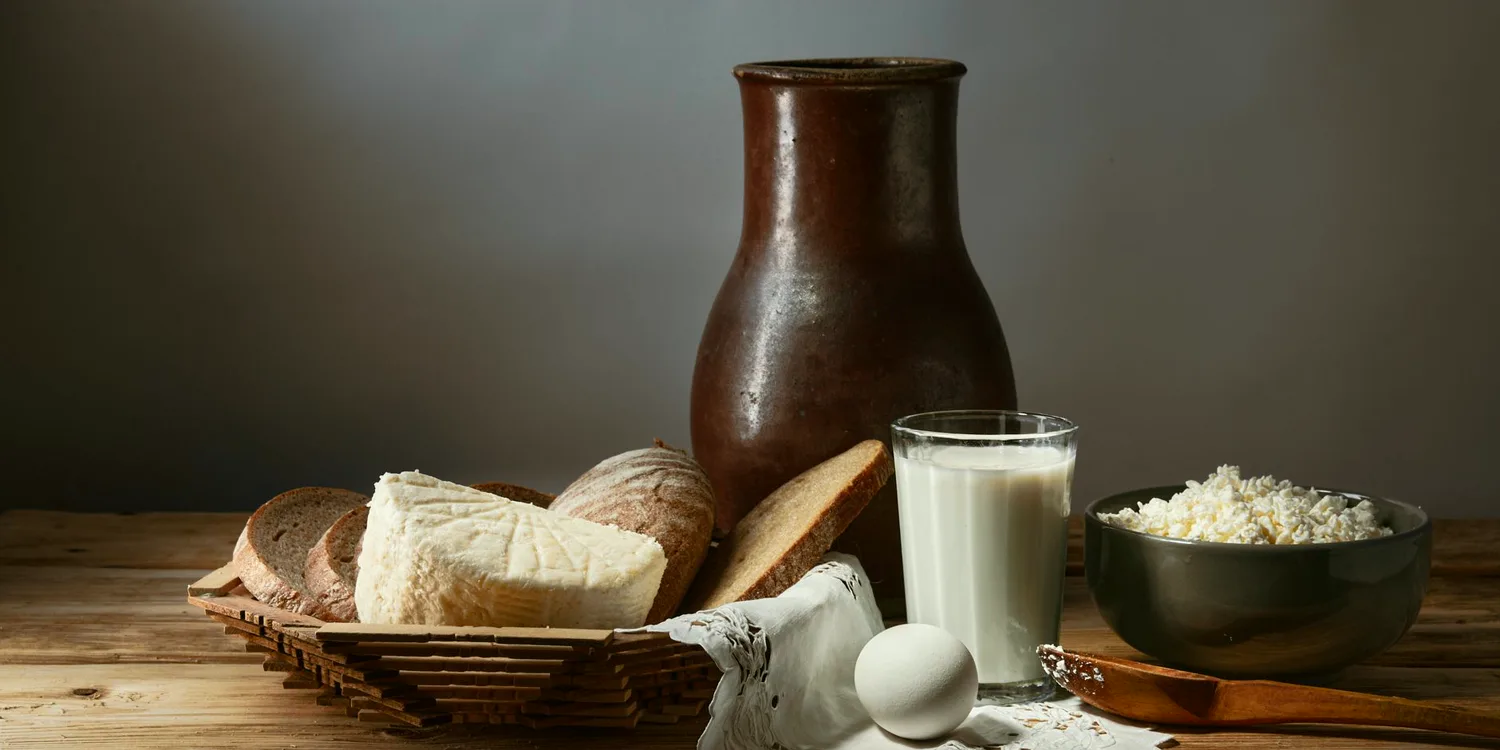
The foods with the most calcium in a normal serving are calcium-set tofu, tinned sardines or salmon eaten with their bones, milk, fortified soya drink, yoghurt and hard cheese. Each gives well over 150 mg a portion by the figures in USDA FoodData Central, and a glass of milk alone covers about a third of the UK's 700 mg. Kale and pak choi are the greens worth counting. Bread, oranges, almonds and seeds add smaller amounts that build up over a day, which is how most people reach the target without trying.
Bone is made partly of calcium phosphate, the mineral that makes it hard, and the body cannot make calcium itself. When the diet runs short, it takes what it needs from the skeleton, and over the years that weakens bone (NIAMS, Calcium and vitamin D: important for bone health). Vitamin D is the partner that lets the gut absorb calcium from food in the first place. Both matter more in the years around menopause, when NIAMS says osteoporosis starts to develop in many women (NIAMS, Osteoporosis).
Count your calcium for a day
Choose which foods to show and how to order them. Then type a number of portions next to what you ate, and press the button.
Nothing counted yet
Type how many portions you ate next to each food, half portions included, and press the button. Two worked example days are under the list.
An estimate from average food values, from food only. Fortified drinks, tofu and cereals differ a lot by brand, so the label on the pack is the better figure for those. Nothing you enter here leaves this page.
How much calcium after menopause
The answer depends on which country's figures you read. In the UK, the NHS says adults from 19 onwards need 700 mg a day, with no change at 50 or 65, and that a varied diet should provide all of it (NHS, Calcium). The Royal Osteoporosis Society uses the same 700 mg for most adults. It adds that a doctor may advise around 1,000 mg a day for someone at risk of osteoporosis or taking an osteoporosis medicine (Royal Osteoporosis Society, Calcium), which is why that figure sits in the counter too.
In the US the Recommended Dietary Allowance, set by the National Academies and published by the National Library of Medicine, is 1,000 mg a day for adults aged 19 to 50. At 51 it rises to 1,200 mg for women while staying at 1,000 mg for men, and from 71 the figure is 1,200 mg for everyone (MedlinePlus, Calcium in diet). The two sets of numbers come from different expert committees reading the evidence their own way, and neither is wrong for its own population.
I would use the figure from the health service you actually see, because that is the one your GP will measure your diet against. If you are in the UK and have been told your bones are thin, ask whether the 1,000 mg figure applies to you before you change anything.
How the list is worked out
Every figure comes from the SR Legacy tables in USDA FoodData Central, which give calcium and energy per 100 g. The serving column scales them to what you would eat at one sitting: a 200 ml glass of milk, a 30 g piece of cheese, an 80 g portion of vegetables, a tablespoon of seeds. Kale, for example, is listed at 150 mg of calcium and 36 kcal per 100 g, so 80 g of it holds 120 mg. The last column, calcium per 100 kcal, shows which foods bring the most for the fewest calories. Pak choi tops it at 775 mg, though you would need a large bowl to get there.
Three foods need a note. Tofu ranges widely, because only tofu set with calcium sulphate or calcium chloride carries much: the USDA entry for firm calcium-set tofu gives 683 mg per 100 g, while the Royal Osteoporosis Society's rounded calcium-rich food chooser gives about 200 mg for a similar piece. Tinned salmon counts only with its bones: the whole contents of a tin give 215 mg per 100 g, and the same salmon with bones and skin removed gives 60 mg. Soya drink is the unsweetened kind with added calcium. Unfortified plant drinks carry very little, and the label says which you have.
The ROS chooser rounds most of its portions to about 200 mg, so a few figures here look higher than the charity's. A 200 ml glass of semi-skimmed milk, for instance, comes to 240 mg in the USDA tables. That 40 mg gap is small next to the spread between two brands of tofu. The counter uses the USDA numbers because they give one consistent method for every food on the list.
Spinach is missing from the list because both the NHS and MedlinePlus say the body absorbs little of the calcium it contains, because the oxalic acid in spinach binds it. MedlinePlus says the same of rhubarb and of wheat bran eaten in the same meal.
Two worked example days
Here is a day built only from foods on the list. Enter a 1 next to each in the counter and you will get the same totals:
- Breakfast: porridge from 40 g of oats cooked in a 200 ml glass of semi-skimmed milk, 261 mg.
- Lunch: two slices of wholewheat bread with 30 g of cheddar, 326 mg.
- Afternoon: a 150 g pot of Greek yoghurt, an orange and a handful of almonds, 304 mg.
- Dinner: a 100 g tin of pink salmon, bones mashed in, with 80 g of kale, 335 mg.
That comes to 1,226 mg for about 1,050 kcal from those nine foods, enough for the US figure. Leave out the yoghurt, the almonds and the salmon, keep the kale with whatever you would have eaten for dinner, and the day still lands at 763 mg, above the NHS 700 mg.
A dairy-free day works just as well. Make the porridge with 200 ml of soya drink that has calcium added (269 mg), spread a tablespoon of tahini on the two slices of bread at lunch (177 mg), eat an orange in the afternoon (56 mg), and stir-fry 100 g of calcium-set tofu with 80 g of pak choi for dinner (757 mg). That adds up to 1,259 mg. With a softer, lower-calcium tofu the total drops sharply, so the tofu label is the one figure worth reading in this version.
Which foods carry the most calcium
Milk, yoghurt and cheese
Dairy supplies calcium in a form the body absorbs easily, MedlinePlus notes, and removing the fat does not lower the calcium. Skimmed milk carries slightly more per glass than whole milk, for 54 fewer calories. Hard cheeses are the densest: cheddar and mozzarella each give over 200 mg in a 30 g piece. Cottage cheese and ricotta are softer and wetter, and give about half as much for the same weight, which is worth knowing if you choose them for their protein.
Tofu, soya and beans
Calcium-set tofu and fortified soya drink are the two plant foods that compete with dairy. Edamame, tempeh and beans contain calcium naturally but at 45 to 100 mg a serving, so they help the total without carrying it. Baked beans, chickpeas and black beans earn their place for fibre and protein more than for calcium.
Tinned fish with soft bones
The calcium in tinned sardines and salmon sits in the bones, which canning softens until you can mash them with a fork. A 90 g portion of sardines gives 344 mg, more than any single dairy serving here. The NHS lists sardines and pilchards as a calcium source for exactly this reason, and both fish count as oily fish for vitamin D too.
Green vegetables
Kale gives 120 mg in an 80 g portion and pak choi 74 mg, at under 30 kcal each. Broccoli is lower at 32 mg. MedlinePlus advises steaming or sautéing in a little water for a short time, since boiling loses some calcium into the water. Greens round out a day well, and MedlinePlus is clear that they are not enough on their own.
Nuts, seeds and fruit
A tablespoon of chia seeds gives 95 mg and a tablespoon of tahini 64 mg, both useful on a dairy-free day. A handful of almonds adds 75 mg for 162 kcal, and three or four dried figs about 50 mg. An orange gives 56 mg, more than most people expect from a piece of fruit.
Bread, oats and eggs
Two slices of wholewheat bread add 113 mg, and the NHS names bread and anything made with fortified flour among its calcium sources. Oats themselves hold little, at 21 mg in a bowl, so porridge gets its calcium from the milk or soya drink it is cooked in. Two eggs give 56 mg.
Vitamin D: sunlight first, then food
Your skin makes vitamin D from direct sunlight. The NHS says that from about late March or early April to the end of September most people in the UK can make all they need that way, and that between October and early March the sun is too weak for it (NHS, Vitamin D). The ROS suggests around 10 minutes of sun on the face and arms, once or twice a day in those months, while taking care not to burn (ROS, Vitamin D).
The official daily amounts again differ by country. The NHS gives 10 micrograms (400 IU) for adults. The NIH figures in the NIAMS table are 15 micrograms (600 IU) up to age 70 and 20 micrograms (800 IU) after that.
Only a short list of foods contains vitamin D:
- Oily fish such as salmon, sardines, trout, herring and mackerel
- Egg yolks
- Red meat, and liver
- Fortified foods, such as some breakfast cereals, fat spreads and yoghurts
Milk is where the two countries part ways. In the US most milk and some yoghurts have vitamin D added, and NIAMS says fortified foods supply most of the vitamin D Americans get from their diet. In the UK cows' milk is generally not fortified, so a glass of it gives calcium and very little vitamin D. Both the NHS and the ROS say it is hard to get enough vitamin D from food alone, and the ROS suggests one portion of oily fish a week as part of a balanced diet.
Supplements are a question for your GP
This site gives no supplement or dose advice, and the counter counts food only. The NHS and the ROS both publish guidance on vitamin D in autumn and winter, and on who may need it all year, such as people who are rarely outdoors or who cover most of their skin. Read it on their pages and ask your GP or pharmacist what fits you, especially if you already take a multivitamin or any bone treatment.
Two points from the ROS are useful before that conversation. Taking more calcium or vitamin D than the recommended amount is unlikely to make bones stronger. A routine calcium blood test does not show whether your diet holds enough, because the body keeps blood calcium steady by drawing on bone, so counting what you eat for a few days tells you more.
Food works with the training
Calcium supplies the material, but bone also needs a reason to keep it. The NHS advice for menopause pairs calcium-rich food with weight-bearing exercise to build strength (NHS, Things you can do). If your bones are already thin, exercise for women with osteoporosis sets out what is safe, and strength training during menopause: how to start covers the first sessions for everyone else. Many of the foods above also carry protein, which the muscle you build needs. Our guide to protein after menopause covers how much to aim for, and the high-fibre foods counter works the same way as this one if you want to check a day's fibre too.
What I would do first
I would run the counter on three ordinary days, because most of us guess wrong in one direction or the other and one day says little about a usual week. If the total falls short, the easiest gain is at breakfast: cooking the oats in milk or a soya drink with added calcium instead of water gives you about 240 mg more without changing anything else. If you eat no dairy, I would keep a block of calcium-set tofu and a tin of sardines or salmon in the house, since either one covers a third or more of the UK target in one meal. For vitamin D, I would put oily fish on the menu once a week and get outside in daylight on summer days, then raise the winter months with the GP at the next appointment.
When to talk to your GP
Ask before changing your diet or adding anything if you have been told you have osteoporosis or osteopenia, or if you are being treated for it. Ask too if you have severe liver or kidney disease, a history of kidney stones, or a condition that affects how you absorb food, or if you take anti-epileptic drugs long term. The ROS lists several of these as conditions that change how the body handles vitamin D, and your GP can say what amounts suit you. More on eating for strength and bone is collected under food and protein.