Food and protein
High-fibre foods list and daily counter
Forty everyday foods with the fibre in a normal serving and per 100 calories, from the USDA database. Sort them, then type in what you eat in a day and see how far it gets you towards 30 g.
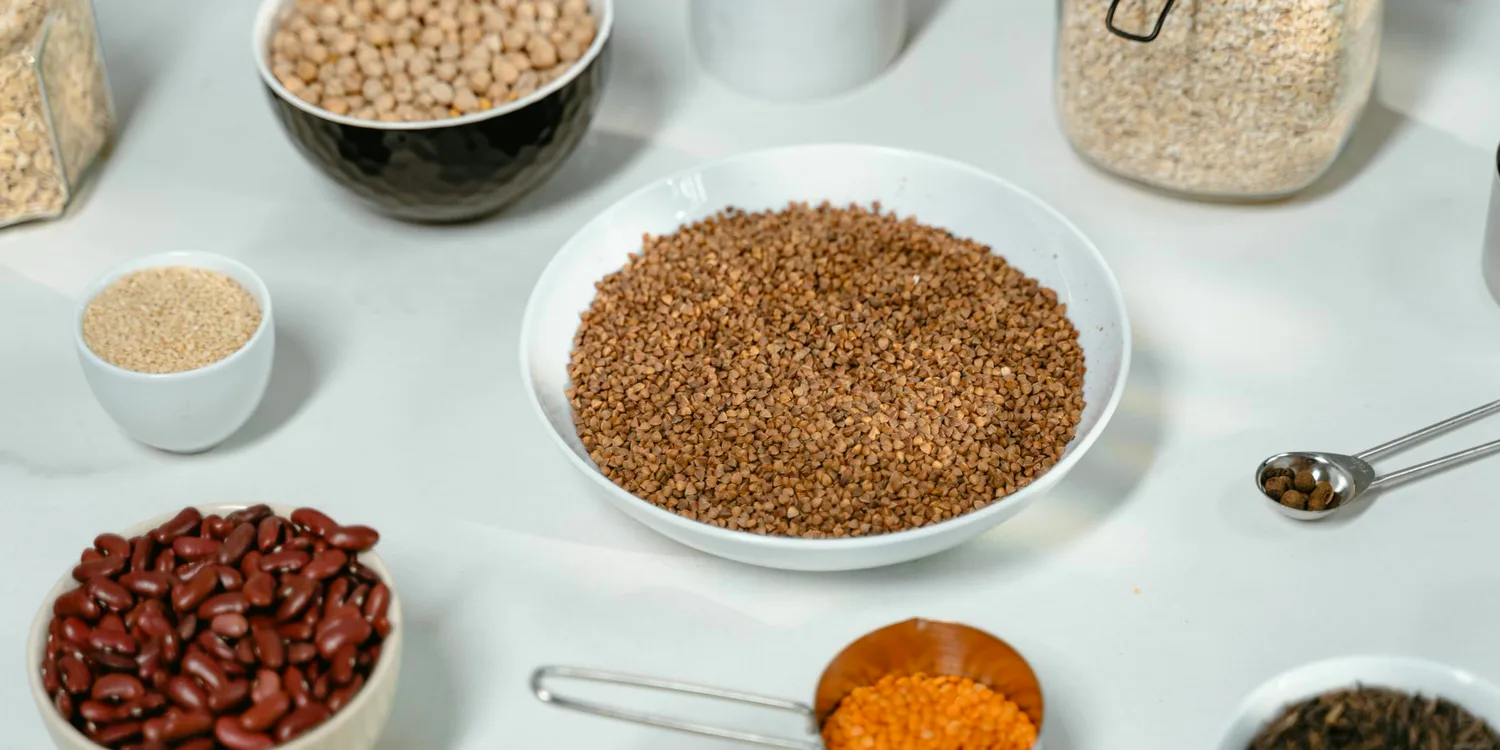
The foods with the most fibre in a normal serving are beans, lentils and split peas: 200 g of boiled lentils or split peas holds about 16 g, more than half the 30 g a day the NHS advises for adults, by the figures in USDA FoodData Central. Bulgur wheat, wholewheat pasta and edamame come next at about 8 g a serving. Fruit, vegetables, oats and nuts give 2 to 5 g each, which is why a day that reaches 30 g nearly always has a pulse or a wholegrain at two of its meals. The list below holds 40 foods. Sort it, then enter how many portions of each you eat to count a whole day.
Count your fibre for a day
Choose which foods to show and how to order them. Then type a number of portions next to what you ate, and press the button.
Nothing counted yet
Type how many portions you ate next to each food, half portions included, and press the button. A worked example of a 32.5 g day is under the list.
An estimate from average food values. Packaged foods differ by brand, so the label on the pack is the better figure for those. Nothing you enter here leaves this page.
How much fibre a day, and for women over 50
In the UK the answer is one number. Government guidelines set 30 g a day for adults, and the NHS says most adults eat only about 20 g (NHS, how to get more fibre into your diet). The figure does not drop at 50 or change with the menopause.
American sources give more than one figure. The Nutrition Facts label uses a Daily Value of 28 g, and the FDA notes that it is based on a 2,000 calorie diet, so your own figure "may be higher or lower depending on your calorie needs" (FDA, dietary fiber). MedlinePlus, the US National Library of Medicine's health site, gives a range of 21 to 38 g for adults and says Americans average about 16 g (MedlinePlus, fiber). Because the US figures follow calorie needs, a smaller woman eating less after 50 sits nearer the bottom of that range. I found no health body that sets a fibre figure for perimenopause or the years after it, which is why the counter offers the three published numbers and nothing in between.
Whichever you pick, the gap is the same shape. Someone eating the UK average of 20 g needs about 10 g more a day, which is one portion of beans or two pieces of fruit and a slice of wholewheat toast.
How the list is worked out
Each figure comes from the SR Legacy tables in USDA FoodData Central, which give fibre and energy per 100 g of food. The portion column scales them to a serving you would put on a plate. Fruit and vegetables use an 80 g portion, or one whole piece of fruit. Beans and lentils use roughly a cooked cupful, nuts a 28 g handful, seeds a tablespoon. Boiled lentils, for example, are listed at 7.9 g of fibre and 116 kcal per 100 g, so 200 g holds 15.8 g and 232 kcal.
Pulses, grains and potatoes are weighed cooked, because cooking adds water and that changes the grams per 100 g. Oats are the one dry weight, since a 40 g scoop is how most people measure porridge. The rye crackers figure is the database's entry for seasoned rye wafers, the closest it has to a plain crispbread, and the sweet potato is the flesh of a potato baked in its skin.
The NHS calls a packaged food high in fibre when it holds 6 g or more per 100 g. Eighteen foods on this list pass that test, but the per 100 g figure flatters anything dry. Chia seeds reach 34 g per 100 g and rye crackers about 21 g, yet a tablespoon of chia gives 5.2 g and two crackers 4.6 g. Cooked lentils look modest at 7.9 g per 100 g, and a normal bowl of them gives three times what the spoonful of chia does. That is why the table opens sorted by what one serving holds.
A worked example: one day that reaches 30 g
Here is an ordinary day built only from foods on the list, with the meat, milk and other foods that carry no fibre left out of the count:
- Breakfast: porridge from 40 g of oats with an 80 g handful of raspberries, 9.2 g.
- Lunch: two slices of wholewheat toast with half a tin of baked beans, 12.4 g.
- Afternoon: an apple, 4.3 g.
- Dinner: a 180 g baked potato in its skin with 80 g of broccoli beside your fish or chicken, 6.6 g.
That comes to 32.5 g for about 850 kcal from those seven foods. Enter 1 next to each of them in the counter and you will see the same total. Swap the baked beans for a ham sandwich filling and the day drops to about 24 g, which shows how much one portion of pulses carries.
Which foods carry the most fibre
Beans, lentils and split peas
Every food on the list with more than 10 g in a portion is a pulse: split peas, lentils, black beans, kidney beans and chickpeas. A tin of beans rinsed into a soup, a chilli or a salad does more for a day's total than any other single change. Tofu is the odd one out among the soya foods, at 3.5 g for 150 g. Edamame, the whole green soya bean, gives more than twice that at 7.8 g.
Grains and bread
Bulgur wheat and wholewheat pasta give about 8 g a plate, two to three times what the same weight of brown rice provides. Quinoa and pearl barley sit in between at 5 to 6 g. Two slices of wholewheat bread give 4.2 g, so a sandwich lunch on wholemeal makes a fair start without trying.
Fruit and vegetables
Sorted by fibre per 100 kcal, berries and green vegetables rise to the top. Raspberries and blackberries give about 12 g for every 100 kcal, broccoli and spinach about 9 to 10 g. Per serving they are smaller, at 2 to 5 g, so they add up across the day rather than carrying it. A pear, at 5.3 g, beats an apple or an orange. A banana gives 3.1 g, the least of the fresh fruit here.
Nuts and seeds
These are often sold as fibre foods, and a spoonful of chia or linseed does add a useful 3 to 5 g with few calories. A handful of almonds or hazelnuts gives about 3 g for over 160 kcal, and peanut butter less than 2 g for nearly 200 kcal. Eat them for taste and for the fats they bring, and count on pulses and grains for the bulk of your fibre.
Fibre and protein on the same plate
Meat, fish, eggs, milk, yoghurt and cheese contain no fibre at all in the USDA tables. A day built around the high-protein foods list can therefore hit its protein target and still fall short on fibre. Pulses close both gaps at once. The 200 g of lentils that gives 15.8 g of fibre also gives about 18 g of protein, and black beans give about 15 g of each in a cupful.
A simple habit covers it: one pulse or wholegrain at lunch and at dinner, next to whatever protein you would have eaten anyway. Lentils stirred into a mince sauce, chickpeas in a chicken curry, a bean salad beside fish. The guide to fibre and regular meals covers when to eat lighter, lower-fibre food before a training session, and the 7-day menopause meal plan puts the pattern into a week of menus.
Adding fibre without a sore stomach
MedlinePlus advises raising fibre gradually over a few weeks and drinking plenty of fluid with it. In practice that means adding one food from the top of the list every few days and letting your gut get used to it before the next. Going from 15 g to 30 g in one day is the version that tends to go wrong.
The FDA describes how the two types work. Soluble fibre forms a gel that slows digestion and can help lower LDL cholesterol. Insoluble fibre speeds food through the gut. Both, it says, can make you feel full. That fullness effect is less reliable than it sounds: a review of 107 short-term tests of 38 different fibres found that only 39% reduced appetite and 22% reduced how much people ate (Clark and Slavin, 2013). Fibre is worth eating for the gut and the heart. For staying full until the next meal, protein does more of the work.
My take
I'd judge a day by one question: did two of my meals have a pulse or a wholegrain in them? If yes, the total almost always lands within a few grams of 30, and fruit and vegetables cover the rest. If you want to count, run the counter on three ordinary days, because one good day tells you little about your usual week. Sort by grams per portion when you plan the main meal and by grams per 100 kcal when you choose snacks and sides.
If I had to pick one food to keep in the cupboard, it would be a tin of beans or lentils. It needs no cooking, works in soup, salad and sauce, and adds 12 to 16 g to whatever meal it lands in.
When to ask your GP or a dietitian
If you live with irritable bowel syndrome, Crohn's disease or another bowel condition, ask your GP or a registered dietitian before you change how much fibre you eat, because the advice for those conditions differs from the general figure. The same goes for anyone told to follow a low-residue diet. This page gives food figures only and no advice on fibre powders or supplements. For the rest of what to eat while you build strength, every guide is under food and protein.