Food and protein
Menopause diet plan: a 7-day meal plan
A good menopause diet plan is the NHS Eatwell Guide with a protein food at every meal, around 30 g of fibre a day and two portions of fish a week, one of them oily. The week below does exactly that with ordinary food, and if you are trying to slim down you keep the same meals and serve smaller portions of starch and fat.
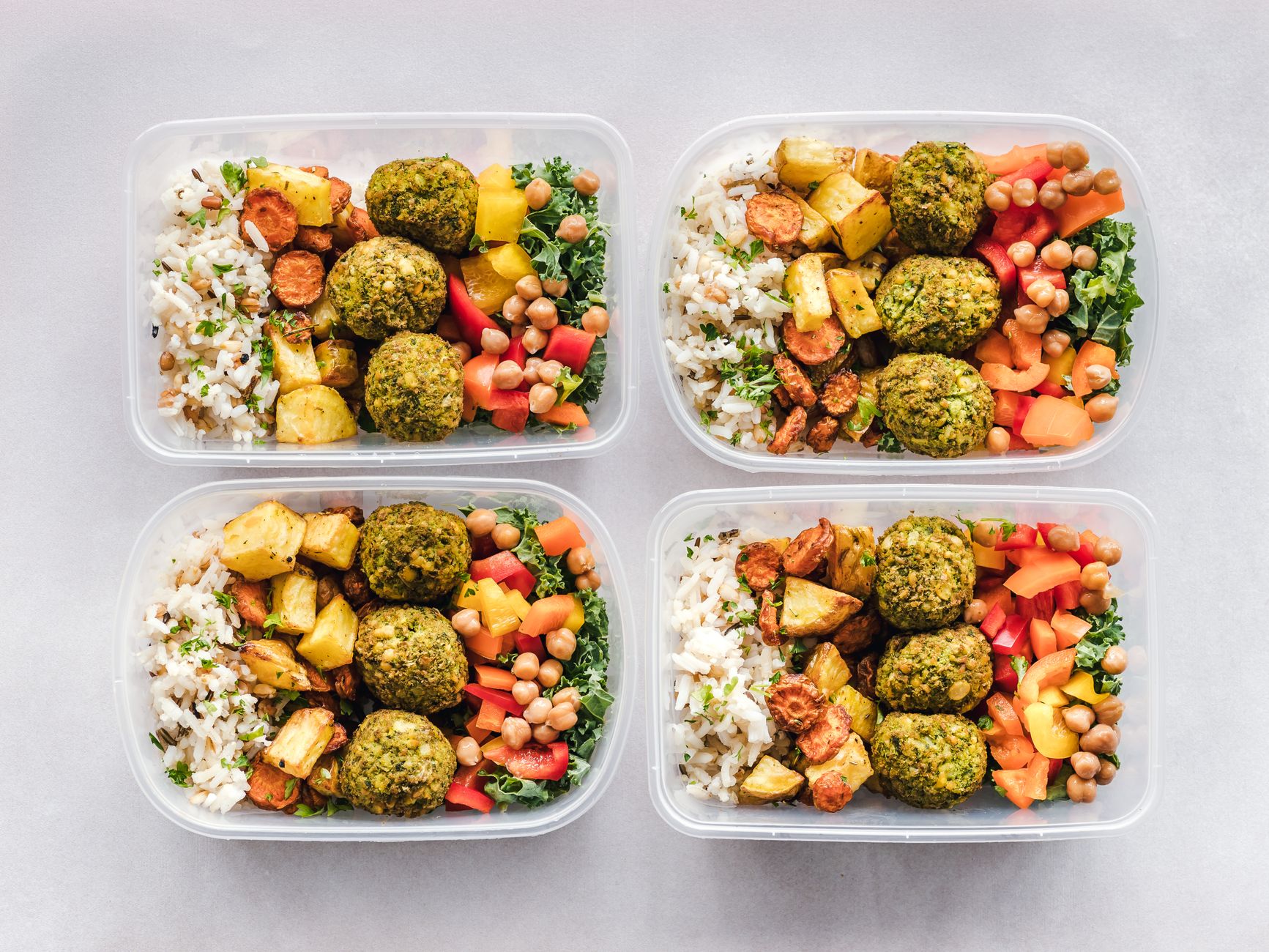
Search for a menopause diet and you will find plans that cut out bread, fruit or dairy, and plans built around powders. The NHS Eatwell Guide, which this plan follows, keeps all three on the plate. This plan is for a woman in perimenopause or after menopause who lifts weights twice a week, or is about to start, and wants a week of meals she can shop for in one go. It is written from NHS guidance and published studies, and it leaves supplements, HRT and medicines to your doctor. If you eat no meat or fish, the vegetarian version of the week swaps every such meal for one with the same protein.
What the plan is built on
Four rules shape every day of the week.
- The Eatwell plate. Just over a third of what you eat is fruit and vegetables, just over another third is starchy food, preferably wholegrain, and the rest is protein foods, dairy or fortified alternatives and a little unsaturated oil (NHS, The Eatwell Guide).
- Protein at each meal. Ageing muscle responds less to small servings. A review by Paddon-Jones and Rasmussen proposes 25 to 30 g of high-quality protein per meal, and found the muscle response blunted below about 20 g in older adults (Current Opinion in Clinical Nutrition and Metabolic Care, 2009). Your own daily figure comes from our daily protein calculator.
- About 30 g of fibre a day. That is the UK figure for every adult, and most of us eat around 20 g (NHS fibre advice). Oats, wholemeal bread, beans, lentils and potatoes in their skins carry most of it here.
- Fish, fat and salt. The NHS asks for at least 2 portions of fish a week, including 1 oily, no more than 20 g of saturated fat a day for women and no more than 6 g of salt (NHS, 8 tips for healthy eating). The week has three oily fish meals and uses olive or rapeseed oil in place of butter for cooking.
Calcium runs through all seven days as milk, yoghurt, cheese, tinned fish with soft bones and calcium-set tofu. The NHS figure for adults is 700 mg a day, and our guide to calcium and vitamin D from food lists how much each of those foods carries.
The 7-day menopause meal plan
Monday, Wednesday and Saturday are marked as training days, with a small snack an hour or so before the session. Move them to suit your week. Portions are left to you: a palm-sized piece of fish, chicken or tofu, a fist of starch and half the plate as vegetables is a fair starting point.
Monday (training day)
- Breakfast: porridge oats made with milk, topped with Greek yoghurt, raspberries and a spoon of pumpkin seeds
- Lunch: lentil and vegetable soup with a wholemeal roll and an apple
- Before training: a banana
- Dinner: baked salmon with boiled new potatoes, broccoli and peas
Tuesday
- Breakfast: two scrambled eggs on wholemeal toast with grilled tomatoes
- Lunch: chickpea, cucumber, feta and bulgur wheat salad dressed with olive oil and lemon
- Snack: a pot of plain yoghurt with a pear
- Dinner: chicken and vegetable stir-fry over brown rice
Wednesday (training day)
- Breakfast: overnight oats soaked in milk with Greek yoghurt and grated apple
- Lunch: tinned sardines on rye toast with a big side salad
- Before training: two oatcakes with a little cheese
- Dinner: bean chilli, all beans or half lean mince, with brown rice and a spoon of yoghurt
Thursday
- Breakfast: wholemeal toast with peanut butter, an orange and a glass of milk
- Lunch: the leftover chilli in a baked potato, skin on, with salad
- Snack: carrot and pepper sticks with hummus
- Dinner: calcium-set tofu and vegetable curry with brown rice or a wholemeal chapati
Friday
- Breakfast: cottage cheese on rye crackers with sliced tomato and a handful of berries
- Lunch: wholemeal wrap with sliced chicken, salad leaves and hummus
- Snack: a small handful of unsalted nuts
- Dinner: cod tray bake with potatoes, peppers, courgette and olives, roasted in olive oil
Saturday (training day)
- Breakfast: spinach and mushroom omelette with wholemeal toast
- Lunch: smoked mackerel with new potatoes, watercress and beetroot
- Before training: a slice of toast with a thin spread of peanut butter
- Dinner: wholewheat spaghetti with a lentil and turkey mince bolognese, side salad
Sunday
- Breakfast: shredded wholegrain wheat cereal with milk, a sliced banana and walnuts
- Lunch: roast chicken with potatoes roasted in their skins, carrots and greens
- Snack: yoghurt with a little dried fruit at the end of the meal
- Dinner: bean and vegetable soup made from the roast's leftovers, with wholemeal bread
To keep it as a PDF, print this page from your browser and choose "Save as PDF" as the printer. The seven days fit on two sheets of paper.
How each meal reaches its protein
Breakfast is the meal that usually falls short, because toast and fruit carry very little. USDA figures give a large egg about 6 g of protein, 150 g of low-fat Greek yoghurt about 15 g and 200 g of cottage cheese about 21 g, which is why every breakfast above has eggs, yoghurt, milk or cottage cheese in it, often two of them. Our high protein breakfast builder adds up any combination for you.
Lunch and dinner are easier. A palm-sized portion of fish or chicken, 150 g of firm tofu (about 26 g by the same USDA tables) or a generous bowl of beans with a little cheese or yoghurt on top lands near the 25 g mark. The protein after menopause guide explains why spreading it across the day helps more than one big evening serving.
A vegetarian version of the week
A vegetarian menopause diet plan can reach the same 25 to 30 g of protein at every main meal. Swap each meat and fish dish for tofu, tempeh, lentils, beans, eggs or dairy in the amounts below, keep the breakfasts and the meatless meals as they are, and the week still follows the Eatwell Guide. The NHS says a healthy vegetarian diet that includes dairy and eggs is the same as anyone else's without the meat and fish (NHS, The vegetarian diet).
The protein figures are worked out from USDA FoodData Central values per 100 g of the food as eaten: tempeh 19.9 g, firm calcium-set tofu 17.3 g, cooked lentils 9.0 g, cooked pinto beans 9.0 g, cooked chickpeas 8.9 g, whole egg 12.6 g, low-fat Greek yoghurt 10 g, 2% cottage cheese 10.4 g, feta 14.2 g, mozzarella 22.2 g, cheddar 22.9 g, edamame 11.9 g and cooked wholewheat pasta 6.0 g (USDA FoodData Central, SR Legacy). Bread, rice and vegetables add a few grams more that the totals leave out.
- Monday dinner (was salmon): 150 g tempeh, sliced and baked with soy sauce and garlic, with the same potatoes, broccoli and peas. About 30 g of protein.
- Tuesday dinner (was chicken stir-fry): 150 g firm tofu and 50 g edamame stir-fried with the vegetables, over brown rice, for about 32 g.
- Wednesday lunch (was sardines): 2 large boiled eggs and 125 g cottage cheese on rye toast with the side salad, around 26 g.
- Wednesday dinner, Thursday lunch (was half-mince chilli): make it the all-bean chilli, 250 g cooked beans a portion with 30 g grated cheddar on top. That reaches about 29 g.
- Friday lunch (was chicken wrap): 125 g pan-fried tempeh strips in the wholemeal wrap with leaves and hummus. About 25 g.
- Friday dinner (was cod): the same tray bake with 200 g chickpeas roasted in and 75 g feta crumbled over for the last ten minutes, close to 28 g.
- Saturday lunch (was smoked mackerel): a warm salad of 200 g cooked green lentils, beetroot, watercress and new potatoes with 50 g torn mozzarella, about 29 g.
- Saturday dinner (was lentil and turkey bolognese): an all-lentil sauce, 200 g cooked lentils a portion, over 200 g cooked wholewheat spaghetti. Around 30 g, before any cheese.
- Sunday lunch (was roast chicken): a roast vegetable tray with 200 g chickpeas, roast potatoes and greens, and 150 g Greek yoghurt stirred with herbs as the sauce. About 33 g.
Thursday's tofu curry and the lentil soup, bean soup and chickpea salad already have no meat, so they stay. Make Sunday's soup with vegetable stock and finish each bowl with 30 g of grated cheddar, because beans and bread alone land nearer 15 g. If you want a number for your own day and not the 25 to 30 g per meal used here, our daily protein calculator works it out from your weight and training, and these high protein vegetarian meals simply get scaled up or down to meet it.
Combining plant proteins
Muscle builds from essential amino acids, and plant proteins carry fewer of them. A Maastricht analysis measured them at about 26% of the protein in plant sources against 37% in animal ones, with lysine low in wheat and oats and methionine low in soy and pea. The same paper found that mixing plant proteins, or pairing plant with dairy or egg, gives a profile close to animal protein (Gorissen and colleagues, Amino Acids, 2018). The NHS puts it more plainly: eat a variety of protein sources to get the right mix of amino acids.
On the plate, that means beans or lentils with a grain at the same meal (chilli with rice, lentils with wholewheat pasta, hummus in a wrap) and an egg, yoghurt or cheese wherever it fits. On days when a meal is plant protein only, I would aim for the 30 g end of the range rather than 25.
What the week loses with the fish
The main plan's three oily fish meals were its omega-3. Walnuts, rapeseed oil and ground flaxseed, chia or pumpkin seeds are the vegetarian sources the NHS lists, though it adds that they may not do as much for heart health as oily fish. Two more nutrients need watching. Iron from plants is absorbed less well, and the NHS suggests eating some vitamin C with pulses and greens, such as the peppers in the chilli or an orange after lunch. Vitamin B12 comes only from animal foods, so the milk, eggs and cheese in this week cover it, and a vegan version would need fortified foods in their place, which is a change worth talking through with a dietitian.
Using it as a menopause diet plan for weight loss
Most searches for a menopause diet are really about weight, and the evidence points to one lever. The NHS puts the average woman's need at around 2,000 calories a day, depending on age, size and activity, and says you are likely to lose weight when you take in fewer calories than you use (NHS, Understanding calories). Your own figure can sit a few hundred calories either side of that average, and the calorie calculator works it out from your age, height, weight and activity.
A Polish trial put that to postmenopausal women directly. Bajerska and colleagues gave 144 women with a large waist either a Mediterranean diet or a lower-fat, high-fibre Central European diet for 16 weeks, both about 700 calories a day below each woman's measured needs. Both groups lost about 7.6 kg on average and 7.4 cm from the waist, with no difference between the diets, and the women who stuck most closely to their plan lost the most (Scientific Reports, 2018). So a Mediterranean diet works for weight loss after menopause, and so does a well-built diet of local foods eaten in smaller amounts. Pick the one you can keep. What the wider evidence says about the Mediterranean pattern for weight, muscle and bone has its own article: Mediterranean diet for menopause: the evidence.
The same trial carries a warning for anyone who lifts. Alongside the fat, the women lost about 1 kg of lean mass in four months, and they had been asked to keep their usual activity rather than add training. That is the case for keeping protein at every meal while you eat less, and for the two strength sessions. Our article on how to prevent or lose menopause weight gain covers the training side.
In practice, keep the protein and the vegetables exactly as written and shrink two things: the starchy portion at dinner, and the oil, butter and cheese you add. Do not cut the snack before a training session. NIAMS links excessive dieting to bone loss, so aim for slow, steady progress instead of crash dieting.
If you want a 5-day plan
Plenty of women only plan Monday to Friday and eat more freely at the weekend. Use Monday to Friday above as your 5-day menopause diet plan to lose weight, with two training days inside it, and keep Saturday and Sunday to three meals at normal times. Weekend meals that skip breakfast and run late tend to undo a weekday deficit: the NHS notes that people who skip meals often snack more later.
Shopping and batch cooking
Three cooking sessions cover most of the week. Make the lentil soup and the bean chilli on Sunday or Monday evening: the chilli feeds Wednesday's dinner and Thursday's lunch. Cook a large pan of brown rice for Tuesday to Thursday and keep it in the fridge, cooled quickly and eaten within a day or so. The Sunday roast leaves chicken for the soup that evening. Tinned sardines, mackerel, chickpeas, beans and lentils, frozen peas and berries, oats and wholemeal bread from the freezer keep the cost and the waste down, and frozen and tinned vegetables count towards your 5 a day just as fresh ones do.
What I would do
I would not start with all seven days. I would take the breakfasts first, because getting 20 g or more of protein before noon is the change most women's current week is missing, and it costs nothing in effort beyond buying yoghurt and eggs. In week two I would add the two fish dinners and the batch of chilli. Then I would judge the plan by how the second strength session of the week feels and by my waist measurement after a month, before looking at the scales. If you track your food in an app or on paper, record protein and fibre alongside calories, because those are the two numbers this plan is built to move. More on eating for strength sits under food and protein, and the fibre and regular meals guide covers timing your food around a session.
Who should adapt it with a dietitian
The Eatwell Guide itself says people with medical needs may want a registered dietitian to adapt it. That covers kidney disease, where protein may need limiting, diabetes treated with insulin or tablets that can cause lows, irritable bowel syndrome, coeliac disease, and any history of an eating disorder. If you take medicines, ask your GP or pharmacist whether any food in the plan interacts with them. If you are starting to train as well, read our pre-exercise health check first.