What studies show for weight, muscle and bone
Mediterranean diet for menopause
The Mediterranean diet is a sound choice in menopause, with real but modest evidence behind it: it takes weight and inches off your waist only when it also means eating less, and it is linked with keeping more muscle and with fewer hip fractures. It does not build muscle without training, and as usually eaten it puts too little protein at breakfast, which is the gap most women need to fix.
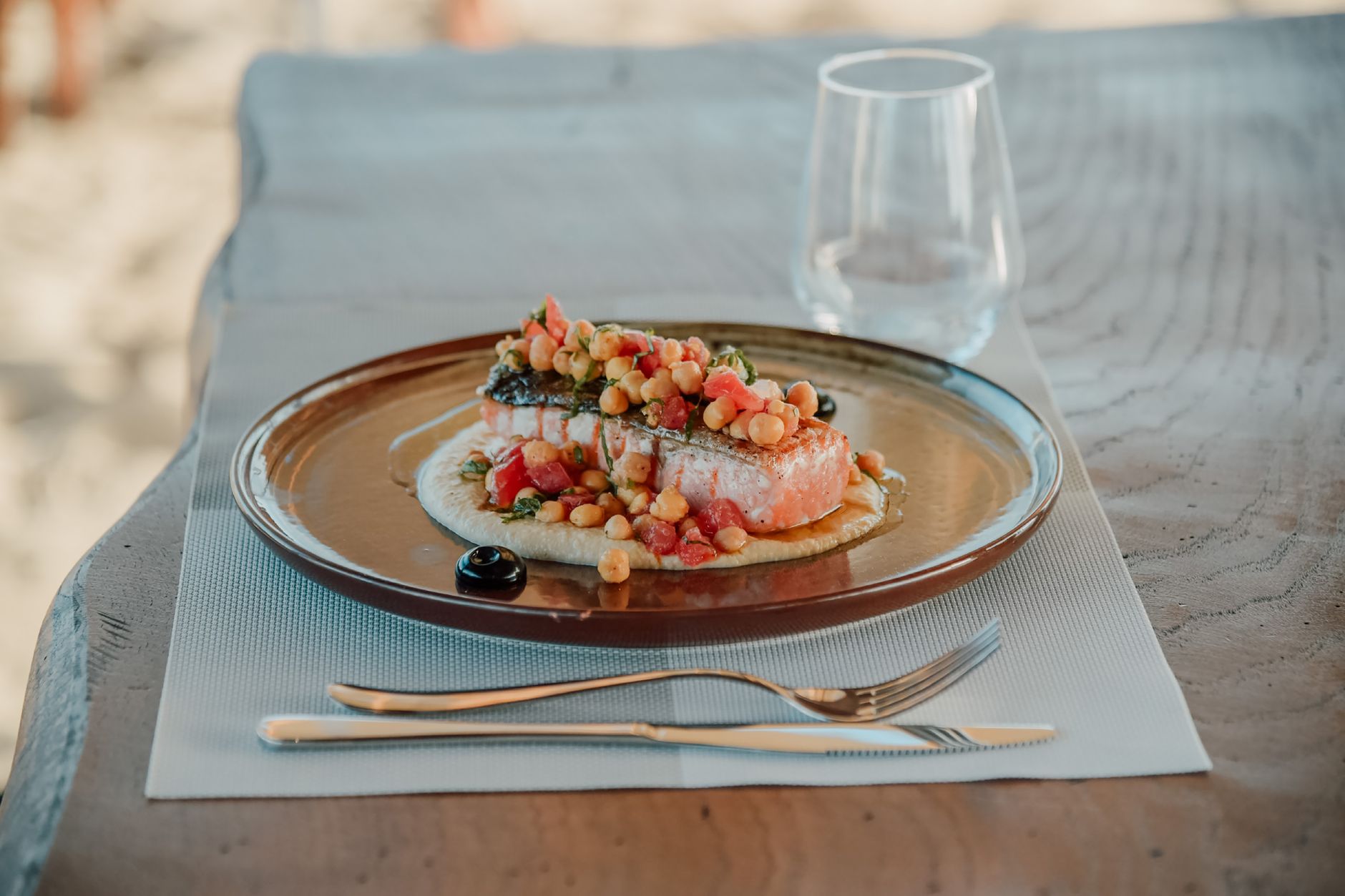
This article weighs the studies on a Mediterranean diet for women in menopause, one outcome at a time: weight, the belly, muscle and bone. It is written from published trials and cohort studies that anyone can look up, linked where each one is used. If you want the meals rather than the evidence, our 7-day menopause meal plan sets out a week of them. Supplements, HRT and medicines are left to your doctor.
What researchers mean by a Mediterranean diet
In the trials below the diet has a fairly fixed shape: vegetables, fruit, pulses and wholegrains at most meals, fish more often than red meat, a handful of nuts most days, some cheese and yoghurt, and olive oil as the main fat. It is not low in fat. The plan used in a Polish trial of postmenopausal women took about 37% of its calories from fat, with olive oil at every meal and five to seven nuts a day, and 18% from protein (Bajerska and colleagues, Scientific Reports, 2018).
That 18% matters later in this article. On a 1,600 calorie day it works out at roughly 70 g of protein, which sounds fine until you see how unevenly a typical Mediterranean day spreads it, with bread and fruit in the morning and fish or beans in the evening.
Is the Mediterranean diet good for menopause weight loss?
It works when it comes with a calorie gap, and it works no better than another healthy diet with the same gap. The Polish trial gave 144 women around 60 years old with a large waist either a Mediterranean diet or a lower-fat, high-fibre Central European diet for 16 weeks, both set about 700 calories a day below each woman's measured needs. Weight fell by 7.6 kg on average and the waist by 7.4 cm, the same in both groups, and in each group the women who kept to their plan most closely lost the most.
Without a calorie gap the picture changes. PREDIMED, a Spanish trial of 7,447 older adults at high risk of heart disease (the women aged 60 to 80), told people to eat a Mediterranean diet freely with extra olive oil or extra nuts, or to cut fat. Nobody was asked to eat less. After about five years weight was almost unchanged in all three groups (Estruch and colleagues, Lancet Diabetes and Endocrinology, 2019). Eating Mediterranean food in whatever amounts you like, then, does not take weight off. What it showed is that a diet rich in olive oil and nuts did not put weight on either, which is the fear that stops many women from using oil freely.
The menopause belly: waist and visceral fat
Fat tends to move to the middle at menopause, and the deep visceral fat around the organs is the kind linked to heart disease and diabetes. Our article on menopause belly fat covers why it happens.
In the Polish trial visceral fat measured by DXA scan fell by about a quarter across both diets. The detail is worth knowing: when the authors split each group by how well women stuck to it, the drop in visceral fat was clear only among the women who kept closely to the high-fibre Central European diet, and it tracked how much fibre they ate. In PREDIMED, the group given extra nuts ended five years with a waist about 0.9 cm smaller than the low-fat group, a small difference with no calorie cutting involved. For the belly, then, a Mediterranean diet helps in proportion to how much less you eat and how much fibre it carries, and it has no special effect beyond that.
Muscle: what the diet does and what it cannot do
Two findings pull in different directions. A Finnish study followed 554 women aged 65 to 72 for three years and scored what they ate. Women whose diet came closest to the Mediterranean pattern lost less muscle and lean mass over those years, walked faster and were more likely to complete a squat test (Isanejad and colleagues, European Journal of Nutrition, 2018). That is an observational study, so it shows women who ate this way kept more muscle, which may partly reflect other habits of the same women.
The Polish trial shows the other side. Alongside the fat, women on the Mediterranean plan lost about 1.1 kg of fat-free mass in four months, and they had been told to keep their usual activity and add no training. Eating less takes some muscle with the fat unless something asks the muscle to stay. That something is lifting, two or more days a week, plus enough protein at each meal. If you are not lifting yet, how to start strength training in menopause is the place to begin, and sarcopenia in women explains what losing muscle with age means for daily life.
Bone: hip fractures and bone density
The largest study is from the Women's Health Initiative in the US, which followed 90,014 postmenopausal women for a median of 15.9 years. Women in the top fifth for Mediterranean-style eating had a 20% lower risk of hip fracture than those in the bottom fifth. In absolute terms that is 0.29 percentage points, or one hip fracture fewer for every 342 women eating this way over the follow-up. The diet showed no link with fractures overall (Haring and colleagues, JAMA Internal Medicine, 2016).
A trial tested it more directly. NU-AGE gave 1,294 Europeans aged around 71, men and women, a Mediterranean-style diet for a year with tailored advice and supplied foods, and the intervention also included vitamin D3 tablets. Bone density did not change compared with the control group. In the small subgroup who already had osteoporosis (24 people on the diet, 30 controls), bone loss at the hip slowed, with no effect at the spine (Jennings and colleagues, American Journal of Clinical Nutrition, 2018). Because the vitamin D came with the food, the trial cannot say which of the two did it.
For bone, the diet looks like a reasonable background with a small, real association with fewer hip fractures. Calcium is the part to watch, since a Mediterranean day with little dairy can fall short: our guide to calcium and vitamin D from food lists the portions. Your scan result, explained in bone density T-scores, shapes how much weight-bearing exercise you should add.
Getting 25 to 30 g of protein at each meal
Ageing muscle responds less to small servings of protein. A review by Paddon-Jones and Rasmussen proposed 25 to 30 g of good-quality protein at each meal and found the muscle response in older adults blunted below about 20 g (Current Opinion in Clinical Nutrition and Metabolic Care, 2009). The examples below reach that range with Mediterranean foods. The grams are worked out from the USDA FoodData Central tables and rounded.
Breakfast
- 200 g of plain Greek yoghurt with 30 g of almonds and some fruit: about 26 g
- Two eggs scrambled with 50 g of crumbled feta, on two slices of wholemeal toast: about 27 g
Lunch
- A 90 g drained tin of sardines on a slice of wholemeal toast with tomatoes: about 26 g, plus the calcium in the soft bones
- 200 g of cooked chickpeas in a salad with 60 g of feta, cucumber, parsley and olive oil: about 26 g
- 100 g of tuna, drained, tossed with 150 g of chickpeas, red onion and lemon: about 33 g
Dinner
- 120 g of cooked salmon or cod with vegetables roasted in olive oil: 27 g, give or take a gram
- A big bowl of lentils, about 250 g cooked, with two spoons of Greek yoghurt on top: about 27 g
Breakfast is the meal to change first, because bread with olive oil, tomato and fruit carries well under 10 g. Our high protein breakfast builder adds up other combinations, and the daily protein calculator gives your own total for the day. The plant meals need bigger portions to get there, so when lentils or chickpeas are the main protein, add cheese, yoghurt or an egg to the plate.
My take
I would pick the Mediterranean pattern for the food it puts on the plate, since the trials give no reason to expect it to melt weight on its own. It is easy to like, it keeps oily fish, pulses and wholegrains in the week, and the hip fracture data from the Women's Health Initiative point the same way as the muscle data from Finland. If weight is your goal, I would judge it the way the Polish trial did: a modest, steady calorie gap you can keep, measured by your waist each month. On day one I would make two changes: a breakfast with 25 g of protein, and two strength sessions written into the diary. Those protect the muscle that a lighter plate would otherwise cost you. For the training side of weight, read how to prevent menopause weight gain.
Who should talk to a doctor or dietitian first
The diet suits most women, but a few need it adapted. If you have kidney disease, protein targets may need to be lower than the figures above. If you take medicine for diabetes that can cause low blood sugar, cutting calories or carbohydrate changes how it works, so talk to your GP or diabetes team first. Anyone with a history of an eating disorder should plan weight loss with professional support. Find more food guides under food and protein.