Starting strength training
How long sore muscles last after 40
Usually a few days. Soreness after a new or harder workout builds over one to three days and rarely lasts more than five, so an ache that peaks on day two and fades by the weekend is your muscles adapting, and the next session of the same moves will hurt far less.
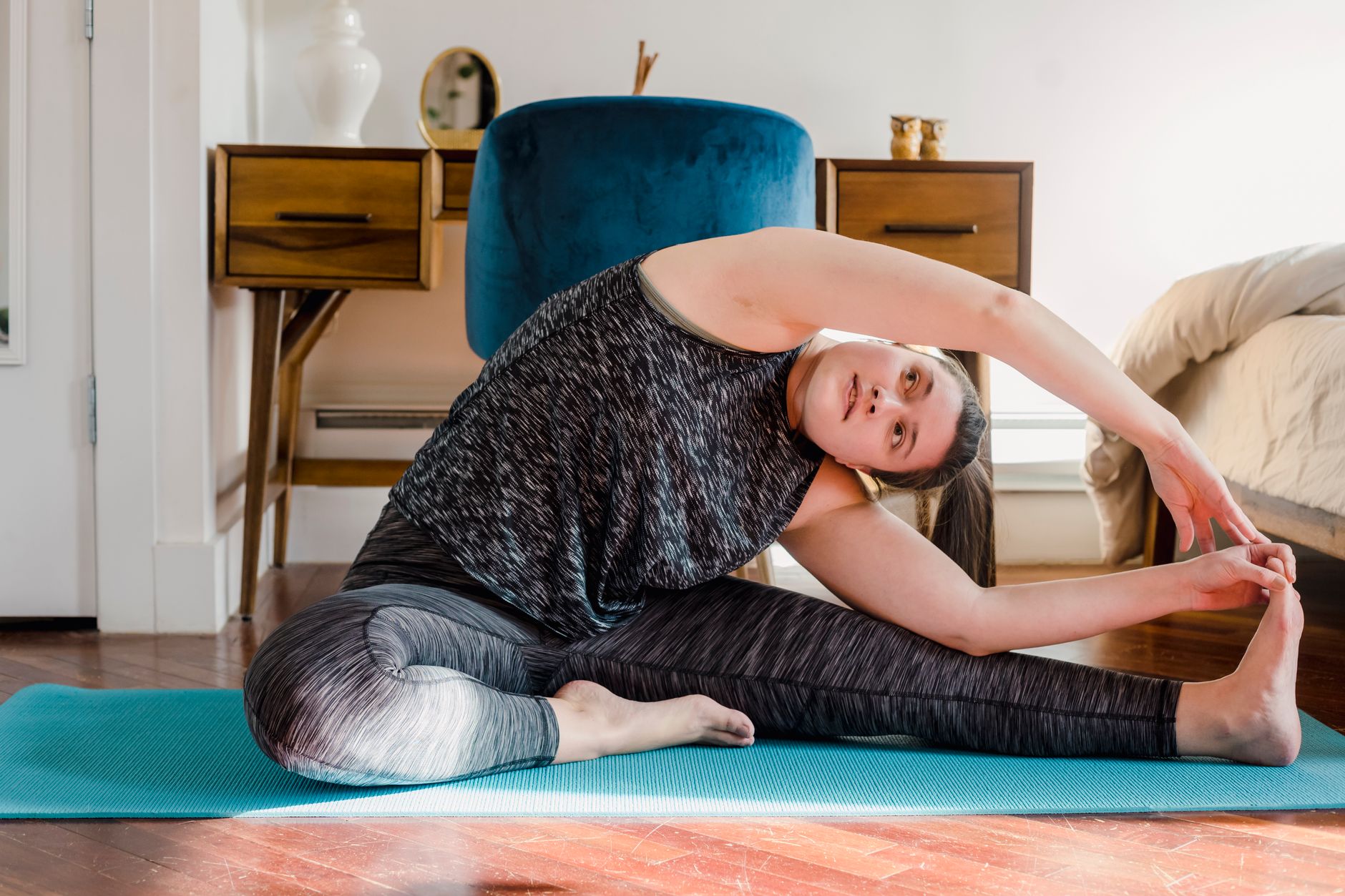
You do your first strength session, feel fine that evening, then wake up two days later barely able to sit on the loo. Plenty of women stop right there, because it feels like they have hurt themselves. In most cases they have not. This page explains what that ache is, how long it lasts, whether to train through it, and the signs that point to an injury instead.
What delayed onset muscle soreness is
Delayed onset muscle soreness, usually shortened to DOMS, is the ache that turns up in the muscles you worked a day or more after the workout. Cleveland Clinic describes it as pain that starts one to three days after intense exercise, sits in the exact muscles you used, and often comes with tenderness to touch, a feeling of weakness and stiffness (Cleveland Clinic, Delayed onset muscle soreness). You do not feel it during the session. It builds over the following hours.
The cause is small-scale damage to muscle fibres, followed by repair. A review in Sports Medicine lists up to six theories for how the soreness itself arises, from inflammation to connective tissue damage, and concludes that two or more of them probably act together (Cheung, Hume and Maxwell, Sports Medicine, 2003). The old idea that lactic acid causes it is one of the theories the review sets aside as an explanation on its own.
How long does muscle soreness last?
For most people, three to five days from start to finish. Cleveland Clinic says DOMS usually lasts a few days and rarely more than five, easing a little each day. A typical pattern after a first session on a Monday looks like this: tight by Tuesday afternoon, at its worst on Wednesday, noticeably better on Thursday and close to gone by Friday or Saturday.
An ache that lasts a week or more is a different matter. The same source says that may be an injury such as a muscle strain, which is covered in the warning signs below.
Why the first sessions hurt most
Two things drive soreness: doing something new, and the lowering half of a movement. Sitting down slowly from a squat, lowering a dumbbell from a curl and walking downhill all load a muscle while it lengthens, and Cheung's review found these "eccentric" actions cause micro-injury more often and more severely than other kinds of muscle work.
The good news is that the body adapts fast. A 2023 meta-analysis of 20 studies compared two bouts of the same exercises, such as squats, and found soreness one and two days after the second bout was clearly lower than after the first (Doma and colleagues, Journal of Strength and Conditioning Research, 2023). Researchers call this the repeated bout effect. In practice, the session that leaves you hobbling is usually the first one, or the first after a long break, or the day you add a new exercise.
Does soreness get worse after 40?
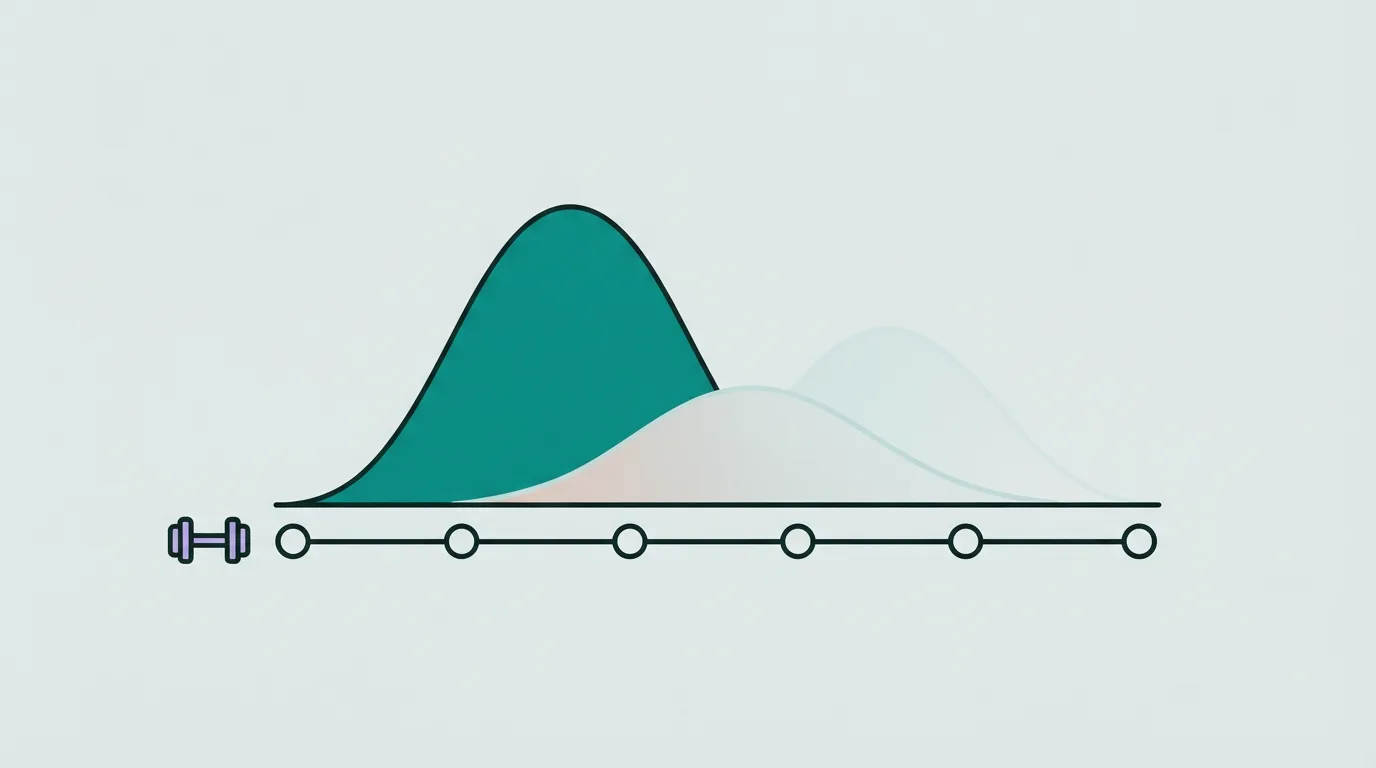
Many women assume they will ache longer now than they did at 25. A pooled analysis of 36 studies, covering 389 younger and 390 older adults, found the opposite. People in the older groups, mostly aged 30 to 60, reported about two-thirds of the soreness younger adults did at 48 hours and about one-third at 72 hours, with no greater loss of muscle function (Hayes and Fernandes, The Conversation, 2025, summarising their study). The authors also report that women lost slightly less muscle function after exercise than men.
So the ache after your first session says more about how new the movements are than about your age.
Should I work out with sore muscles?
Gentle movement, yes. For a hard session on the same muscles, wait a day or two. Cheung's review found that exercise is the most effective way to ease DOMS pain while you are moving, though the relief wears off afterwards. Its advice is to cut the intensity and length of training for one to two days after a session that causes heavy soreness, or to work the less sore parts of the body instead. Cleveland Clinic agrees: everyday activity is fine, a short walk and some stretching can help, and another heavy leg day should wait.
In practice that gives you three options on a sore day:
- A brisk walk, which keeps you active without loading the legs the way squats do.
- Upper-body work if only your legs are sore, such as wall press-ups and band rows.
- The easier version of your planned session, with one set of each move.
Our "Should I train today?" check weighs soreness alongside sleep and menopause symptoms and suggests which of these fits the day.
Rest days between workouts over 40
The NHS asks adults to do strengthening activity on at least two days a week (NHS, Strength exercises). For a beginner that means two or three whole-body sessions with a day off between them, such as Monday and Thursday. That gap lets the first wave of soreness pass before you work the same muscles again.
You do not need extra rest because of your age. The Hayes and Fernandes analysis suggests adults over 30 may not need longer recovery between workouts than younger people. What does need care is how fast you add new work. Cheung's review recommends bringing in new exercises, and heavy lowering work in particular, over one to two weeks. The NHS strength routine says the same in plainer words: build up slowly and add repetitions over time.
If you are not sure how to pace that, our 4-week plan starts with one set of each exercise, and the sets and reps guide explains when to add a second set or a heavier weight.
How to warm up before lifting weights
A warm-up raises your heart rate and gets the joints moving before they carry load. The NHS warm-up takes at least six minutes and needs no kit (NHS, How to warm up before exercising):
- March on the spot for 3 minutes, pumping your arms.
- Heel digs for 60 seconds, placing alternate heels in front.
- Knee lifts for 30 seconds, bringing each knee up to the opposite hand.
- Shoulder rolls, 5 forwards and 5 backwards, twice, while still marching.
- Knee bends, 10 small ones, lowering no more than about 10cm.
The NHS lists skipping the warm-up and working tired muscles among the common causes of sprains and strains (NHS, Sprains and strains).
Warm-up exercises for leg day
Squats, lunges and leg presses ask more of the hips, knees and ankles than the general routine prepares them for, so on a leg day I'd follow the march with four moves that rehearse what comes next. The whole sequence adds about five minutes:
- March on the spot for 3 minutes, as in the NHS routine, to raise your heart rate.
- Five slow sit-to-stands from a firm chair without arms, standing up with your legs and lowering with control (NHS, Strength exercises). This is the squat pattern at body weight.
- Ten glute bridges: lie on your back with knees bent and feet flat, push through your heels to lift your hips while your shoulder blades stay on the floor, then lower. A physiotherapist writing for the orthopaedic practice OrthoSouth suggests 2 sets of 10 to get the buttock muscles working before you load the legs (OrthoSouth, Dynamic warm-ups).
- Five calf raises holding the back of a chair, lifting both heels slowly as far as is comfortable, as the NHS strength routine describes.
- One light first set of your main lift: the same movement with no weight, or about half the load you plan to use, for 8 to 10 easy repetitions.
That last set matters most. It shows you how your knees and back feel in the exact movement before the working sets, and if something pinches you find out at a load that cannot hurt you. The OrthoSouth page also prefers moving warm-ups to holding stretches before a session, and our 10-minute stretching routine for after 50 is the place for the longer holds, once the lifting is done. Neither source says a warm-up stops the ache a day or two later, so expect the first leg day to leave you sore whatever you do beforehand. Our guide to warming up and cooling down after 40 sets out what each does and what the studies found.
Soreness or injury? Signs to take seriously
DOMS is a dull, spread-out ache in the muscles you worked that arrives late and gets better each day. An injury tends to announce itself differently. Stop and get advice if you notice any of these:
- Sharp pain during a movement, or pain in a joint, such as the knee or shoulder, rather than in the muscle.
- Pain that is sharp and constant, lasts more than a week, or is getting worse.
- Severe swelling or bruising around a muscle or joint.
- You cannot put weight on a leg or use a limb normally.
- Urine that is unusually dark, tea-coloured or has blood in it after hard exercise.
Dark urine with muscle pain and weakness can be a sign of rhabdomyolysis, a breakdown of muscle tissue that can harm the kidneys, and MedlinePlus lists severe exertion among its causes (MedlinePlus, Rhabdomyolysis). It is rare after a beginner's session, and it needs medical care the same day.
When to see a GP
For a suspected sprain or strain, the NHS says to use NHS 111 if it is very painful or getting worse, if swelling or bruising is large or spreading, if you cannot walk more than a few steps, or if it is not improving after treating it yourself. See a GP if it is still not getting better. Call 999 or go to A&E if you heard a crack, the area has changed shape, or it is numb or tingling. In many areas you can also refer yourself to NHS physiotherapy for back or joint problems.
If you have a heart, joint or bone condition, or have not exercised for years, our pre-exercise health check shows when to talk to a GP before your first session. Women with a low bone density result can read what exercise is safe with osteoporosis.
What I would do
I'd start by expecting the first week to ache and planning around it: one set of each exercise, a slow lowering only as far as feels steady, and two clear days between the first two sessions. I'd skip ice packs and long stretching sessions aimed at the ache, since Cheung's review found neither cold treatment nor stretching eased DOMS, and walk on sore days instead. I'd judge progress by the soreness itself. When the same workout leaves only mild stiffness the next day, usually by the third week, it is time to add a second set. If the no-equipment home workout is where you begin, its chair squats and wall press-ups are a gentle first dose.