Check your agility against women your age
8-foot up-and-go test
Get up from a chair, walk round a cone 8 feet away and sit back down. Time two tries below and see where your faster one sits among women of your age.
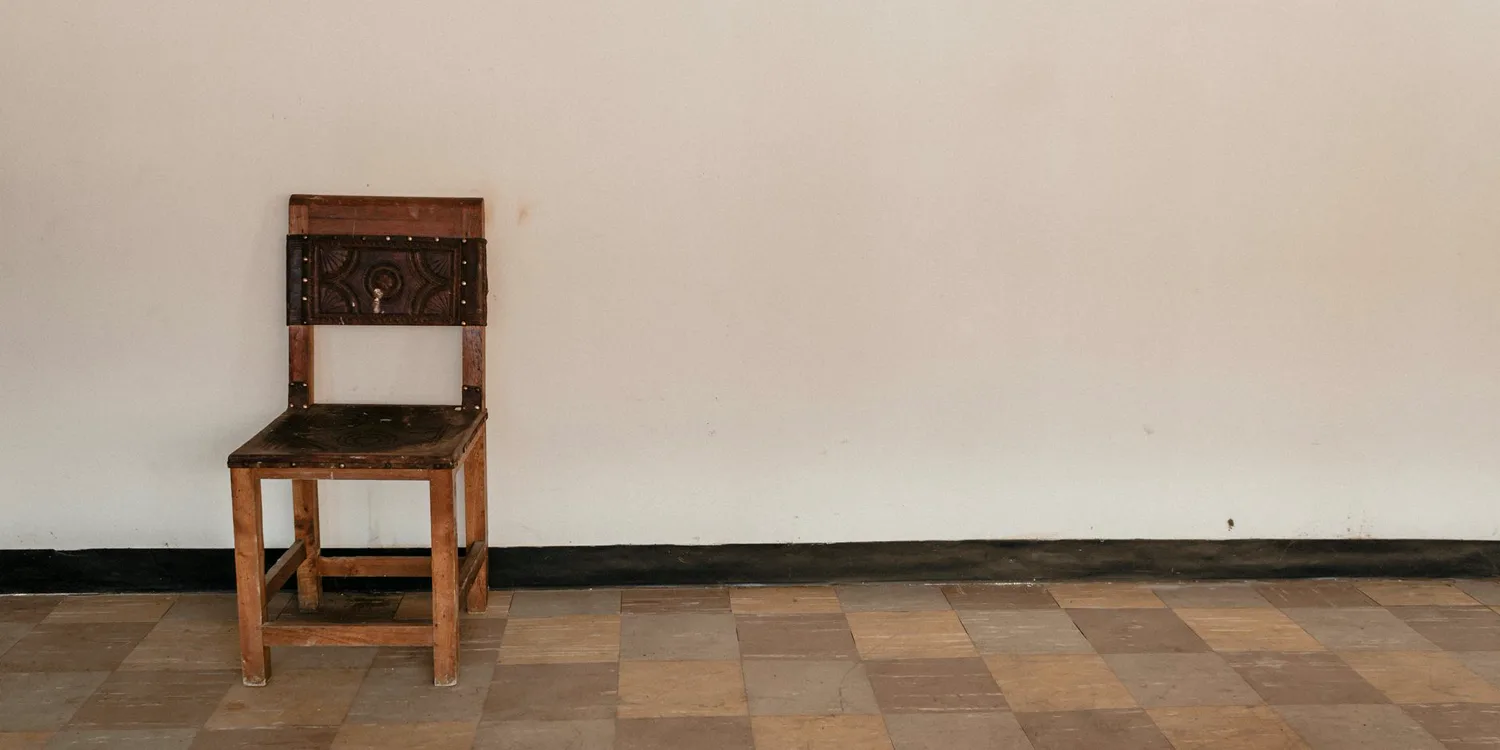
The 8-foot up-and-go times how fast you can stand up from a chair, walk 8 feet (2.44 m) round a marker and sit down again. It is the agility and dynamic balance item of the Senior Fitness Test (FitnessNorms, 8-foot up-and-go). Women aged 60 to 64 typically finish in 4.4 to 6.0 seconds, and a lower time is better. The checker below takes the faster of your two tries and places it against the Rikli and Jones percentiles for women in five-year age bands. Treat it as an estimate to track over time: it does not diagnose anything.
Time your up-and-go
Example: best of 5.4 seconds at age 68
5.4 s
For women aged 65 to 69 the middle half of the group finished in 4.8 to 6.4 seconds and the median was 5.6. A best time of 5.4 seconds sits inside that middle half, a little quicker than the median, which the usual labels call average. Retest with the same chair and course to see how it moves.
| Age | 5th | 25th | Median | 75th | 95th |
|---|---|---|---|---|---|
| 60 to 64 | 3.2 | 4.4 | 5.2 | 6.0 | 7.2 |
| 65 to 69 | 3.6 | 4.8 | 5.6 | 6.4 | 7.6 |
| 70 to 74 | 3.8 | 4.9 | 6.0 | 7.1 | 8.6 |
| 75 to 79 | 4.0 | 5.2 | 6.3 | 7.4 | 8.9 |
| 80 to 84 | 4.0 | 5.7 | 7.2 | 8.7 | 10.8 |
| 85 to 89 | 4.5 | 6.2 | 7.9 | 9.6 | 12.0 |
| 90 to 94 | 5.0 | 7.3 | 9.4 | 11.5 | 14.6 |
An estimate from one session, set against a large sample of women living independently. It is not medical advice, and nothing you enter leaves this page.
How to run the 8-foot up-and-go safely at home
You need a straight-back chair with a seat about 17 inches (43 cm) high, a cone or any marker that will not roll, a tape measure and a stopwatch, which can be the one above (FitnessNorms). Push the chair against a wall so it cannot slide back as you sit. Measure 8 feet from the front edge of the seat and set the marker there, then clear the floor between them of rugs, cables and anything else you could catch a foot on.
- Sit right back in the chair, feet flat on the floor and hands resting on your knees.
- On "go", the clock starts. Stand up and walk as quickly as you safely can to the marker. Walk the whole way, without breaking into a run.
- Go round the marker and walk back to the chair.
- Sit down fully. The clock stops as you land on the seat.
- Rest, then do it once more. Your score is the faster of the two, to a tenth of a second.
That sequence follows the published protocol (Topend Sports, 8-foot up-and-go). FitnessNorms also allows one practice lap before the two that count, which is worth taking: the first attempt is mostly about learning where to turn. If you normally walk with a cane or walker, use it. The protocol permits it, and the checker notes it so you can repeat the test the same way next time.
The test asks you to move briskly and turn, which is where a stumble happens if it is going to. The NHS advice for its balance exercises is to work near a wall or a stable chair in case you lose your balance (NHS balance exercises), and the same sense applies here: keep the course short of furniture with sharp corners and have someone nearby if you are unsure of your footing. If you have a health condition or have been inactive for a long time, our pre-exercise health check sets out what to raise with a doctor first.
Women's up-and-go norms by age
The table in the checker comes from Roberta Rikli and Jessie Jones. Their 1999 study tested 7,183 adults aged 60 to 94 living independently in the community, at 267 sites in 21 US states, and the percentile curves in the 2013 edition of their Senior Fitness Test Manual were modelled on that sample (FitnessNorms). Each row gives the time at five points: the 5th percentile is the quick end, where only 5 women in 100 were faster, and the 95th is the slow end.
The middle three columns matter most. Half the women in each age band finished between the 25th and the 75th percentile, so that span is the typical range, and the median sits in the middle of it. The median climbs from 5.2 seconds at 60 to 64 to 6.0 at 70 to 74, 7.2 at 80 to 84 and 9.4 at 90 to 94. The range widens with it: 1.6 seconds separates the 25th and 75th percentiles in the early sixties, and 4.2 seconds in the early nineties.
Topend Sports turns the same cut points into three plain labels. A time under the 25th percentile counts as above average, a time between the 25th and 75th as average, and a time slower than the 75th as below average. The checker uses those labels and adds a rough position, such as "among the quickest quarter of women your age".
Men scored better than women on the agility and balance item in the original study, while women did better on flexibility (Rikli and Jones, Journal of Aging and Physical Activity, 1999). That is why a woman's time should be read against the women's table. A men's chart from another page would make her look slower than she is.
A worked example
A woman of 68 takes one practice lap, then records 6.1 seconds and 5.4 seconds. Her score is 5.4, the faster of the two. She falls in the 65 to 69 band, where the 25th percentile is 4.8 seconds, the median 5.6 and the 75th percentile 6.4. Her 5.4 falls between those two, two tenths of a second ahead of the median. On Topend's labels that is average.
Had her best been 6.8 seconds, she would have been slower than the 75th percentile for her age, the band labelled below average. That result is a nudge toward leg and balance work: the 30-second chair stand test shows whether getting up from the chair is the slow part, and our balance exercises for women over 50 cover the stepping and turning side.
Timed Up and Go, STEADI and the 8-foot test
Three tests share one name in everyday speech, and their numbers get swapped around online. It helps to keep them apart.
- The 8-foot up-and-go on this page: 8 feet (2.44 m) out and back, walked as quickly as is safe, from the Senior Fitness Test.
- The Timed Up and Go (TUG) used in clinics: the same idea over 3 metres (9.8 feet). FitnessNorms points out that the two measure similar abilities but that their norms cannot be swapped, because the distances differ.
- The STEADI screen from the US Centers for Disease Control and Prevention uses that longer TUG at your usual pace. MedlinePlus explains that taking 12 seconds or more may mean a higher risk of a fall (MedlinePlus, fall risk assessment).
So the 12-second line does not apply to your 8-foot time, and neither do TUG percentile tables from other countries. The 8-foot course is shorter and walked faster, and a woman who takes 12 seconds on it would be at or past the 95th percentile in every age band up to 89.
One study did look for a cut point on the 8-foot course. Debra Rose and colleagues compared 134 older adults with and without a history of falls. Those who needed 8.5 seconds or longer on the 8-foot up-and-go were classed as fallers, with an overall prediction rate of 82%, a specificity of 86% and a sensitivity of 78%. In the same group, 10 seconds or longer on the standard TUG predicted faller status 80% of the time (Rose and colleagues, Journal of Aging and Physical Activity, 2002). It was a small study that sorted people by falls they had already had, so 8.5 seconds is a research marker. It does not say who will fall next.
Rikli and Jones later proposed an 8.0-second standard for people aged 90 to 94, a time tied to keeping up everyday independence and set just under Rose's 8.5 seconds (Human Kinetics, senior fitness standards). The standards for younger ages are in their manual, and this page does not print them. For balance while standing still, the single-leg balance test is the companion check.
Where this sits in the Senior Fitness Test
The Senior Fitness Test is a set of short tasks that score the fitness behind daily movement, and the up-and-go is its agility item. This site now has a checker for each of the items you can do in a living room: the chair stand for leg strength, the 30-second arm curl test for the arms, the 2-minute step test for stamina, the chair sit-and-reach and back scratch test for flexibility, and this one.
Because the norms were gathered in one study with one protocol, the items line up. A woman can see, for example, that her arm curl count is typical while her up-and-go is slow for her age, which points to legs and balance as the place to start. The grip strength test is a useful extra outside the battery, and our health-related fitness check after 40 puts every home test in one plan.
What a slower time means, and what it does not
One lap packs several jobs into a few seconds: rising from a seat, speeding up, turning on the spot, slowing down and lowering yourself under control. A slow time can come from any of them, so it pays to notice where yours goes: in the rise, the walk out, the turn at the cone or the sit at the end. A helper watching from the side will see it more easily than you will.
A slow result is a reason to train. It is no forecast of a fall, and the published norms give no such reading, because they describe how women of each age performed. Strength work for the legs and practice at stepping and turning both feed into this time. The four-minute daily strength routine and the lower body workout cover the legs, and if thin bones are part of why you care about balance, read exercise for women with osteoporosis before you plan the rest. Retest with the same chair, the same marker and the same floor, so the only thing that changes is you.
My take
I would run this twice a year alongside the chair stand and the one-leg balance test, and write all three numbers down on the same line. Together they show whether your strength and your balance are moving in step, which a single cut-off cannot. I would not fixate on 8.5 or 12 seconds. The first comes from a small study of past falls, and the second belongs to a different, longer test. Aim to sit in the middle half for your age band or better, and treat a time that creeps slower from one test to the next as the signal to put more leg and balance work into your week. For more on keeping muscle, bone and balance, see our muscle, bone and balance guides.