Exercises that protect your spine
Core and back strength after menopause
After menopause, and especially with low bone density, train your core with moves that hold the spine straight (planks, bird dogs, bridges, carries) and strengthen the muscles along the back, instead of curling forward with sit-ups and crunches. The back extensors matter most: in a Mayo Clinic trial, women who built them up had fewer spinal fractures ten years later.
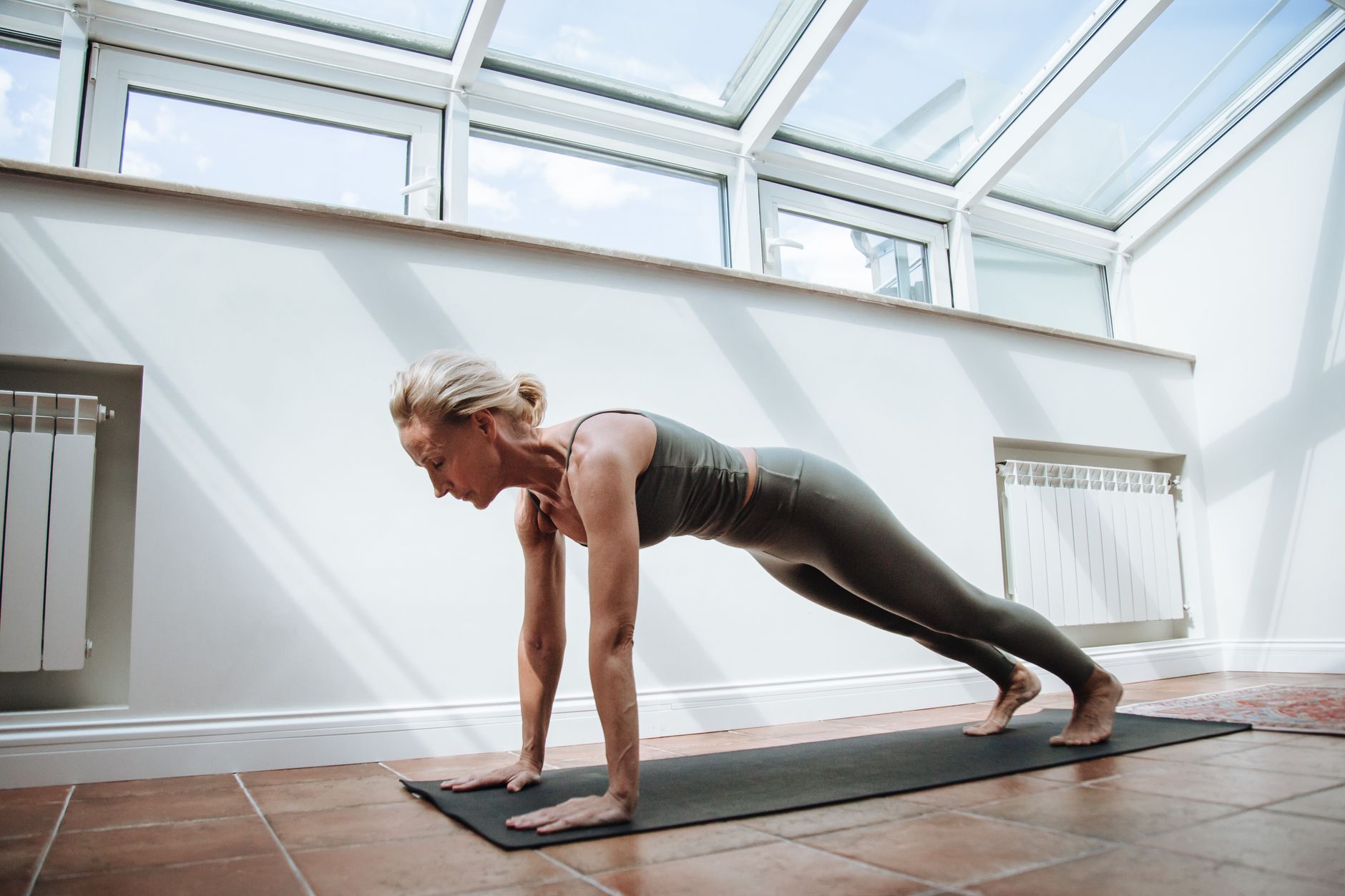
This guide sets out a core and back routine for women over 50, built from what the UK's Royal Osteoporosis Society, the NHS and published trials say about the spine after menopause. It covers which moves to drop, what to do in their place, and a short session you can repeat twice a week. It is written from those sources, linked where each is used. If you have already broken a bone in your spine, read the section on seeing a physiotherapist before anything else.
Why core and back strength matter more after menopause
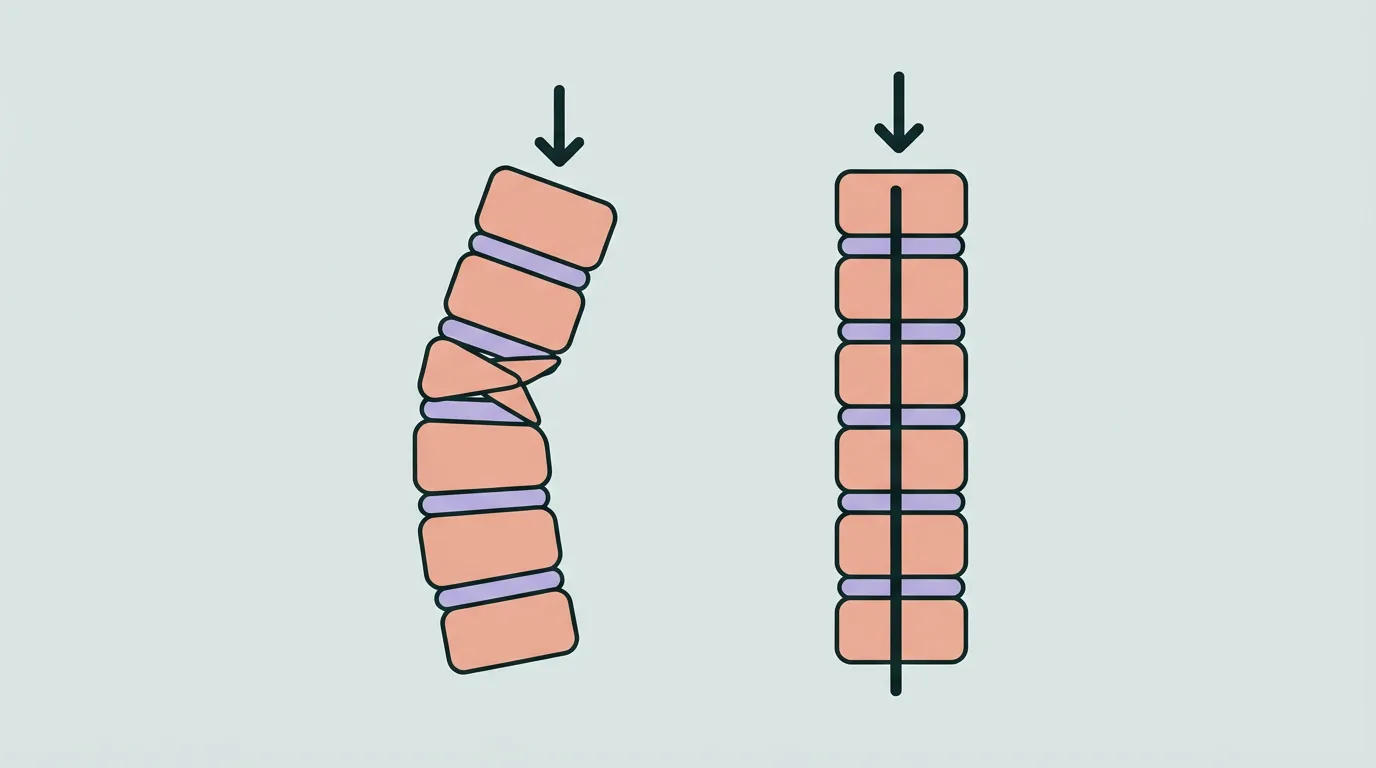
Bone thins faster after menopause, and the spine is one of the places it shows. A vertebra weakened this way can squash at the front into a wedge, sometimes without any pain, which is how women lose height or develop a rounded upper back. Mehrsheed Sinaki, who spent decades studying this at the Mayo Clinic, wrote that in osteoporosis "axial strength and stability are of primary importance" and that a back extensor programme should use progressive resistance as tolerated (Sinaki, PM&R, 2012).
The best evidence for that advice is her own long follow-up. Fifty healthy postmenopausal women aged 58 to 75 were randomly split: 27 did progressive back-strengthening exercises for two years, 23 did not. Ten years after the start, and eight after the exercises had stopped, the exercise group still had stronger backs and higher bone density. X-rays found compression fractures in 1.6% of their vertebrae against 4.3% in the control group, a risk 2.7 times higher without the training (Sinaki and colleagues, Bone, 2002). It is one small trial, but it points the same way as the guidance that followed.
The international Too Fit To Fracture panel, which reviewed the evidence for people with osteoporosis or a spinal fracture, strongly recommends a programme of resistance and balance training, and advises against doing aerobic exercise alone (Giangregorio and colleagues, Osteoporosis International, 2014). Core and back work belongs inside that programme, next to leg strength and balance.
Core moves to avoid with low bone density
The Royal Osteoporosis Society names sit-ups, touching your toes, and the Pilates roll-down and curl-up as exercises that can put pressure on the spine (How to exercise safely for bones). Its Pilates guidance adds the reason: uncontrolled, repeated or sudden forward bending, or loading the spine while it is curved, presses unevenly on the front of the vertebrae, the part of a weak vertebra that gives way first (Pilates and osteoporosis). Crunches, ab machines that curl you forward and weighted toe-touches all fall into that group.
An older Mayo Clinic study is why this advice exists. Fifty-nine women with spinal osteoporosis and back pain were given extension exercises, flexion (curling) exercises, both, or none. New wedging or fractures showed up in 16% of the extension group and 89% of the flexion group, with 53% in the combined group and 67% with no exercise (Sinaki and Mikkelsen, Archives of Physical Medicine and Rehabilitation, 1984). The flexion group had only nine women and the groups were not randomly assigned, so read the numbers as a warning sign rather than a precise risk.
Bending forward to tie a shoe or pick up a sock is part of ordinary life, and the Society's answer is the hip hinge: fold at the hips with your back kept straight. Low bone density is also not the only reason to drop crunches. If you have bladder leaks, our page on pelvic floor exercises after menopause explains the same swap from the pelvic floor side.
Safe core exercises for women over 50
Each of these trains the trunk to hold the spine still while the arms, legs or hips move, which is what the core does when you carry shopping or catch yourself on a step. Do them slowly, breathe out on the effort, and stop for any pain.
Brace and breathe
Sit tall or lie on your back with knees bent. Tighten your tummy as if about to be prodded, without pulling it in hard or holding your breath, and hold it there while you take five slow breaths. This is the base for every move below.
Worktop plank
Hands on a kitchen worktop, feet back until your body makes a straight slope from head to heels. Hold 10 to 20 seconds, rest, repeat three times. As it gets easy, move to a lower surface such as a sturdy table, then a step.
Bird dog
On hands and knees, reach one arm forward and the opposite leg back until both are level with your back, hold for a breath, and return. Your back should stay as flat as a tray throughout. Six to eight each side.
Side plank from the knees
Lie on your side propped on your forearm, knees bent behind you, and lift your hips until you form one line from head to knees. Hold 10 seconds each side. A wall version, standing side-on and leaning on your forearm, suits anyone not yet comfortable on the floor.
Glute bridge
On your back with knees bent and feet flat, squeeze your buttocks and lift your hips until your body is straight from shoulders to knees. Lift from the hips and keep your back from arching. Ten slow repetitions.
Suitcase carry
Hold one heavy bag or dumbbell at your side and walk 10 to 20 metres standing tall, without leaning towards the weight. Swap hands and walk back. It trains the side of the trunk the way daily life does. Our dumbbell weight finder helps you pick a starting weight.
Back strengthening exercises for women over 50
The back extensors are the long muscles either side of the spine that hold you upright. A Japanese trial gave 80 postmenopausal women with osteoporosis one simple home exercise: lie face down and raise the upper trunk to level, then hold. After four months back strength had risen 26% in the exercise group against 11% in the control group, and quality-of-life scores rose only in the women who exercised (Hongo and colleagues, Osteoporosis International, 2007).
Face-down chest lift
Lie on your front with a pillow under your hips and your arms by your sides. Lift your head and chest a few centimetres until your spine is straight, look at the floor, hold for a slow count of five and lower. Five to ten repetitions. The aim is a level back, so skip any backbend past straight.
Band row and pull-apart
Sitting tall, loop a band round your feet and row the ends to your ribs, squeezing your shoulder blades together. For the pull-apart, hold a band in front at shoulder height and stretch it out wide. Both work the upper back that pulls the shoulders back. Our guide to resistance band exercises for women over 50 explains how to pick a band.
Hip hinge with a broom handle
Hold a broom handle along your back so it touches your head, upper back and tailbone. Push your hips back and tip forward from the hips, keeping all three points in contact, then stand up. This teaches the bend you use to lift anything from the floor.
A 15-minute core and back session, twice a week
The Royal Osteoporosis Society advises leaving a day's rest between strength sessions, so two or three days a week is plenty. After a five-minute warm-up of marching on the spot and shoulder rolls, one round looks like this:
- Brace and breathe, five breaths
- Worktop plank, three holds
- Bird dog, six each side
- Glute bridge, ten
- Face-down chest lift, five to ten
- Band row, ten to twelve
- Suitcase carry, two lengths each hand
Do two rounds once one feels easy. Add the side plank and the hip hinge in the third or fourth week. If you are unsure how many sets to aim for overall, sets and reps for beginners over 40 explains it, and the session tucks onto the end of our home workout for women over 50.
Lower back pain exercises for women over 50
For ordinary lower back pain, the NHS advice is to stay active, keep up your daily activities and avoid long spells in bed. It suggests exercises and stretches, plus walking, swimming, yoga and Pilates, and says to stop if the pain gets worse (NHS, Back pain). The bridge, bird dog and chest lift above are gentle enough to keep going through a sore spell, at fewer repetitions.
See a GP if the pain has not improved after a few weeks, is worse at night, or comes from between your shoulders, or if your back has changed shape. After menopause those last two can be signs of a spinal fracture. If you have pain or numbness in both legs, or changes in bladder or bowel control, call 999 or go to A&E.
Who should see a physiotherapist first
Most women can start this routine on their own. The Royal Osteoporosis Society advises seeing a physiotherapist first if you have spinal fractures that cause pain or other symptoms, have broken many bones, have had many falls, or find other conditions make exercise hard. After a fracture, wait until the bone has healed, which can take up to three months. Our guide to exercise for women with osteoporosis covers impact work and heavier lifting, and bone density scan results explained helps you read your T-score.
My take
I'd start with the face-down chest lift and the bird dog, and if a reader with low bone density could keep only two moves, I'd pick those, because they train the back extensors and trunk control that the Mayo and Japanese trials point to. I'd skip crunches for good and judge progress by how long you can hold a level back, since the core that protects the spine wraps all the way round the trunk. Fifteen careful minutes twice a week is a dose most women can keep up for years, and the Mayo follow-up suggests years are what count. For the rest of the week, keep building leg strength and balance through the guides under muscle, bone and balance.