Strength training
The principles of strength training after 40
The principles of exercise are overload, progression, specificity, reversibility, individuality, rest and recovery, and the FITT principle (frequency, intensity, time and type), which sets the weekly dose. For a woman starting strength training after 40, they come down to two sessions a week that work every major muscle group, sets that end feeling hard, small regular increases, and a plan you can keep through a bad week.
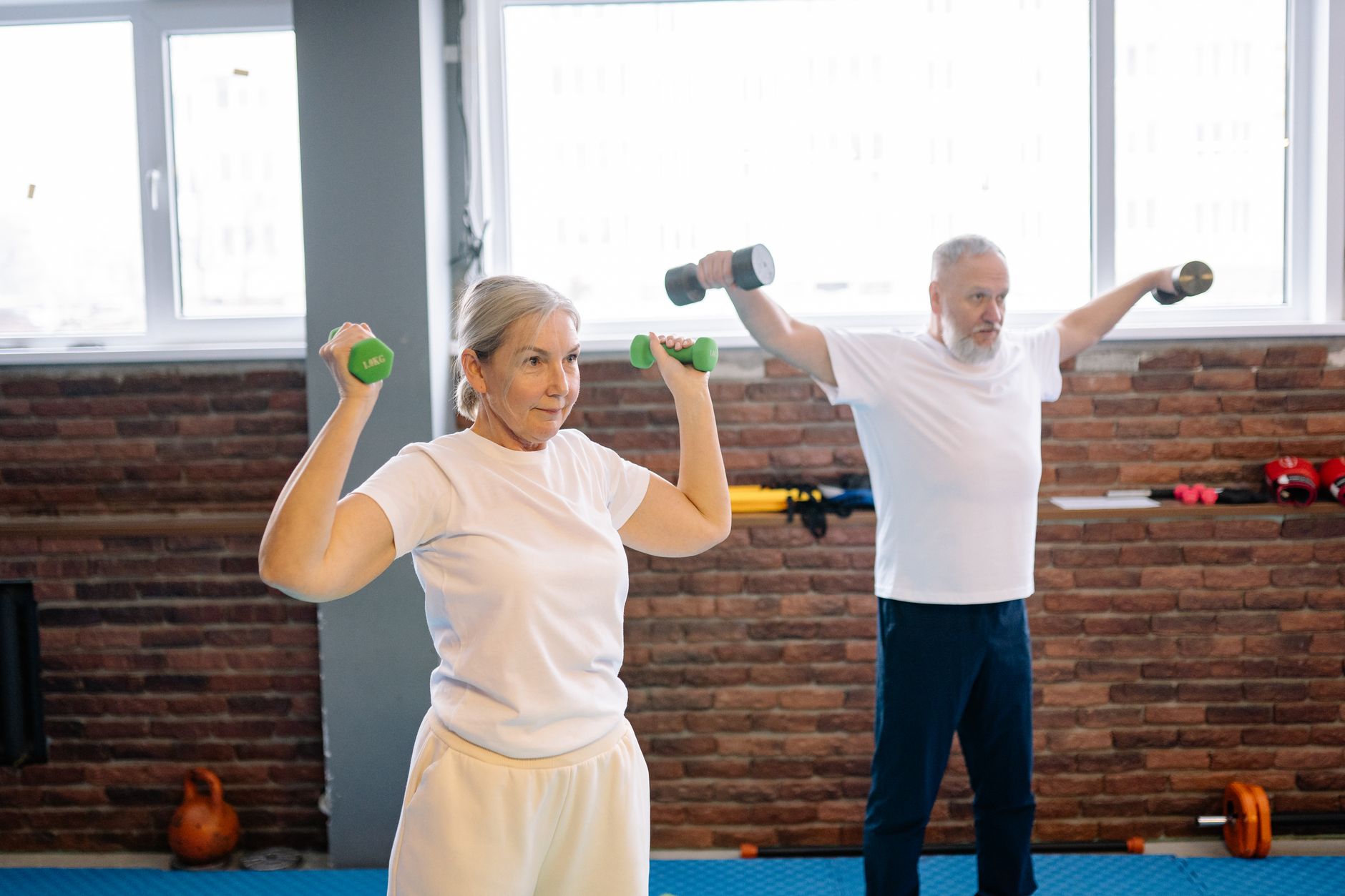
These principles come from exercise science textbooks and the position stands that turn them into advice. They were written with athletes in mind, and most explanations online still use a sprinter or a footballer as the example. Below, each one is applied to the week of a woman in her forties, fifties or sixties who is new to lifting, with a link to the page on this site that puts it into practice.
The principles of exercise, listed
An open textbook from eCampusOntario names five training principles that sit on top of FITT: progressive overload, specificity, reversibility, diminishing returns and individuality (The Foundations of Human Movement and Physical Fitness, 6.7 Training Principles). Other courses split overload from progression and add rest and recovery as a principle of its own. Here is the full set, with what each one means for a beginner's week:
- Overload: each set has to be hard enough that your muscles have a reason to adapt.
- Progression: as you adapt, the work grows in small steps so the overload continues.
- Specificity: you get better at what you practise, so the exercises match the job you want done.
- Reversibility: gains fade when training stops, slowly at first.
- Individuality: the same programme gives different results in different people, and fits some lives better than others.
- Rest and recovery: muscles adapt between sessions, so the days off belong to the plan.
- FITT: frequency, intensity, time and type, the four settings you adjust to apply all of the above.
The FITT principle for strength training
FITT is the part most people search for, because it turns a principle into a weekly prescription. For strength training it reads like this for a beginner over 40:
| Setting | For a midlife beginner | Where it comes from |
|---|---|---|
| Frequency | For a beginner: 2 days a week, with a day between sessions for the same muscles | Source: NHS, NIA, ACSM 2026 |
| Intensity | For a beginner: a weight you can lift 8 to 12 times, the last two or three reps hard | Source: ACSM 2009 |
| Time | For a beginner: long enough to work legs, hips, back, chest, shoulders, arms and core | Source: NHS |
| Type | For a beginner: dumbbells, bands, machines or your own body weight | Source: ACSM 2026 |
Frequency is the setting with the firmest guidance. The NHS asks adults to do strengthening activities that work all the major muscle groups on at least two days a week (NHS physical activity guidelines for adults), and the National Institute on Aging adds that the same muscle group should not be worked two days in a row (NIA, Three types of exercise). A Monday and Thursday pattern fits that rule, and so does Tuesday and Saturday.
Intensity is where beginners most often go wrong, usually by choosing a weight they could lift thirty times. The American College of Sports Medicine's 2009 position stand recommends a load a novice can lift 8 to 12 times (ACSM, Progression models in resistance training, 2009). The guide to sets and reps for beginners over 40 explains how to judge that by the reps you have left in the tank.
Time has no official number for strength work. A session lasts as long as the exercises take, and a first routine of six to eight moves for one or two sets each usually fits in 20 to 30 minutes. Type is the most relaxed setting of all: the ACSM's 2026 update, built on 137 systematic reviews and more than 30,000 participants, found that bands, body weight and home routines give clear gains in strength, muscle size and everyday function (McMaster University release on the ACSM Position Stand, March 2026).
Does the FITT principle change for older adults?
The four settings stay the same, and the main shift is in how fast you move along them. Older adults and anyone coming back after years off are better served by starting at the lighter end, taking a week or two to learn each movement, and adding weight in smaller steps. The ACSM authors also note that rigid ideal programmes are no longer backed by the evidence, and that personal goals, enjoyment and sticking with it matter most for adults who want to stay strong as they age.
Overload: make the last reps count
Muscles adapt to a demand they are not used to. Lifting a weight you could manage all day asks nothing new of them, so the set has to reach the point where the last two or three reps take real effort while your form still holds. That is overload in practice.
For a midlife beginner the risk runs both ways. Too light, and months of sessions change very little. Too heavy too soon, and joints that have not been loaded in years complain. The dumbbell weight finder gives a sensible first weight for the common moves, and you adjust from there by how the end of each set feels.
Progression: add a little, often
The textbook definition of progressive overload is a gradual increase in the stress placed on the body, through more weight, more reps or more sets, because without it progress levels off. The ACSM 2009 stand gives a working rule: once you can do one or two reps more than your target in two sessions in a row, raise the load by 2 to 10%.
Home dumbbells rarely come in 2% steps, so progression after 40 usually means adding reps first, then a set, then moving up one dumbbell size and dropping back to the bottom of the rep range. The progression calculator does this sum for your own weights and rep counts.
Expect the pace to slow. The same textbook calls this diminishing returns and gives an example: a new lifter might add 2 to 3 kg every two weeks at first, and later only 0.5 to 1 kg every four. A slower month after a fast first quarter is the normal shape of a training curve, so there is no need to hunt for a new programme.
Specificity: train for the job you want done
The body adapts to the kind of work it does. Walking builds stamina for walking, and lifting builds strength in the muscles you lift with. So the first question for any routine is what you want it to help with.
If it is getting up from a low sofa or out of the car, sit-to-stands and squats are the specific exercise, and the 30-second chair stand test measures the result. If it is carrying shopping, rows and farmer's carries train that grip and that back. Steadiness on your feet needs its own practice, which is why the balance exercises sit beside strength work rather than inside it. Specificity is also why the NHS lists strength and aerobic activity as two separate parts of the weekly guideline: a brisk walk and a set of squats train different things.
Reversibility: what a break costs
Gains fade when training stops, a process the textbooks call detraining. For a midlife beginner the useful news is how slowly strength goes. In an Alabama trial, adults aged 60 to 75 trained for 16 weeks and then some stopped completely for 32 weeks, and their strength was largely retained through the break, with only a slight drop at the end (Bickel and colleagues, 2011).
A fortnight away for a holiday or an illness does little harm. Months away cost more, and you start again with lighter dumbbells than you finished on. Our page on how long it takes to lose muscle when you stop working out sets out the timing from the detraining studies and has a calculator for where to restart.
Individuality: your week, your body
Two women on the same programme will not gain at the same rate. Genes, training history, sleep, joints and what else fills the week all play a part, and the textbook says plainly that there is no one-size-fits-all way to train. It lists the factors to weigh: fitness level, age, past injuries, medical conditions and what the person actually wants to do.
In midlife, individuality often looks like symptom days. A night broken by sweats or a morning of joint aches can make a planned session feel impossible. Moving that session to the next good day keeps the twice-weekly frequency intact, and the strength week planner lays out a week with that flexibility built in. Noting those days as they happen helps you spot your own pattern, and Her Good Days, a free app for women's health, keeps hot flashes, night sweats, sleep and mood in one dated log. A known heart, blood pressure or bone condition is individuality too, and the pre-exercise health check covers when to talk to your GP first.
Rest and recovery: the days off are part of the plan
Muscles repair and get stronger between sessions. That is the reason for the NIA's day between working the same muscle group, and the reason two well-spaced sessions do more than three crammed together.
Many women assume they need far longer to recover after 40. A pooled analysis described on our page about how long muscle soreness lasts found that adults over 30 reported less soreness two and three days after exercise than people in their twenties. What deserves care is new work: a new exercise or a big jump in sets brings on more soreness than the same load a month later, so bring changes in over a week or two.
Within a session, rest between sets matters as well. A minute to two minutes is typical for strength sets, and longer is fine if it lets you finish the next set with good form.
Putting the principles into one beginner's week
Here is how they combine. Two sessions, say Monday and Thursday, each with a squat or sit-to-stand, a hip hinge or bridge, a row, a press against the wall or with dumbbells, a shoulder press and a carry or core move. One or two sets of 8 to 12 at a weight where the last reps are hard. Walking on other days for the aerobic half of the guideline. A note of the weights and reps after each session, so progression is a decision made from the numbers.
The 4-week plan for your first month sets this out day by day, and the weekly exercise checker shows whether your week meets the full guideline once walking is added.
My take
If I had to rank the principles for a woman starting out after 40, I'd put frequency first, then overload, then everything else. The 2026 ACSM update backs that order: going from no strength training to some brings the biggest change, and the finer settings matter far less than turning up twice a week.
I'd ignore periodisation, training splits and percentages of one-rep maximum for at least the first three months. Pick six moves, write down what you lift, add a rep or a kilo when the numbers say so, and let a bad night move a session instead of cancelling it.