Weight and body changes
Metabolism after 40: does it really slow down?
Mostly not. The largest study of daily calorie burn found it held steady from age 20 to 60 once body size was taken into account, so the weight many women gain in their forties comes from losing muscle, moving less and fat shifting to the waist.

"My metabolism has slowed down" is the explanation most women reach for when the same meals and the same routine start adding weight in their forties. The research points somewhere more useful. Your cells burn energy at much the same rate at 45 as they did at 25. The body they are working in has changed, and that part you can do something about.
What the biggest metabolism study found
In 2021 a team of more than 80 scientists pooled measurements from over 6,600 people aged one week to 95, in 29 countries (Pontzer and colleagues, Science, 2021). Earlier studies mostly measured the energy needed to stay alive at rest. This one used doubly labelled water, a urine test that tracks how fast a harmless form of water leaves the body, to measure every calorie burned over normal days, including walking the dog and washing up.
Once the researchers allowed for body size and the amount of lean tissue each person carried, energy use in the 20s, 30s, 40s and 50s was the most stable of any stage of life. Even pregnancy did not change it beyond what the extra weight explained. The decline began only after 60, at about 0.7% a year, which adds up to a person in their 90s needing about 26% fewer calories a day than someone in midlife (Duke University summary of the study). For an estimate of what your own body uses in a day, try the calorie calculator for women over 50.
Herman Pontzer, one of the authors, pointed out that these metabolic stages do not line up with milestones such as puberty or menopause. The study has limits for this question. It looked at men and women of all ages, and it was not built to follow women through the menopause transition year by year. What it does rule out is a built-in metabolic slump that arrives with your fortieth birthday.
Why weight changes after 40
If the rate per kilo of lean tissue holds steady, three other things are left to explain the change, and all three are well documented in women.
Muscle slips away. A review of strength training research puts the loss in inactive adults at 3% to 8% of muscle per decade, with a fall in resting calorie burn and a gain in fat alongside it (Westcott, Current Sports Medicine Reports, 2012). Muscle uses more energy than fat, so a body with less of it burns a little less, even though each cell is doing the same work. Our page on sarcopenia in women covers how that loss builds up.
The menopause transition moves fat and muscle. The US SWAN study scanned women for years and found fat gain roughly doubled once the transition began, while lean mass started to fall, with no sudden jump on the scale. Our article on whether menopause causes weight gain walks through those figures. Much of the new fat settles around the waist and the organs, which is why clothes can fit differently while your weight barely moves (see menopause belly fat).
Everyday movement drops. The calories you burn moving about are part of the total the Pontzer team measured, and they shrink when work, family and tiredness keep you sitting. Sleep broken by night sweats makes a long walk or a session at the gym harder to face the next day.
How to boost your metabolism after 40
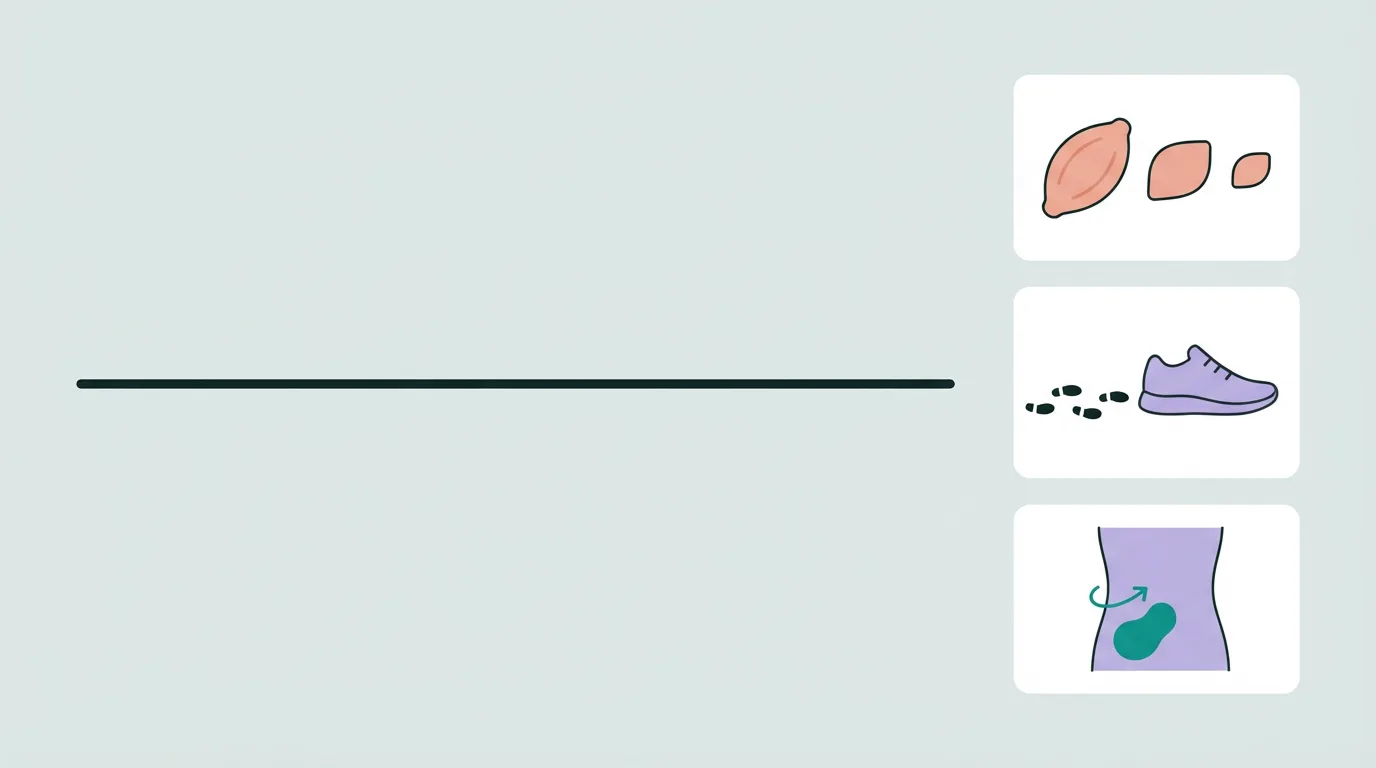
The changes with evidence behind them are building muscle on two strength days a week, moving more through the whole day, eating a portion of protein at each meal and guarding your sleep. Each one works on the parts of calorie burn that actually shift in midlife (how much muscle you carry, how much you move and how much you eat), and none of them needs a product.
Build muscle on two strength days
Of everything people try in order to speed up metabolism after 40, building muscle is the one with measured results behind it. In a trial at the University of Alabama, men and women aged 61 to 77 lifted weights for 26 weeks. They gained about 2 kg of lean mass and 36% in strength, and the calories they burned at rest rose by 6.8%. Their total daily burn rose by 12%, more than the sessions themselves explain, because they also moved more in daily life once they were stronger (Hunter and colleagues, Journal of Applied Physiology, 2000). The trial was small, 15 people, but the Westcott review of many training studies lands in the same place: ten weeks of resistance training may add about 1.4 kg of lean weight, raise resting metabolic rate by about 7% and take off about 1.8 kg of fat.
A 7% rise in the calories you burn at rest will not let you eat whatever you like. The fat loss in those studies came from more muscle, the energy spent in the sessions and the extra activity that being stronger makes easier, all working together.
To get there, train the whole body twice a week. The NHS physical activity guidelines recommend strengthening activities that work all the major muscles on at least two days a week, on top of 150 minutes of moderate activity such as brisk walking. If you are new to it, start with our guide to starting strength training in menopause or the 4-week plan, and move up in weight as the sets and reps guide explains. Muscle grows from work that gets harder over the weeks, so the same light routine repeated for a year will hold your strength without adding much.
Move more between sessions
Two sessions take about an hour of your week. Everyday movement, which researchers call non-exercise activity thermogenesis or NEAT, runs through all the other hours: walking to the shops, taking the stairs, standing to make calls, gardening, even fidgeting. In a Mayo Clinic study, 16 volunteers ate 1,000 extra calories a day for eight weeks. Two thirds of the rise in what they burned came from this kind of movement, and how much of it each person added explained the tenfold spread in how much fat they stored (Levine and colleagues, Science, 1999).
This is the part that slips most quietly when work, family and tiredness keep you sitting. A daily walk at a pace where you can talk but not sing counts as moderate activity in the NHS guidelines, and it is the easiest way to reach the 150 minutes. A step count on your phone is a fair way to see whether a desk-bound week has crept in.
Eat protein at each meal
Protein feeds the muscle the training builds. Older muscle responds less to small servings, and researchers have proposed about 25 to 30 g of high-quality protein at each meal rather than most of the day's protein at dinner (Paddon-Jones and Rasmussen, 2009). Breakfast is where many women fall short, so our high protein breakfast ideas are a good place to start, and the daily protein calculator gives a target for your weight.
Protect your sleep
Short sleep pushes up how much you eat. In a laboratory study, healthy adults allowed four hours in bed for five nights ate about 527 more calories a day than before, much of it late at night, while a group sleeping normally ate the same as usual (Spaeth and colleagues, Nutrients, 2020). Night sweats can break sleep for months around menopause, so a bad week is worth treating as a reason to keep meals regular, and a reason to talk to a GP if it keeps happening.
Why no supplement is advised here
This site does not recommend any supplement, pill or tea to raise your metabolism. The measured gains above come from muscle, movement, food and sleep, and the evidence for products sold to speed up metabolism is thin. The US National Institutes of Health says there is little scientific evidence that weight-loss supplements work, that green tea may help with a small amount of weight at most, and that high-dose green tea extract has been linked to rare but serious liver damage (NIH Office of Dietary Supplements). If you already take one, mention it to your GP or pharmacist at your next visit.
What strength work cannot do
It cannot target the waist. Fat comes off the whole body, and in the trials on deep belly fat, steady aerobic exercise such as brisk walking did more than lifting alone. A mix of both is what the menopause research supports.
It will not outpace a rise in what you eat, and it cannot hold off the slow cell-level decline the Pontzer study found after 60, which persisted even after the authors allowed for muscle mass. Strength work still matters at 60 and beyond, because muscle you keep then is what lets you climb stairs, carry shopping and stay steady on your feet.
The scale may disappoint you at first. Adding muscle while losing fat can leave your weight much the same for weeks. A waist measurement once a month and the weights you can lift tell you more. The 30-second chair stand test is an easy way to follow your leg strength.
What I would do
I would stop blaming metabolism and look at the three things it leaves behind. First, two full-body strength sessions a week, with the weight going up when the last few reps feel easy. Then a brisk walk on most other days. Then I would add protein to breakfast and lunch, the two meals where many women eat the least of it. I would judge the change by a monthly waist measurement and by the weights I can lift after three months, rather than by the scale week to week.
When to see a GP
Weight gain that comes with extreme tiredness, feeling cold more than usual, constipation, dry skin or low mood can be a sign of an underactive thyroid. The NHS says the condition most often starts in women between 30 and 50, that symptoms develop slowly, and that you should see a GP if you think you might have it, since a blood test can check (NHS, Underactive thyroid). If you have not exercised for a long time or live with a health condition, our pre-exercise health check shows when to talk to a GP before you start.