Strength training
Kettlebell exercises for women over 50
Start with four slow moves, the goblet squat, a deadlift from a raised block, a suitcase carry and a one-arm row, and leave the swing until those feel steady. One bell of 6 or 8 kg covers most of them, and the dumbbell finder tells you which.
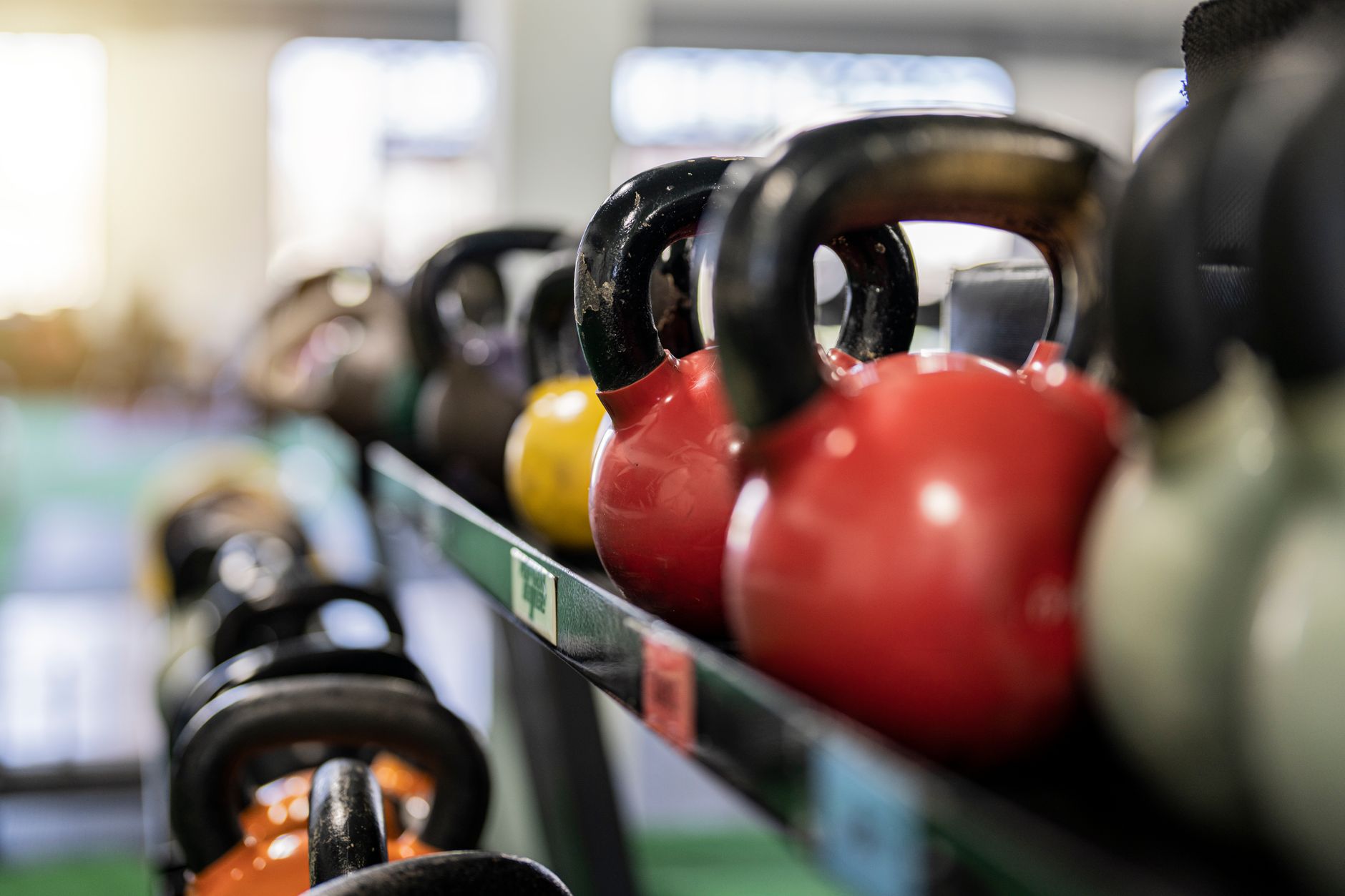
A kettlebell is a cast iron ball with a handle on top, and that handle is what makes it useful at home. You can hold it against your chest, lift it off the floor between your feet or carry it at your side like a bag of shopping, so one bell does the work of several dumbbells for the legs, hips, back and grip. The NHS counts any weight training of this kind towards its two strength days a week (NHS physical activity guidelines for adults).
Do kettlebells work for women over 50?
The best direct evidence comes from a small Australian study called BELL (Meigh and colleagues, BMC Geriatrics, 2022). It recruited 32 inactive adults aged 59 to 79, half of them women, and compared 12 weeks of their usual routine with 12 weeks of supervised kettlebell classes three times a week. After the training block, grip strength had risen by about 7 kg in the right hand and 6 kg in the left, people managed 3.3 more stands in the 30-second chair test, and lean mass in the arms and legs went up by 0.65 kg. Attendance was 91.5%, and the trial logged four adverse events, none of them serious.
Two things limit what that tells you. Everyone acted as their own control instead of being randomised, and the authors note that no clinical guideline for using kettlebells with older adults existed when they started. So the trial shows kettlebell training can be done and does what other resistance training does, without proving it beats dumbbells or bands. If you want to see where you stand before you begin, the grip strength test and the 30-second chair stand test are the two measures the trial moved most that you can take at home.
What weight kettlebell should a woman over 50 use?
For a beginner, a bell of 6 or 8 kg. The BELL researchers handed every participant an 8 kg bell for home sessions on day one, before anyone had learned the moves, and the supervised classes moved people up from there. Harvard Health puts the principle plainly: the right weight depends on the person, and a small, light woman will use a lighter bell than a tall, heavy one (Harvard Health, Should you try kettlebells?).
The moves do not all need the same bell. Carries and deadlifts let you hold more than you can squat or row, because the legs and hips do the lifting and the arms only hang on. To pick a size without guessing, run the dumbbell weight finder with its goblet squat and one-arm row tests. Both moves are the same with a kettlebell, and the finder accepts any test weight you can put on the kitchen scales. Take its squat answer as your first kettlebell, rounded down to the nearest size on sale. If it says 4 or 5 kg, buy 6 kg as well, because you will want it for the deadlift and the carry within a few weeks.
Kettlebells usually go up 2 kg at a time at the light end, and some ranges jump 4 kg. Going from 8 to 12 kg is a 50% increase, far more than the 2 to 10% steps the American College of Sports Medicine suggests. Our progression calculator explains how to bridge a jump like that with extra reps and slower lowering before you change bells.
Five kettlebell exercises for beginners over 50
Do them in this order, after three or four minutes of marching on the spot.
| Move | What it works | Start with |
|---|---|---|
| Goblet squat | Thighs and glutes | 1 set of 8 to 12 |
| Block deadlift | Glutes, hamstrings, back | 1 set of 8 to 12 |
| Suitcase carry | Grip, trunk, hips | 4 walks of about 6 m, each side |
| One-arm row | Upper back and arms | 1 set of 8 to 12 each arm |
| Swing (optional) | Hips, with a fast push | Learn it from a coach first |
1. Goblet squat
Hold the bell by the sides of its handle, upside down or the right way up, close against your chest with your elbows pointing down. Stand with your feet a little wider than your hips and sit back towards a chair until you touch it lightly, then stand. The chair sets a depth you can trust, and holding the weight in front keeps your chest up, which is the main reason a goblet squat is easier to get right than a squat with weights at your sides.
2. Deadlift from a block
Stand the bell on a sturdy step, a couple of yoga blocks or a stack of thick books, so the handle sits around mid-shin. Feet hip-width apart with the bell between them, push your bottom back, bend your knees a little, keep your back straight and take the handle with both hands. Stand up by driving your hips forward, then lower it to the block the same way. Raising the bell shortens how far you have to bend, so you can learn the hip hinge with your spine held long before you ever lift from the floor. Once that feels steady, take away one book at a time.
3. Suitcase carry
Pick up the bell in one hand, the way you would carry a suitcase, and walk about 6 metres, then turn and walk back. Harvard Health's description of this move has you cover the distance four times on each side, with one warning: do not lean to the side. Keeping yourself upright against a weight that pulls you over is what works the trunk, and holding the handle trains the grip that the BELL group improved so much. A carry also counts as balance practice, since every step is taken with weight on one side.
4. One-arm row
Rest your left hand and left knee on a bench or a firm chair seat, right foot on the floor, back flat. Let the bell hang from your right hand, then pull it up towards your hip, elbow close to your side, and lower it slowly. Do all your reps, then swap sides. The supporting hand takes much of the load off your spine, which makes this the safest pulling move for the upper back if you have been told your bones are thin.
5. Swing, last and optional
The swing comes last because it is the fastest and most technical of the five, and you can leave it out entirely.
It is a hip hinge done fast. The bell hangs between your legs at arm's length, you push your hips back so it swings behind you, then snap your hips forward so it floats up to about chest height, arms straight, before it falls back. It trains the hips and raises the heart rate in a way the slow moves do not. It also needs coaching, because a swing pulled up with the arms or the lower back is the version that causes strain. Learn it in a class or with a physiotherapist before you do it alone, and read the next two sections first.
Kettlebells with low bone density: bend at the hips
If a scan has shown osteopenia or osteoporosis, the shape of a move matters more than the weight in your hand. The Royal Osteoporosis Society asks people with weak bones to avoid exercises that round the spine forward under load, such as sit-ups and toe touches, and to bend forward from the hips with a straight back instead, pushing the bottom back as if towards a wall (Royal Osteoporosis Society, How to exercise safely for bones). That hip hinge is the deadlift, the row position and the bottom of the swing, so the same three kettlebell moves are either the movement the Society recommends or the one it warns against, depending on whether your back stays flat or curls.
So the moves above suit low bone density as long as you keep three habits. Lift from a block until your back stays flat at the bottom without you thinking about it. Keep the weight close to your body, since a bell held out in front pulls your spine forward. And put the bell down whenever you feel strain in your back, then go lighter. Harvard Health adds that some experts caution against heavy kettlebells with osteoporosis or osteopenia, and that people at risk of falling take on extra risk with any free weight. Our guide to exercise with osteoporosis sets out the full list of moves to adapt and who should see a physiotherapist first, and bone density scan results explained helps you read the T-score that started the question.
Is the kettlebell swing safe after menopause?
For most women without bone or pelvic floor problems, it can be, once it is learned well. The catch is that it loads you harder than the weight suggests. In novice older adults, a swing with an 8 kg bell produced a higher peak force through the feet than a deadlift with 32 kg, which the BELL authors cite as a reason the swing is useful. The same paper lists the risks clinicians see when older adults use kettlebells, including osteoporotic fractures and, in women, pelvic organ prolapse.
I would leave the swing out if you have had a spinal fracture or several broken bones, if a scan has shown osteoporosis and nobody has watched your hinge, or if you leak or feel heaviness in the pelvis when you cough, lift or jump. Our page on pelvic floor exercises and lifting explains those signs and what to do about them. Without any of those, start with a lighter bell than you deadlift, 5 to 10 swings at a time, and stop the set as soon as the bell drifts forward or your back starts doing the work. If you are new to exercise or have a heart or blood pressure condition, go through the pre-exercise health check before your first session.
How to fit the five moves into your week
The NHS asks for strength work on at least two days a week, and a rest day between the two sessions gives the same muscles time to recover. The US National Institute on Aging suggests one set of 8 to 12 repetitions per exercise to begin with, and says two or three sets may work better once you are used to it (NIA, Three types of exercise). Each set should end at the point where another rep would be hard. It also asks you to breathe out as you lift and never hold your breath, which matters more with a kettlebell than you might think, because the deadlift and the carry make most people brace and stop breathing.
A first session takes about 20 minutes: the warm-up, one set of the squat, deadlift and row, and four carries on each side. Add a second set of each move from the third week if the first set still feels tidy at the end. Our guide to sets, reps and progressive overload explains how hard "hard" should be, and the 4-week strength plan lays out a first month you can follow with a kettlebell in place of the dumbbells.
My take
I'd buy one 8 kg kettlebell before a rack of dumbbells if space is tight, and add a 6 kg one only if the goblet squat or the row is too much at 8. The deadlift from a block is the move I'd spend the first month on, because a straight-backed hinge protects your spine every time you lift shopping out of the car, and the suitcase carry is the one I'd never drop, since it trains grip and balance in the same minute. The swing can wait. Bodyweight sessions, bands and dumbbells do the job too, and if you already have them, the home workout for women over 50 and resistance band exercises will get you just as far.
Comments
No comments yet. Questions and your own experience are welcome.
Thank you. Your comment will appear once it has been reviewed.