Food and protein
High-protein lunch ideas for women over 50
A lunch reaches about 25 g of protein when it is built around one protein food: a tin of tuna, two eggs, a pot of cottage cheese, a block of tofu or a bowl of beans. A tuna and chickpea salad gives 34 g, cottage cheese on whole-wheat toast 29 g and an edamame and chickpea salad 27 g. Below are eleven lunches, six of them meat-free, with protein, fibre and calories worked out for each.
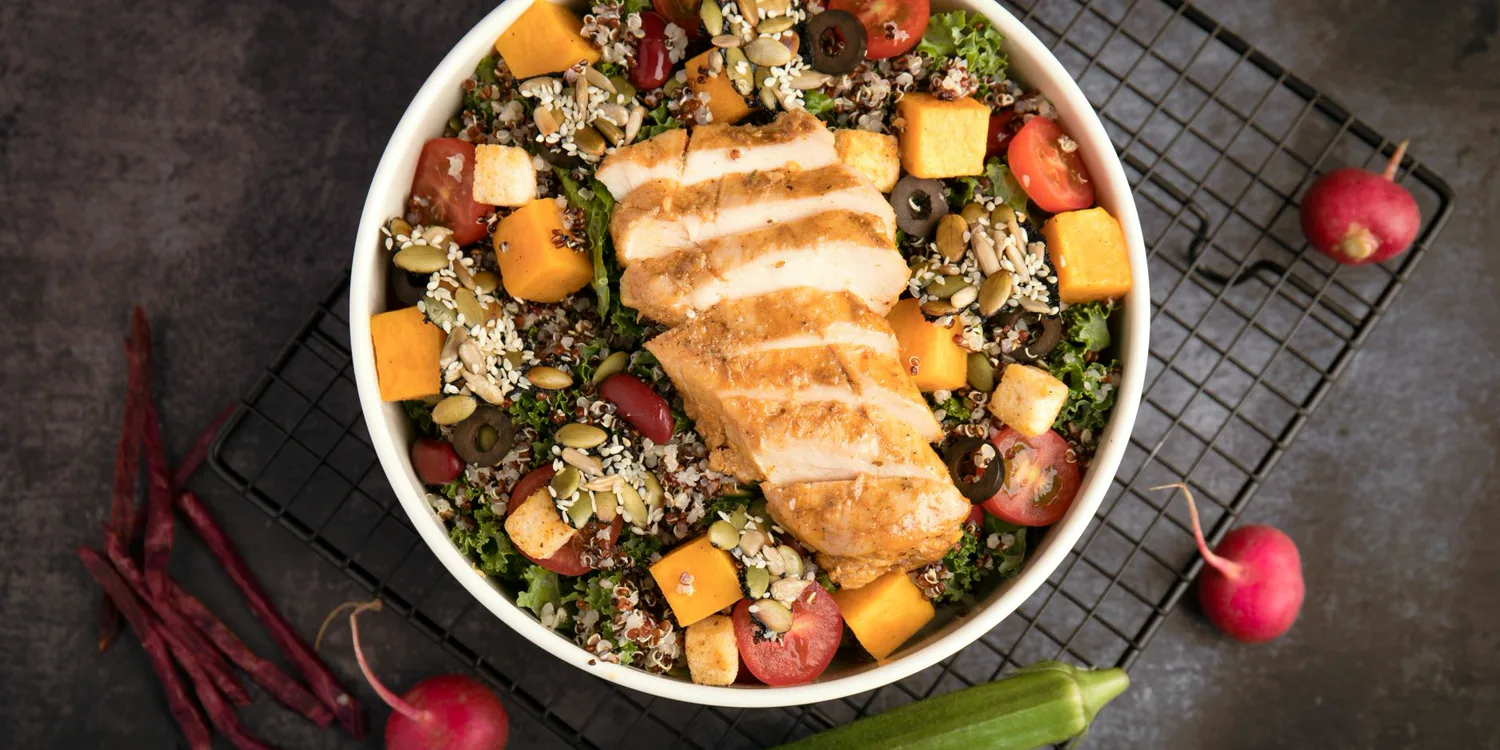
Lunch is where good intentions often turn into a sandwich and a piece of fruit, which lands somewhere around 10 to 15 g of protein. The ideas here keep the shape of an ordinary midday meal and change what goes in it. Five travel in a lunch box, four are made at home in about ten minutes, and two are vegan. Further down are lighter versions with the most protein per calorie, seven lunches under 20 g of carbohydrate, and a week of lunches cooked ahead that stays inside food safety limits. Every figure comes from the US Department of Agriculture's FoodData Central database (the SR Legacy tables), scaled to the weights given, and calories are counted before any dressing or oil.
Why aim for about 25 g at lunch
Muscle responds to protein meal by meal. Reviewing the feeding studies, Douglas Paddon-Jones and Blake Rasmussen concluded that 25 to 30 g of high-quality protein in one meal gives the largest muscle-building response a meal can, and that older muscle responds poorly to meals with less than about 20 g (Paddon-Jones and Rasmussen, 2009). A pooled analysis of older adults put the figure at roughly 0.40 g per kilogram of body weight in one serving, which for a woman of 65 kg comes to 26 g (Moore and colleagues, Journals of Gerontology, 2015).
Most people already eat their largest serving of protein in the evening, a pattern the authors of one widely cited trial built their study around (Mamerow and colleagues, 2014). Whether spreading it evenly matters for muscle is still argued over. Lunch is still the easiest place to find extra grams, because the meal that usually leans on bread and salad has the most room to change.
Eleven lunches with about 25 g of protein
Weights are drained weights for tins and cooked weights for grains, beans and meat. A slice of bread is counted as 35 g. Fibre is in the table because protein foods like fish, eggs and cheese carry none, and the lunches with beans make up for that.
| Lunch and what goes in it | Protein | Fibre | Calories |
|---|---|---|---|
| Tuna and chickpea salad100 g tuna in water, 100 g chickpeas, salad leaves | Protein: 34 g | Fibre: 8 g | Calories: 280 |
| Chicken and quinoa salad80 g roast chicken breast, 120 g quinoa, 100 g broccoli | Protein: 32 g | Fibre: 7 g | Calories: 311 |
| Egg and lentil salad2 hard-boiled eggs, 150 g lentils | Protein: 26 g | Fibre: 12 g | Calories: 329 |
| Turkey and hummus sandwich100 g sliced turkey breast, 40 g hummus, 2 slices whole-wheat bread | Protein: 27 g | Fibre: 6 g | Calories: 377 |
| Black bean bowl150 g black beans, 40 g cheddar, 50 g Greek yoghurt | Protein: 27 g | Fibre: 13 g | Calories: 396 |
| Cottage cheese on toast200 g cottage cheese, 2 slices whole-wheat toast | Protein: 29 g | Fibre: 4 g | Calories: 338 |
| Sardines on toast90 g sardines with bones, 1 slice whole-wheat toast | Protein: 26 g | Fibre: 2 g | Calories: 275 |
| Smoked salmon toast60 g smoked salmon, 100 g cottage cheese, 2 slices whole-wheat toast | Protein: 30 g | Fibre: 4 g | Calories: 328 |
| Lentil soup and cheese toast200 g lentils in stock, 1 slice whole-wheat toast, 20 g cheddar | Protein: 27 g | Fibre: 18 g | Calories: 401 |
| Tofu and edamame rice bowl100 g firm tofu, 80 g edamame, 100 g brown rice | Protein: 30 g | Fibre: 8 g | Calories: 364 |
| Edamame and chickpea salad150 g edamame, 100 g chickpeas | Protein: 27 g | Fibre: 15 g | Calories: 346 |
Source for every row: USDA FoodData Central, SR Legacy entries for each food, scaled to the weights shown. Vegetables, herbs, lemon and vinegar add little and are left out.
High-protein lunches for work you can pack the night before
The first five rows of the table are built to sit in a box until one o'clock. The tuna salad is the most forgiving: a tin of tuna and half a tin of chickpeas need no cooking, and a squeeze of lemon with a little olive oil keeps them from drying out. The chicken and quinoa salad is a good use of a Sunday roast, and quinoa holds its texture overnight better than rice or pasta.
For the egg and lentil salad, boil the eggs while you open a pouch of ready-cooked lentils. It carries 12 g of fibre, the most of any packed lunch except the black bean bowl. The turkey and hummus sandwich is for days when you want bread in your hand, and the two slices of whole-wheat bread give almost 9 g of its protein. The bean bowl tastes just as good cold, with the cheddar grated over and the yoghurt spooned on as a dressing.
Keeping a packed lunch safe
Meat, fish, eggs, tofu, cheese, yoghurt and cooked rice or pasta all belong in the group that has to stay cold. University of Nebraska food safety guidance, drawn from the USDA, says bacteria multiply quickly between 40 and 140 °F (about 4 to 60 °C) after two hours, or after one hour above 90 °F (University of Nebraska, Packed lunch safety). If you pack the night before, keep the box in the fridge until you leave, carry it in an insulated bag with a frozen gel pack, and put it in a work fridge if there is one. Bread, nuts and whole, unpeeled fruit are fine at room temperature, so add them in the morning.
High-protein meal-prep lunches for the week
Cooking once for several lunches works as long as each food goes into the fridge quickly and is eaten before its time runs out. The US storage chart that Clemson University's extension service publishes gives 3 to 4 days at 40 °F (4 °C) for cooked chicken, meat and fish, 3 to 5 days for egg, chicken or tuna salads, and a week for hard-boiled eggs (Clemson Home and Garden Information Center, Leftovers). The UK Food Standards Agency sets a shorter limit. It says to eat leftovers within 48 hours or freeze them (FSA, How to chill, freeze and defrost food safely), and to eat cooked rice within 24 hours, chilling it within an hour of cooking if you can (FSA, Home food fact checker).
One plan can respect both if the cooked food covers two days and the rest of the week leans on tins, eggs and the freezer. A working week built from the lunches in the table:
- Sunday: roast two chicken breasts, cook a pan of quinoa, boil six eggs and make a pot of lentil soup, then freeze the soup in single portions.
- Monday and Tuesday: the chicken and quinoa salad, boxed on Sunday evening.
- Wednesday: the egg and lentil salad, using Sunday's eggs and a pouch of lentils opened that morning.
- Thursday: the tuna and chickpea salad from two tins, with nothing to cook.
- Friday: one frozen portion of the soup, moved from the freezer to the fridge on Thursday night and reheated until it steams.
Two habits from the same guidance make batch cooking safer. Get cooked food into the fridge within one to two hours, and divide soups and stews into shallow containers no more than about 5 cm (2 inches) deep so the middle cools as fast as the edges. Clemson also suggests writing the date on a strip of tape on each box, which saves guessing on day three. I would keep leaves, dressing and anything crunchy in a separate pot until the morning, since a salad dressed on Sunday is limp by Tuesday.
Lunches at home in about ten minutes
On a day at home, toast is the quickest base. Cottage cheese piled on two slices of whole-wheat toast gives 29 g, more than most people expect, because 200 g of cottage cheese alone has 21 g. Smoked salmon on the same toast with a thinner layer of cottage cheese reaches 30 g and feels more like a treat.
Sardines on toast is the cheapest lunch here and does a second job. Tinned sardines eaten with their soft bones are an oily fish and a source of calcium, which the NHS points out in its guidance on fish (NHS, Fish and shellfish). Mash them with lemon and black pepper so the bones disappear into the spread. Our guide to calcium and vitamin D from food after menopause lists other good sources.
Lentil soup takes longer the first time and no time after that. A pot made with red lentils, onion and stock freezes in portions, and one bowl with a slice of cheese on toast gives 27 g of protein and 18 g of fibre, more than half of the 30 g a day the NHS suggests for adults (NHS, How to get more fibre into your diet).
Meatless and vegan high-protein lunches
Six of the eleven lunches contain no meat or fish. Four rely on eggs or dairy, and the last two in the table are fully vegan. Soy foods do most of the work in a vegan lunch: 100 g of firm tofu made with calcium sulphate has 17 g of protein, and frozen edamame, which you can defrost in a sieve under hot water, has 12 g per 100 g. A meta-analysis of nine trials found that soy protein produced the same gains in strength and lean mass as animal protein in people doing resistance training (Messina and colleagues, 2018).
Beans and lentils alone rarely get a lunch to 25 g without a very large bowl, because they hold about 9 g of protein per 100 g. Pairing them works better. Chickpeas with edamame, beans with cheddar and yoghurt, and lentils with eggs all pass the mark at a portion that fits in an ordinary lunch box, and these pairings carry more fibre than any other lunch on the list. The high-protein foods list filters to vegan or vegetarian foods and shows how many portions of each make 25 g, which helps when you plan a pairing of your own.
Low-calorie, high-protein lunch ideas
When you are eating fewer calories, the number to compare is grams of protein per 100 kcal. The lunches that score highest pair a lean protein food with vegetables. Chicken breast, tuna in water and smoked salmon carry little fat, and boiled broccoli or green beans fill the box for about 35 kcal per 100 g. Four of the lunches below reach 25 g of protein or more for under 230 kcal.
| Lunch | Protein | Calories | Protein per 100 kcal |
|---|---|---|---|
| Chicken and broccoli | Protein: 33 g | Calories: 200 | Per 100 kcal: 17 g |
| Tuna and egg salad | Protein: 34 g | Calories: 229 | Per 100 kcal: 15 g |
| Tuna, half the chickpeas | Protein: 30 g | Calories: 198 | Per 100 kcal: 15 g |
| Salmon and cottage cheese | Protein: 27 g | Calories: 192 | Per 100 kcal: 14 g |
| Tuna and chickpea salad | Protein: 34 g | Calories: 280 | Per 100 kcal: 12 g |
| Chicken and quinoa salad | Protein: 32 g | Calories: 311 | Per 100 kcal: 10 g |
| Sardines on toast | Protein: 26 g | Calories: 275 | Per 100 kcal: 9 g |
| Lentil soup and toast | Protein: 27 g | Calories: 401 | Per 100 kcal: 7 g |
The first four rows are worked out in the low-carb table further down, the rest come from the eleven lunches above, all from the same USDA SR Legacy entries. Calories are counted before any dressing. A tablespoon of olive oil adds about 120 kcal and can take the leanest box here into the middle of the table, while lemon juice, vinegar or a spoonful of Greek yoghurt adds very little. The soup and the black bean bowl sit at the bottom on this measure and still carry the most fibre of any lunch on the page, so a lighter week can keep one of them. The high-protein foods list sorts by grams per 100 kcal if you want to build your own.
Protein at lunch helps with the mid-afternoon hunger that ends at the biscuit tin. A 2024 meta-analysis of 49 trials found that protein eaten before or with a meal reduced appetite and the amount people ate at that meal, though the weight effects of high-protein diets faded after six to twelve months (Anjom-Shoae and colleagues, 2024). How your weight moves over months depends on the calories across the whole day. The calorie calculator for women over 50 gives a daily figure to plan around, and the protein target does not drop when the calories do.
Low-carb, high-protein lunches under 20 g of carbs
Most of the carbohydrate in an ordinary lunch sits in the bread, grains and beans around the protein. One slice of whole-wheat bread holds about 15 g, 120 g of cooked quinoa about 26 g and 100 g of chickpeas 27 g. Tuna, chicken, sardines and smoked salmon have none in the USDA tables, and an egg about half a gram. Swap the starch for green vegetables and a lunch falls under 20 g of carbohydrate while keeping its protein.
Low carb has no single agreed definition. A 2026 clinical review describes ordinary low-carbohydrate eating as roughly 50 to 150 g a day, and very low-carbohydrate diets, which often bring on ketosis, as 20 to 50 g (Oh and Daley, Low-Carbohydrate Diet, StatPearls, 2026). A lunch of 4 to 14 g sits comfortably inside either range.
| Lunch | What goes in it | Protein | Carbs | Calories |
|---|---|---|---|---|
| Tuna and egg salad | 100 g tuna in water, 1 egg, 100 g green beans | Protein: 34 g | Carbs: 8 g | Calories: 229 |
| Chicken and broccoli | 100 g roast chicken breast, 100 g broccoli | Protein: 33 g | Carbs: 7 g | Calories: 200 |
| Salmon and cottage cheese | 60 g smoked salmon, 150 g cottage cheese | Protein: 27 g | Carbs: 7 g | Calories: 192 |
| Sardines and egg | 90 g sardines, 1 egg, 100 g spinach | Protein: 31 g | Carbs: 4 g | Calories: 288 |
| Tofu and edamame | 100 g firm tofu, 80 g edamame | Protein: 27 g | Carbs: 10 g | Calories: 241 |
| Egg and edamame | 2 hard-boiled eggs, 120 g edamame | Protein: 27 g | Carbs: 12 g | Calories: 300 |
| Tuna, half the chickpeas | 100 g tuna in water, 50 g chickpeas | Protein: 30 g | Carbs: 14 g | Calories: 198 |
Carbs are total carbohydrate with fibre included, from the USDA SR Legacy entries for each food. Green beans, broccoli and spinach are weighed after boiling, an egg is counted as 50 g, and the cottage cheese is the 2% fat kind.
Cutting the carbs in the first eleven
The tuna and chickpea salad keeps most of its protein with half the chickpeas: 50 g instead of 100 g takes it from 27 g of carbohydrate to 14 g and still leaves 30 g of protein. Smoked salmon with its cottage cheese is just as good eaten from a bowl with cucumber as piled on toast, and dropping the two slices saves about 30 g. The bean bowl, the lentil soup and the tofu rice bowl are harder to trim, because the beans, lentils and rice make up most of the bowl and nearly all of its fibre. On a low-carb day, swap them for another lunch rather than shrinking them.
Fibre is what a low-carb box is most likely to lose. Fish, eggs, chicken and cottage cheese have none, so the vegetables in the box carry it all, and edamame helps more than most: 100 g has 5.2 g of fibre for under 9 g of carbohydrate. The high-fibre foods list shows what else adds fibre without much starch.
How lunch fits your daily protein
The PROT-AGE expert group suggested 1.0 to 1.2 g of protein per kilogram a day for healthy older adults (Bauer and colleagues, 2013). For a woman weighing 65 kg the lower end is 65 g. A 27 g lunch and a 30 g dinner leave less than 10 g for the rest of the day, which a pot of yoghurt at breakfast covers. The daily protein calculator works out your own target from your weight and how much you train.
The other meals have their own guides. The high-protein breakfast builder counts the grams on a morning plate, high-protein dinner ideas gives twelve plates of 28 to 34 g, and high-protein snacks covers the gaps between them. If you train at lunchtime, what to eat before and after strength training explains how to time the meal around the session.
My take
I would start with the tuna salad for work days and cottage cheese on toast for days at home, because neither needs cooking and both clear 25 g with room to spare. Once those are habits, I would make a pot of lentil soup on a weekend and freeze it, since it is the lunch that does most for fibre. On a lighter or lower-carb day I would reach for chicken and broccoli, which gives the most protein for its calories of anything on this page, and for meal prep I would cook for two days at a time rather than five, so the boxes stay inside the UK's 48 hours. And I would weigh the tuna, beans and cottage cheese once with kitchen scales, just to learn what 100 g or 200 g looks like in a bowl, then judge by eye after that.
When to talk to your GP or a dietitian
If you have chronic kidney disease, ask before eating more protein: the PROT-AGE group says people with severe kidney disease who are not on dialysis may need to limit it. If you take medicine for diabetes, talk to your GP before cutting carbohydrate hard, because the StatPearls review notes that a low-carb diet can change how much medicine some people need. A registered dietitian can help if you live with diabetes, a food allergy or coeliac disease, or follow a vegan diet and find the gram counts hard to reach. The reasoning behind the numbers is in protein after menopause, and every guide on eating for strength is under food and protein.