Food and protein
High-protein dinner ideas for women over 50
A dinner reaches the 25 to 30 g of protein per meal that muscle research points to when one food on the plate is there for its protein. A palm-sized salmon fillet with quinoa gives 32 g, and so does a prawn stir-fry with brown rice, while a turkey and black bean chilli gives 34 g and a bowl of lentil dal with two eggs 31 g. Below are twelve such dinners, five of them vegetarian, then ten low-carb plates under 20 g of carbohydrate, with the grams and calories worked out for each.
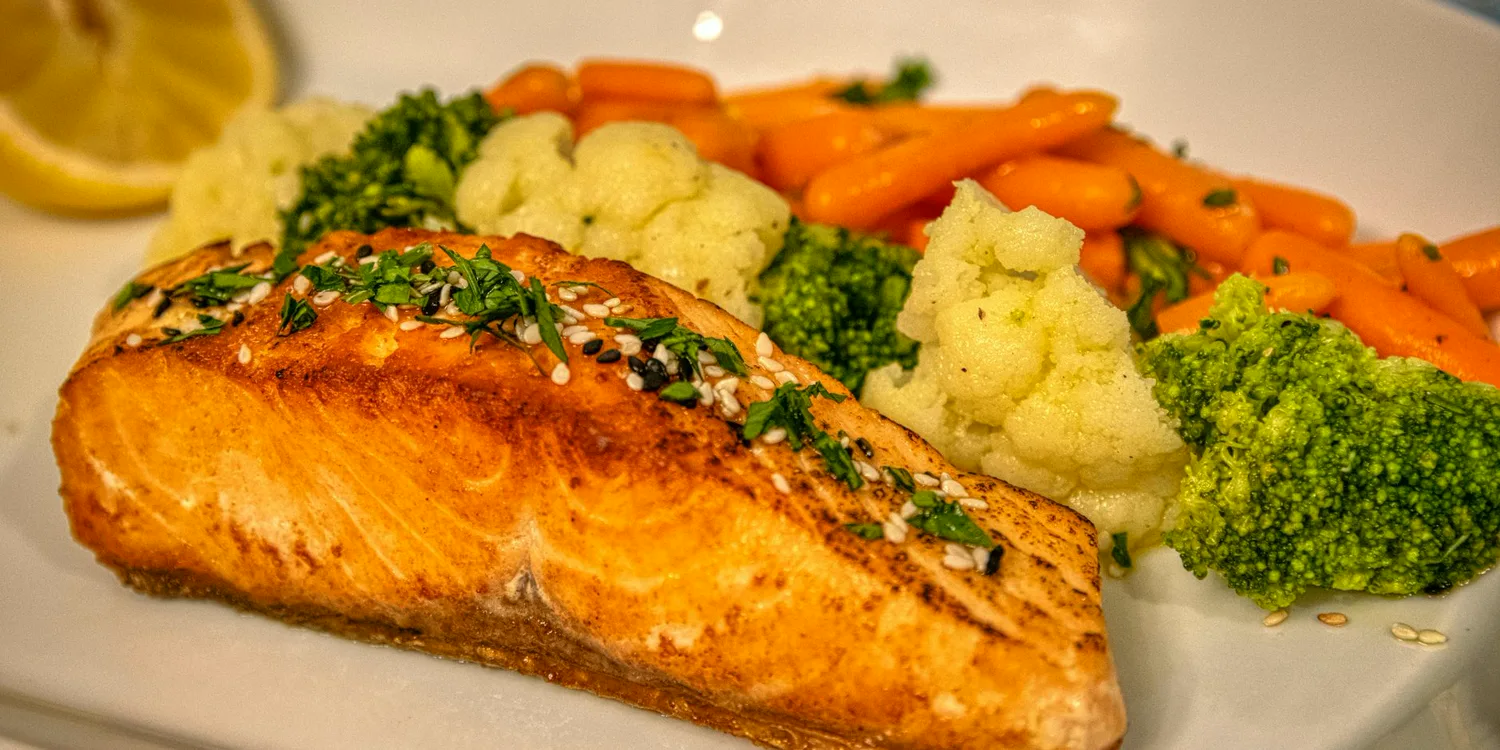
Dinner is the meal most women already get right for protein. The trouble is usually the size of the portion on a busy evening, or a vegetarian plate built mostly from pasta. This page gives twelve plain dinners, each built so the plate lands between 28 and 34 g, using portions you would serve anyway, then the versions for three common evenings: cutting carbs, cutting calories, and cooking for a family. Every figure comes from the US Department of Agriculture's FoodData Central database (the SR Legacy tables), scaled to the weights in the table, and calories are counted before any cooking oil.
Why 25 to 30 g a plate
The figure comes from Douglas Paddon-Jones and Blake Rasmussen at the University of Texas Medical Branch. Reviewing the feeding studies, they concluded that about 25 to 30 g of high-quality protein in one meal gives the largest muscle-building response a meal can, in older people as well as younger ones, and that older muscle responds poorly to meals under about 20 g (Paddon-Jones and Rasmussen, Current Opinion in Clinical Nutrition and Metabolic Care, 2009). They also found that a serving of beef holding 90 g of protein did no more for muscle than one holding 30 g. Paddon-Jones has received funding from beef and dairy trade bodies, which the paper discloses.
For dinner, that has a practical meaning. Most people eat the bulk of their protein in the evening, and a large steak or a heaped plate of chicken goes well past what muscle can use from one sitting. A plate of 25 to 30 g does the job, and the grams you save are better spent at breakfast, which is where most diets come up short.
Does spreading protein over the day matter?
The evidence is split. In a small crossover trial, eight healthy adults in their late 30s ate the same daily protein either as about 30 g at each of three meals or skewed to 11, 16 and 63 g, with most of it at dinner. Muscle protein synthesis over 24 hours was 25% higher on the even pattern (Mamerow and colleagues, Journal of Nutrition, 2014). A later Danish trial in 24 men and women aged 65 to 80 found no difference in muscle protein synthesis between an even and a skewed pattern over three trial days (Justesen and colleagues, Nutrients, 2022), and a meat ingredients company helped fund it. Neither trial ran long enough to measure muscle size or strength.
What both groups of researchers agree on is that the daily total comes first. So treat 25 to 30 g at dinner as the target for this one meal, and use the daily protein calculator to see how much you need in a whole day.
Twelve dinners with 25 g of protein or more
The table runs from fish through meat to vegetarian plates. Weights are cooked weights, except the pork, which is weighed raw because that is how the pack is labelled. Grams and calories are rounded to whole numbers. To swap one food for another, the high-protein foods list gives the protein in a normal serving of 33 foods and sorts them by grams per 100 calories.
| Dinner | What is on the plate | Protein | Calories |
|---|---|---|---|
| Salmon with quinoa | 110 g salmon, 120 g quinoa, 100 g broccoli | Protein: 32 g | Calories: 406 |
| Baked cod and rice | 110 g cod, 150 g brown rice, 100 g broccoli | Protein: 32 g | Calories: 336 |
| Prawn stir-fry | 110 g cooked prawns, 120 g brown rice, 100 g broccoli | Protein: 32 g | Calories: 292 |
| Chicken thigh tray bake | 110 g thigh meat with skin, 150 g broccoli | Protein: 29 g | Calories: 308 |
| Turkey and bean chilli | 90 g turkey mince, 80 g black beans, 100 g brown rice | Protein: 34 g | Calories: 411 |
| Beef ragu with pasta | 80 g browned 85% lean mince, 150 g whole-wheat pasta | Protein: 30 g | Calories: 424 |
| Pork tenderloin | 130 g tenderloin (raw weight), 100 g brown rice, 100 g broccoli | Protein: 32 g | Calories: 300 |
| Tofu stir-fry | 150 g firm tofu, 120 g brown rice, 100 g broccoli | Protein: 32 g | Calories: 399 |
| Tempeh and quinoa bowl | 120 g tempeh, 120 g quinoa | Protein: 30 g | Calories: 374 |
| Lentil dal with eggs | 200 g cooked lentils, 2 hard-boiled eggs | Protein: 31 g | Calories: 387 |
| Cheese omelette | 3 eggs, 30 g cheddar, 1 slice wheat toast | Protein: 29 g | Calories: 441 |
| Chickpea curry | 200 g cooked chickpeas, 100 g plain Greek yoghurt | Protein: 28 g | Calories: 401 |
Source for every row: USDA FoodData Central, SR Legacy entries for each food, scaled to the weights shown. Sauces, onions, tomatoes and spices add a gram or two and are left out.
Fish and seafood dinners
White fish and prawns give the most protein for the fewest calories of anything here. A 110 g fillet of baked cod carries 25 g on its own, and cooked prawns, which the USDA lists at 24 g per 100 g, reach the same with a handful more. Salmon has a little less protein per gram and about twice the calories of cod, because of its oil. The NHS suggests two portions of fish a week, one of them oily (NHS, Fish and shellfish), so a salmon night and a cod or prawn night cover that between them.
Frozen fillets and frozen cooked prawns keep for weeks, which makes fish the dinner you can make on a night when the fridge is bare.
Chicken, turkey, beef and pork
Chicken thigh with the skin on has a little less protein than breast and more fat, yet a tray bake of thighs and broccoli still reaches 29 g. If you prefer breast, 80 g of roast breast gives the same 25 g as 110 g of thigh. Turkey mince is the leanest way to make a chilli or a bolognese, and adding a tin of black beans stretches four portions to five while bringing fibre.
Pork tenderloin is one of the leanest cuts in the shop, at 21 g of protein and about 110 calories per 100 g raw. Beef mince at 85% lean, browned and drained, gives 26 g per 100 g, so a ragu made with 80 g a portion is enough. That is far less than the 200 g or more that often goes into a pan for two.
Vegetarian high-protein dinners
A vegetarian dinner needs one food on the plate that is there for its protein. Pasta, rice and vegetables alone rarely pass 15 g. Tofu and tempeh are the most concentrated options: 150 g of firm tofu gives 26 g, and the calcium-set kind adds a good share of a day's calcium as well. Tempeh, made from whole fermented soybeans, has 20 g per 100 g and a firmer, nuttier bite that holds up in a bowl with quinoa.
Soy protein appears to do as much for muscle as animal protein when people strength train: a 2018 meta-analysis of nine trials found no difference in strength or lean mass gains between soy and animal protein (Messina and colleagues, International Journal of Sport Nutrition and Exercise Metabolism, 2018). Lentils and chickpeas are cheaper and bring 15 g or more of fibre to the plate, but they hold less protein per bite, so the dal gets two boiled eggs and the chickpea curry a spoonful of thick Greek yoghurt stirred through at the end. If you eat no eggs or dairy, swap them for 100 g of tofu cubes, which adds about 17 g.
High-protein, low-carb dinner ideas
Meat, fish and eggs carry almost no carbohydrate, so a low-carb dinner is mostly a matter of what sits beside the protein. Take away the rice, pasta and beans and put green vegetables in their place, and every plate below stays under 20 g of carbohydrate while still reaching 27 to 37 g of protein. There is no agreed definition of a low-carb diet: a 2026 clinical review describes ordinary low-carb eating as about 50 to 150 g of carbohydrate a day, and the very low-carb diets that bring on ketosis as 20 to 50 g (Oh and Daley, Low-Carbohydrate Diet, StatPearls, 2026). A dinner of 6 to 16 g leaves plenty of room inside either range.
| Dinner | What is on the plate | Protein | Carbs | Calories |
|---|---|---|---|---|
| Garlic prawns | 120 g cooked prawns, 200 g courgette | Protein: 31 g | Carbs: 6 g | Calories: 149 |
| Cod and yoghurt | 130 g cod, 50 g Greek yoghurt, 150 g green beans | Protein: 37 g | Carbs: 14 g | Calories: 227 |
| Salmon and greens | 120 g salmon, 100 g broccoli, 100 g spinach | Protein: 32 g | Carbs: 11 g | Calories: 305 |
| Roast chicken | 100 g chicken breast, 200 g cauliflower (raw) | Protein: 35 g | Carbs: 10 g | Calories: 215 |
| Pork and broccoli | 130 g tenderloin (raw weight), 150 g broccoli | Protein: 31 g | Carbs: 11 g | Calories: 194 |
| Turkey stir-fry | 100 g turkey mince, 150 g green beans | Protein: 30 g | Carbs: 12 g | Calories: 256 |
| Bunless burger | 100 g 85% lean patty, 20 g cheddar, 100 g spinach | Protein: 34 g | Carbs: 4 g | Calories: 354 |
| Tofu and broccoli | 150 g firm tofu, 150 g broccoli | Protein: 30 g | Carbs: 15 g | Calories: 269 |
| Tempeh and broccoli | 120 g tempeh, 100 g broccoli | Protein: 27 g | Carbs: 16 g | Calories: 265 |
| Spinach omelette | 3 eggs, 30 g cheddar, 100 g spinach | Protein: 29 g | Carbs: 6 g | Calories: 376 |
Figures are from the same USDA SR Legacy entries as the twelve dinners above, with vegetables weighed after boiling unless marked raw. The carbohydrate column is total carbohydrate, fibre included, and the eggs are counted at the USDA's values for a 50 g egg.
Turning the first twelve into low-carb plates
Most of the plates in the first table only need their starch swapped. The salmon, cod, prawn and pork dinners get nearly all their carbohydrate from the quinoa or brown rice, and replacing it with another 100 g of broccoli costs about 7 g. The chilli is the exception worth knowing: served without rice, its 80 g of beans still bring 19 g of carbohydrate, so it sits just inside the line with 32 g of protein, and the beans keep their fibre on the plate.
The salmon plates earn a place in the week for another reason. Salmon counts as an oily fish, and the NHS asks adults to eat at least one portion of oily fish a week. Our guide to fats after menopause explains why that portion, and less saturated fat on the rest of the plate, matters for cholesterol around the last period.
Vegetarian plates are harder to keep low in carbohydrate, because lentils and chickpeas are mostly starch. Tofu is the easiest route: 150 g holds about 4 g of carbohydrate against 26 g of protein. Tempeh holds more, at nearly 8 g per 100 g, and eggs almost none, which is why the omelette comes in at 6 g once the toast is left off.
Easy high-protein dinners in about 15 minutes
Four of the twelve are quick enough for a tired evening. The omelette is the fastest. The prawn stir-fry uses prawns that are already cooked, so they only need heating through with a bag of stir-fry vegetables and a pouch of microwave brown rice. Tofu goes the same way: press it in a clean tea towel for a few minutes, cube it, and fry it until the edges colour.
The lentil dal takes about 15 minutes from tinned lentils, and the eggs can be boiled at the same time in a second pan. Cooking a double batch of chilli or ragu on a Sunday gives you two more of these evenings, because both freeze well in portions.
High-protein family dinners that scale
A family dinner works when the protein food is counted per person and the starch is left to each eater. Cook the chicken, fish, mince or tofu for everyone, serve the rice, pasta, potatoes or tortillas in their own dish, and your own plate can be the low-carb version while a teenager takes a double helping of rice from the same pan.
Scaling is easiest with foods sold by weight. Pork tenderloin is labelled raw at about 21 g of protein per 100 g, so a 500 g tenderloin holds about 105 g, which gives four adults about 26 g each. For a chilli or ragu, multiply the cooked portion in the table by the number of adults: a chilli for four needs 360 g of cooked turkey mince and 320 g of cooked beans. Weigh the cooked meat from your usual pack once, and from then on you know how many plates it makes.
Three formats feed a table of four or five with little extra work:
- A tray bake of chicken thighs, broccoli and cauliflower, at about 110 g of cooked thigh meat per adult, with a tray of potatoes beside it for whoever wants them.
- Build-your-own bowls or tacos: one bowl of turkey mince or prawns, one of black beans, one of rice, and a pot of Greek yoghurt in place of soured cream.
- A large tofu or prawn stir-fry with the noodles or rice cooked separately and added at the table.
Children's portions will be smaller than yours and a teenager's may be larger. For portions you can judge by eye without scales, MedlinePlus counts about 7 g of protein in each ounce of meat or fish (roughly 28 g), each egg, each quarter cup of tofu and each half cup of cooked beans or lentils (MedlinePlus, Protein in diet).
Low-calorie, high-protein dinners
If you are eating fewer calories, the useful measure is how many grams of protein a plate gives for every 100 kcal. Four of the low-carb plates reach 16 g or more on that count and come in under 230 kcal for the whole plate, because white fish, prawns, chicken breast and pork tenderloin carry very little fat.
| Dinner | Protein | Calories | Protein per 100 kcal |
|---|---|---|---|
| Garlic prawns | Protein: 31 g | Calories: 149 | Per 100 kcal: 21 g |
| Cod and yoghurt | Protein: 37 g | Calories: 227 | Per 100 kcal: 16 g |
| Roast chicken | Protein: 35 g | Calories: 215 | Per 100 kcal: 16 g |
| Pork and broccoli | Protein: 31 g | Calories: 194 | Per 100 kcal: 16 g |
| Prawn stir-fry with rice | Protein: 32 g | Calories: 292 | Per 100 kcal: 11 g |
| Beef ragu with pasta | Protein: 30 g | Calories: 424 | Per 100 kcal: 7 g |
The beef ragu and the cheese omelette sit at the bottom of either table, at about 7 g per 100 kcal, because mince, cheese and egg yolk carry more fat. Salmon lands in the middle at about 10 g, and it is still worth its place as the oily-fish portion the NHS suggests each week. Even the twelve starch-based plates come in under 450 calories before oil, and a tablespoon of oil adds about 120, so measure it rather than pouring. To build your own lean plate, sort the high-protein foods list by grams per 100 kcal: prawns, tuna and cod come out on top.
Protein helps with hunger in the short run. A 2024 meta-analysis of 49 trials found that protein eaten before or with a meal reduced appetite and how much people ate, while the weight effects of high-protein diets tended to fade after six to twelve months (Anjom-Shoae and colleagues, Frontiers in Endocrinology, 2024). What the scales show over months still comes down to calories across the whole day. The calorie calculator for women over 50 gives you a daily figure to plan dinner around, and your protein target stays where it was when the calories come down.
How dinner fits your daily target
Take a woman of 65 kg aiming at 1.0 g per kilogram, the lower end of what the PROT-AGE expert group suggested for older adults (Bauer and colleagues, 2013). She needs about 65 g a day. A 30 g dinner covers almost half of it, which leaves 35 g for breakfast and lunch together. A pot of Greek yoghurt with oats in the morning and a tuna sandwich at lunch would get her there with room to spare, and the high-protein lunch ideas give eleven more midday meals of about 25 g.
If breakfast is toast and tea, the gap opens before the day has started. The high-protein breakfast builder counts the grams for a morning plate, high-protein snacks lists fifteen ways to add 10 g or more in between, and the 7-day menopause meal plan lays out a whole week with protein at each meal. For the reasoning behind the numbers, read protein after menopause.
Dinner after an evening workout
If you train after work, dinner is your recovery meal, and there is no need for a separate snack. Older muscle needs a larger single serving than younger muscle to respond fully, around 0.40 g per kilogram in a pooled analysis of older adults, which works out at 26 g for a woman of 65 kg (Moore and colleagues, Journals of Gerontology, 2015). Every plate in the table meets that. The timing advice for earlier sessions is in what to eat before and after strength training.
My take
I would pick three of these and rotate them on weeknights before adding more: the prawn stir-fry for speed, the turkey chilli because it freezes, and the tofu stir-fry so at least one night a week is meat-free. I would weigh the protein food once or twice with kitchen scales, because a portion you guess at is often 20 or 30 g short. If you are cutting carbs, I would start with the prawns and courgette and the roast chicken with cauliflower, since both are as quick as the rice versions, and in a family I would keep the starch in its own dish rather than cooking two dinners. And I would not buy a bigger steak to chase a number. If your daily total comes up short, the grams are cheaper to find at breakfast, where most women eat the least.
When to talk to your GP or a dietitian
If you have chronic kidney disease, ask before raising your protein: the PROT-AGE group itself says people with severe kidney disease who are not on dialysis may need to limit it. If you take medicine for diabetes, talk to your GP before cutting carbohydrate sharply, because the StatPearls review notes that a low-carb diet can change how much medicine some people need. A registered dietitian can also help if you live with diabetes or a food allergy, or follow a vegan diet and struggle to reach the gram counts. More on eating for strength sits under food and protein, including calcium and vitamin D from food and the Mediterranean diet in menopause.