Strength training
Hip strengthening exercises for women over 50
The hip exercises that NHS pages point to are simple: bridges, standing side and back leg lifts, supported squats and getting up from a chair, done slowly two or three times a week. They fit the hip pain that often turns up around menopause: for arthritis they ease pain and stiffness a little, and for pain on the outside of the hip a guided programme of exercise and advice did better than a steroid injection in a trial where most of the patients were women in their fifties.
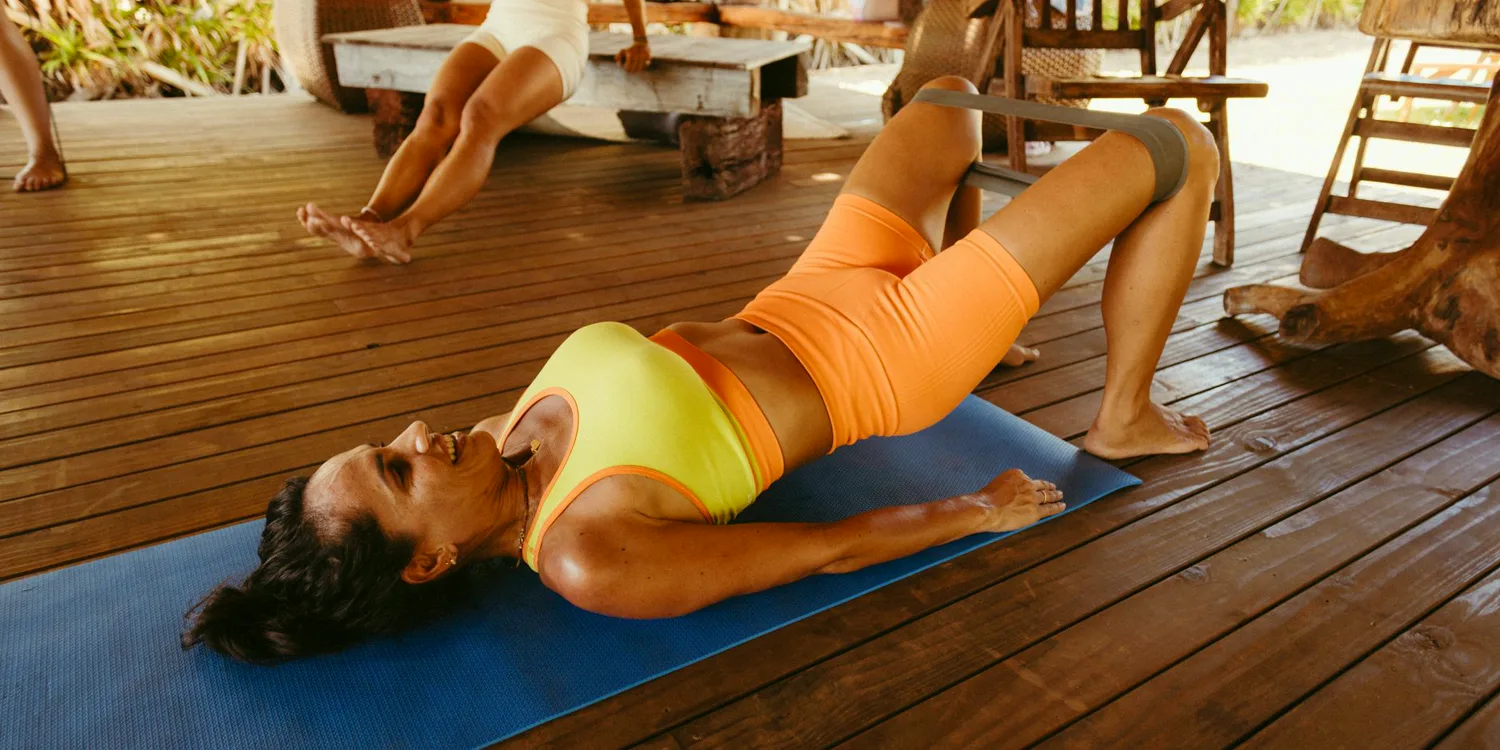
Hip pain gets more common with age, and the NHS lists the usual reasons on its hip pain page. In people over 45, osteoarthritis is the likely cause when walking makes the pain worse and the joint feels stiff. Pain that spreads down the outer thigh and feels worse when you lie on that side points to bursitis, and the same outer hip pain is also traced to the tendons there, a problem called gluteal tendinopathy. This page covers hip exercises for women over 50 with either problem: which moves to start with, what the trials show, what to ease off and when the pain needs a doctor first. It is written from the guidance and studies linked in each section, and a physiotherapist can fit it to your own hip.
Hip pain in menopause: what exercise can do
The NHS lists muscle aches and joint pains among the symptoms of menopause and perimenopause, and names joint pain as one that can carry on after periods have stopped (NHS menopause symptoms). A hip that aches more than it used to around 50 may be part of that general picture. It may also be early osteoarthritis, or a problem with the tendons on the outside of the hip. The NHS page does not single out the hip, and only a GP or physiotherapist can say which of these yours is, but the exercise advice differs enough between them that the patterns are worth knowing.
Outer hip pain is the one tied most closely to this stage of life. A physiotherapy leaflet from Cambridge University Hospitals says gluteal tendinopathy is most common in peri- and post-menopausal women, and puts it at 23.5% of women aged 50 to 79 against 8.5% of men (CUH, gluteal tendinopathy). Researchers who designed a trial in post-menopausal women with this pain pointed to falling oestrogen as one possible reason, and also called the research on hormones and tendons "limited, inconsistent and generally of poor quality" (Ganderton and colleagues, BMC Women's Health, 2016). What the physiotherapy advice agrees on is simpler: strengthen the muscles at the side of the hip gradually, and take pressure off the tendon during the rest of the day.
Moves that suit a sore outer hip
The leaflet's first stage starts with holds. Sit with a belt or luggage strap around your lower thighs and press your knees outwards against it for 30 seconds. Do that four times, and repeat the set three times. The muscle works hard while the sore tendon barely moves. Then it adds two moves this page already uses, with the belt still on: the bridge, and the sit-to-stand, starting from a high chair and moving to a lower one as it gets easier. It asks for the strengthening moves at least four times a week and says the best results come after at least 12 weeks.
What to ease off with outer hip pain
- Side-lying leg lifts and clams, which the leaflet says press and rub the tendon over the bone at the side of the hip
- Buttock stretches and other stretches that pull the leg across the body
- Sitting with your legs crossed, and standing with your weight shifted onto one hip
- Low sofas and car seats that leave your knees higher than your hips
- Long hill walks and lots of stairs while the pain settles, using a rail on the side opposite the sore hip when you do climb
Some ache during a session is fine if it fades quickly and is no worse later. The leaflet also suggests noticing pain at night. A hip that hurts more in bed after an active day has taken more load over the last day or two than it could handle, so do less for a while. The standing side leg lift further down is not in the leaflet's first stage, so with outer hip pain I would hold it back until the belt holds and bridges feel easy. If your pain is the stiff, deep ache of arthritis instead, the advice in the what to ease off section applies, and the GP warning signs hold whatever the cause.
Why the hip muscles matter after 50
Every step, stair and sit-down passes through the hip, and the muscles around it (the glutes at the back and side, the hip flexors at the front and the inner thigh) do most of the work of keeping the pelvis level. When they weaken, the joint and the tendons on the outside of the hip take more of the load. Muscle loss speeds up from midlife, and our guide to sarcopenia in women explains how that happens and how fast.
The outer hip is where women in particular run into trouble. In the largest trial of treatment for gluteal tendinopathy, 167 of the 204 people recruited were women, and their average age was 54.8 (Mellor and colleagues, BMJ, 2018). That is the age group this site writes for, and the side glute muscles that trial trained are the ones the exercises below load.
What the trials say about exercise for hip arthritis
NICE, which sets treatment guidance in England, calls therapeutic exercise and weight management (where it applies) the core treatments for osteoarthritis. It tells doctors to offer every patient exercise "tailored to their needs (for example, local muscle strengthening, general aerobic fitness)", and to consider supervised sessions (NICE guideline NG226).
The effect for the hip is smaller than many leaflets suggest. The 2014 Cochrane review of land-based exercise for hip osteoarthritis pooled nine trials and found pain fell by about 8 points on a 100-point scale and function improved by about 7, with the gain still there three to six months after the supervised sessions ended (Fransen and colleagues, Cochrane, 2014). The 2026 update, with 18 trials and 1,368 people, came out more cautious: against no treatment, exercise probably reduced pain by about 7 points and improved function by about 9, and the authors judged those changes "unlikely to be clinically meaningful" (Hall and colleagues, Cochrane, 2026). Most of the trials were small and none could hide from patients whether they were exercising.
I read that as a reason to expect modest relief from the pain itself. Exercise is the treatment with the fewest side effects that NICE recommends for everyone, it is cheap, and strong hip and thigh muscles help with jobs the review did not measure, such as climbing stairs, carrying shopping and staying steady on your feet.
Hip strengthening exercises to start with
That NHS page sends readers to a free sheet of hip exercises from the UK arthritis charity (exercises for the hips). These six from it work the glutes and the muscles at the side of the hip, and all of them can be done at home with a chair and a mat.
Bridge
Lie on your back with your knees bent and feet flat on the floor or the bed. Lift your pelvis and lower back, hold for five seconds and lower slowly. Squeezing your buttocks as you lift puts the effort into the glutes and spares the lower back.
Standing side leg lift (hip abduction)
Rest one hand on the back of a chair or a worktop. Lift the outside leg straight out to the side, pause at the top for a count of five and lower it slowly, five times each side. Keep your body upright, because leaning away from the leg lets the trunk do the lifting. It can also be done lying on your side, but skip that version if the outside of your hip hurts, for the reasons in the menopause section above.
Standing hip extension
Holding the chair, move one leg backwards with the knee straight, and clench the buttock as you hold it there for five. The charity's one instruction here is not to lean forward, which is the usual way to cheat the movement.
Lying leg raise
Face down, with your head turned to whichever side is comfortable, tighten your stomach and buttock muscles and lift one leg slightly off the floor while your hips stay flat. Hold five to ten seconds, three times on each leg.
Supported squat
Hold the chair or worktop and bend your knees until each kneecap sits over your big toe, then stand back up. Repeat until you cannot do another, rest a minute and do two more rounds. Go a little deeper as you improve, though the charity sets a limit of a right angle at the knee.
Sit to stand
This one is on the charity's knee sheet, and it trains the hip and thigh muscles together in the movement a sore hip finds hardest. Stand up from a firm chair without using your hands, then sit back down slowly. The 30-second chair stand test turns it into a measure you can repeat every month.
When these feel easy, a loop band around the thighs adds load to the bridge and the side leg lift, and the resistance band exercises page shows more glute moves. In a gym, the leg press works the same muscles as the sit-to-stand while the seat keeps you steady, which our gym workout for women over 50 covers. Our guide to sets, reps and progressive overload shows how to add load step by step.
What the largest trial on outer hip pain found
Gluteal tendinopathy is irritation of the tendons where the side glutes attach to the top of the thigh bone. In the Mellor trial, people aged 35 to 70 with at least three months of outer hip pain were given 14 physiotherapy sessions of education on managing load plus exercise over eight weeks, a single steroid injection, or a wait-and-see approach. At eight weeks, 51 of 66 in the exercise group rated themselves a success, against 38 of 65 after the injection and 20 of 68 who waited. After a year the exercise group still did better than both on overall improvement, though its pain scores had drawn level with the injection group.
The programme was supervised and the education part mattered: patients were taught how to stop the tendon being squeezed in daily life as well as how to strengthen it. A sheet of exercises at home is a smaller dose of the same idea. If the side of your hip has hurt for months, asking for physiotherapy is the route the evidence supports, and the NHS notes that in many areas you can refer yourself to its musculoskeletal services without seeing a GP.
Exercises for knee and hip arthritis together
Many women have both. The good news is that the main moves overlap. Sit-to-stands, supported squats and step-ups load the thigh and the glutes at the same time, so one routine serves both joints, and our knee arthritis exercises page adds the straight-leg raise and quad work for the knee. ESCAPE-pain, the six-week group programme of exercise and education described on that page, was built for people with knee or hip pain and is a sensible next step if you want someone to watch your form.
What to ease off, and how much pain is normal
NICE asks doctors to warn that joint pain may rise when someone starts exercising, and to explain that regular exercise helps the joint even when it hurts at first. A hip that aches a little during or after a session and has settled by the next day fits that pattern. Pain that builds from one session to the next means the load rose too quickly, so go back to the last level that felt manageable.
The guidance also lists a few habits to change:
- Keep moving, but do not overdo it, and avoid carrying anything heavy while the hip is sore (NHS)
- Swap low sofas and chairs for a firmer, higher seat, since the NHS says low chairs put extra pressure on the hip
- Stop squats at a right angle at the knee, and only lift the knee above hip height in marching if your physiotherapist is happy with it
- Skip the seated hip rotation if you have had recent hip surgery, which the charity flags itself
- Wear comfortable shoes with a soft, shock-absorbing sole for walks
For people carrying extra weight, NICE says any weight loss helps pain and function, and losing 10% of body weight is likely to do more than 5%. Our guide on preventing menopause weight gain covers how strength work fits into that.
When to see a GP before you exercise the hip
The NHS sorts hip warning signs by urgency. See a GP if the pain stops you doing normal things or disturbs your sleep, keeps getting worse or coming back, has not improved after two weeks of looking after it at home, or if the hip is stiff for more than 30 minutes after you wake up. Ask for an urgent appointment or contact NHS 111 for severe pain that came on suddenly without a fall, a hip that is swollen and hot or has changed colour, or hip pain with a high temperature. Severe pain after a fall, being unable to put weight on the leg, or tingling or numbness after an injury are reasons to call 999.
If you have low bone density, a fall onto the hip deserves the same care, and our page on exercise for women with osteoporosis covers which moves to adapt. For other conditions, the pre-exercise health check lists what to raise first.
Fitting hip work into your week
The NHS asks adults for strengthening work on at least two days a week, and these moves count towards it. Two sessions of the six exercises take about 15 minutes each. On the other days, walking, cycling or swimming cover the aerobic half of what NICE recommends, and walking for weight and fitness sets out a pace and a step count to aim for. Stronger hips also help your balance, and the balance exercises page builds on the side leg lift with single-leg work.
What I would do
I'd start with three moves: the bridge, the standing side leg lift and the sit-to-stand, twice a week on days with a rest day between. That covers the back of the hip, the side and the whole leg in under ten minutes. I would note my chair stand count on day one and again at six weeks, because the Cochrane numbers suggest the pain may change only a little while strength changes a lot, and seeing the count rise is what keeps most people going. If the pain sits on the outside of the hip and has lasted more than three months, I would ask for physiotherapy early, since that is where the trial evidence is strongest. More guides on this subject are under strength training and muscle, bone and balance.