Strength training
Gym exercises for golf, tennis and pickleball over 50
The gym work that helps golf, tennis and pickleball after 50 trains four things: turning the trunk with control, strength on one leg, grip and forearm endurance, and shoulders that last a whole match. Those are the qualities that trials in older golfers trained to add swing speed, and they match the injuries sports doctors see most: the low back and lead shoulder in golf, elbows and calves in tennis, and wrist fractures from falls in pickleball.
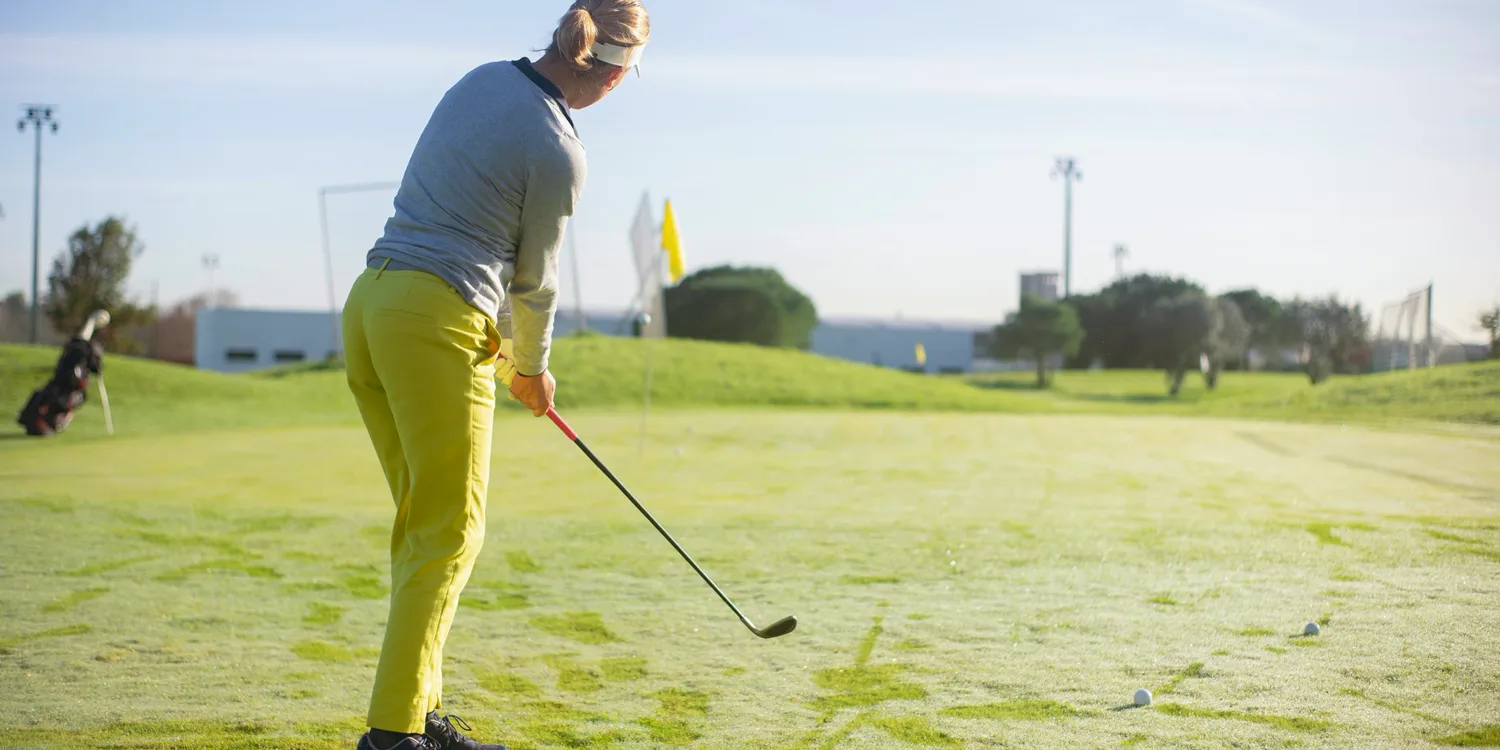
The three sports ask the same body for different things. A round of golf is about 55 full swings of fast rotation, tennis is sprints, sudden stops and a serve over your head, and pickleball is short lunges and quick changes of direction close to the net. This page sets out what each sport tends to injure, the four qualities that protect against those injuries and help your game, the moves that build them, and how to fit two sessions around your playing week. It is written from sports-medicine guidance and published studies, linked where each fact is used. If you are coming back to exercise after a long break, our pre-exercise health check is the place to start.
How strength and endurance help your game
Strength is how much force a muscle can produce, and endurance is how long it can keep producing it. In a swing or a stroke the legs and hips make the force, the trunk passes it upwards, and the shoulder, elbow and wrist steer it into the ball. A review of golf training programmes in Sports Health linked golf injuries to a missing warm-up, poor trunk flexibility and strength, faulty swing technique and overuse. Its authors concluded that flexibility, strength and power training, together with swing corrections, lower the chance of injury and improve performance (Meira and Brumitt, Sports Health, 2010).
The trials behind that are small. In one, 18 recreational golfers with an average age of 70.7 trained three times a week for eight weeks with spinal stabilisation, balance and strength exercises, and their clubhead speed rose significantly compared with a group that did not train. Several of their Senior Fitness Test scores improved too. In another, middle-aged golfers who did trunk rotations, side bends and resisted swings three to four days a week hit the ball faster and carried it further. Every player in both studies was a man, so the size of the gain is unproven for women. The direction is still useful: older golfers who trained got quicker.
Tennis shows the other side of it. Dr Haylee Borgstrom, a sports medicine specialist at Mass General Brigham, says many players use their shoulders to make up for weakness in the chest, core and back without realising it. She adds that stronger wrist muscles leave the elbow tendons with less force to absorb (Mass General Brigham, tennis injuries). A stroke is repeated over and over in a match, which is why light, high-repetition work belongs in the plan beside heavier sets. Our muscular endurance plan shows how to build it over six weeks.
What each sport injures after 50
Golf: low back, lead shoulder and elbows
UPMC's sports medicine team lists the low back, elbow, foot and ankle, shoulder and knee as the most common golf injuries, with repetition as the main cause. The swing can load the lower spine with up to eight times your body weight, and golfers with back pain usually have stiff hips, which moves the twist up into the spine. Shoulder overuse injuries are three times more likely in the lead shoulder, the left one for a right-handed player, and senior golfers are more prone to rotator cuff disease. The trail elbow tends to get golfer's elbow on the inside, while the lead elbow gets tennis elbow on the outside (UPMC, common golf injuries).
Tennis: shoulder and elbow wear, sudden leg strains
Mass General Brigham splits tennis injuries in two. Overuse injuries build up over weeks and mostly affect the shoulder, elbow, wrist and hand, and rotator cuff tendinopathy becomes more common with age. Sudden injuries come from sprints and pivots and hit the legs: knee ligament and meniscus tears, ankle sprains, and the calf strain players call tennis leg. Equipment plays a part as well. A racket handle that is too small for your hand makes you squeeze harder, and that extra grip inflames the tendons of the forearm.
Pickleball: falls and wrist fractures
For women over 50, the main pickleball risk is a fall. A study of US emergency department records from 2002 to 2022 found 397 pickleball fractures, a 90-fold rise over the period. The average patient was 66, 87% were over 60 and 69% were women. Falls caused 92% of the fractures, two thirds were in the arm, and the radius, the forearm bone at the wrist, was the bone most often broken (Ghattas and colleagues, Orthopaedic Journal of Sports Medicine, 2024). The researchers tied the pattern to the bone health of women past menopause (HealthDay report of the AAOS presentation). That puts balance, quick feet and bone-loading work at the centre of pickleball training. Our pages on bone density scan results and exercise with osteoporosis cover the bone side.
Four things to train for all three sports
The injuries above point to the same four gaps. Each one gets two or three moves here, and they all reappear in the gym session further down.
Rotation with control
The trunk has to turn fast in a swing and then stop. The Pallof press trains the stopping half: stand side-on to a cable or a band fixed at chest height, hold the handle against your breastbone and press it straight out without letting it pull you round. The half-kneeling cable chop trains the turn. Kneel on one knee side-on to a high cable and pull the handle diagonally down across your body towards the opposite hip, turning from the ribs while your hips stay square. Add a hip stretch to finish, since stiff hips push the turn onto the lower back. If you have osteoporosis or have had a spinal fracture, read our osteoporosis page before you add load to any twist. More trunk work is in core and back exercises after menopause.
Single-leg strength
Every step to a drop shot, every lunge at the net and the weight shift through a golf swing happens on one leg. Split squats, step-ups onto a box or bench, and side steps with a band around the knees build that. The band work reaches the hip abductors on the outside of the hip, which Dr Borgstrom names alongside the core as the muscles to strengthen against lower-body injuries. Calf raises finish the set, first on two legs and then on one, because the calf takes every push-off and is the muscle behind tennis leg. The leg day workout and hip strengthening exercises have full versions of these moves, and the single-leg balance test compares how long you can stand on one leg with women your age.
Grip and forearm endurance
Club, racket and paddle all go through the hand, and the forearm muscles that grip are anchored at the elbow. Farmer's carries, where you walk 20 to 30 metres holding a dumbbell in each hand, train the grip for minutes at a time. Wrist curls with the palm up and reverse wrist curls with the palm down work the muscles on each side of the forearm, the ones Mass General Brigham suggests strengthening to protect the elbow. Use a light dumbbell and slow repetitions for the wrist work. The grip strength test gives you a starting figure to compare with in two months.
Shoulders that last a match
The rotator cuff is a group of four small muscles that keep the ball of the shoulder centred while the bigger muscles swing the arm. Band external rotations build it: keep the elbow tucked at your side and turn the forearm outwards against a light band. Rows and face pulls strengthen the upper back behind it, which a serve or an overhead smash relies on. Keep these light, 12 to 15 repetitions a set. Our arm exercises page adds the backs of the arms and the front of the shoulder.
A gym session for golf, tennis and pickleball
Two of these sessions a week meet the NHS advice to do strengthening work on at least two days (NHS physical activity guidelines). For the bigger moves, choose a weight you can lift 8 to 12 times with good form, as our sets and reps guide explains.
- Goblet squat or leg press: 2 to 3 sets of 8 to 12.
- Split squat or step-up: 2 to 3 sets of 8 to 12 on each leg.
- Dumbbell or cable row: 2 to 3 sets of 10 to 12.
- Pallof press: 2 sets of 8 to 10 slow presses each side.
- Half-kneeling cable chop: 2 sets of 8 to 10 each side.
- Band external rotation: 2 sets of 12 to 15 on each arm.
- Wrist curl and reverse wrist curl: 2 sets of 12 to 15 of each.
- Calf raise: 2 sets of 12 to 15.
- Farmer's carry: 3 walks of 20 to 30 metres.
Finish with a minute of standing on one leg on each side, holding a rail at first. If free weights are new to you, the machine versions in our gym workout on the machines do the same job for the squat, the row and the calves. After six to eight weeks, start lifting the squat, step-up and row briskly and lowering them slowly. Speed is what a swing and a first step to the ball depend on, and our guide to power training after 50 shows how to add it safely. Balance drills beyond the one-leg stand are in balance exercises over 50.
Warm up before you play
The golf review describes a study in which two simple changes cut injuries: a 10-minute warm-up before play and a bag cart in place of carrying the bag. Dr Borgstrom gives the same advice for tennis, because an active warm-up raises blood flow to the muscles and helps prevent sudden injuries. Five minutes of brisk walking or gentle hitting, then leg swings, arm circles, trunk turns and a few half-pace swings or strokes, covers it. Our page on warming up and cooling down explains what each part does, and the 10-minute stretching routine suits the end of a round.
When to stop and get it looked at
A tendon that still aches days after you played, elbow pain that returns with every session, or a calf that suddenly feels as if it was kicked mid-rally are all reasons to stop and have it seen before you play again. UPMC's advice for golfer's elbow is rest and ice, then a doctor if the pain persists. After a fall onto an outstretched hand with pain or swelling at the wrist, get it checked rather than finishing the game. With a heart, joint or bone condition, take the questions in the pre-exercise check to your GP before starting the session above.
My take
I would start with the moves for the part of the game that hurts. A golfer with a stiff back gets the most from the Pallof press, the chop and hip stretches. With a sore elbow from tennis, I would begin with wrist curls and band rotations. For pickleball I would put single-leg work and the balance test first, since falls caused nine in ten of the fractures in that emergency department study. Within a month I would run the whole session twice a week, keep the shoulder and wrist moves light and slow, and save the heavier effort for squats, step-ups and rows. Then I would judge it by whether I still feel quick in the third set or on the back nine, and by my grip and balance figures two months on. The strength training topic has the rest of the routines to build from.