Food and protein
Vegetarian protein after 50
Work out a daily total first (about 1.0 to 1.2 g per kilo of body weight if you are keeping or building muscle), then put a real protein food at breakfast, lunch and dinner so each meal reaches roughly 25 to 30 g. Over the day, mix pulses and soy with eggs or dairy if you eat them. Then cover vitamin B12 and iron, which a plate without meat can run short on.
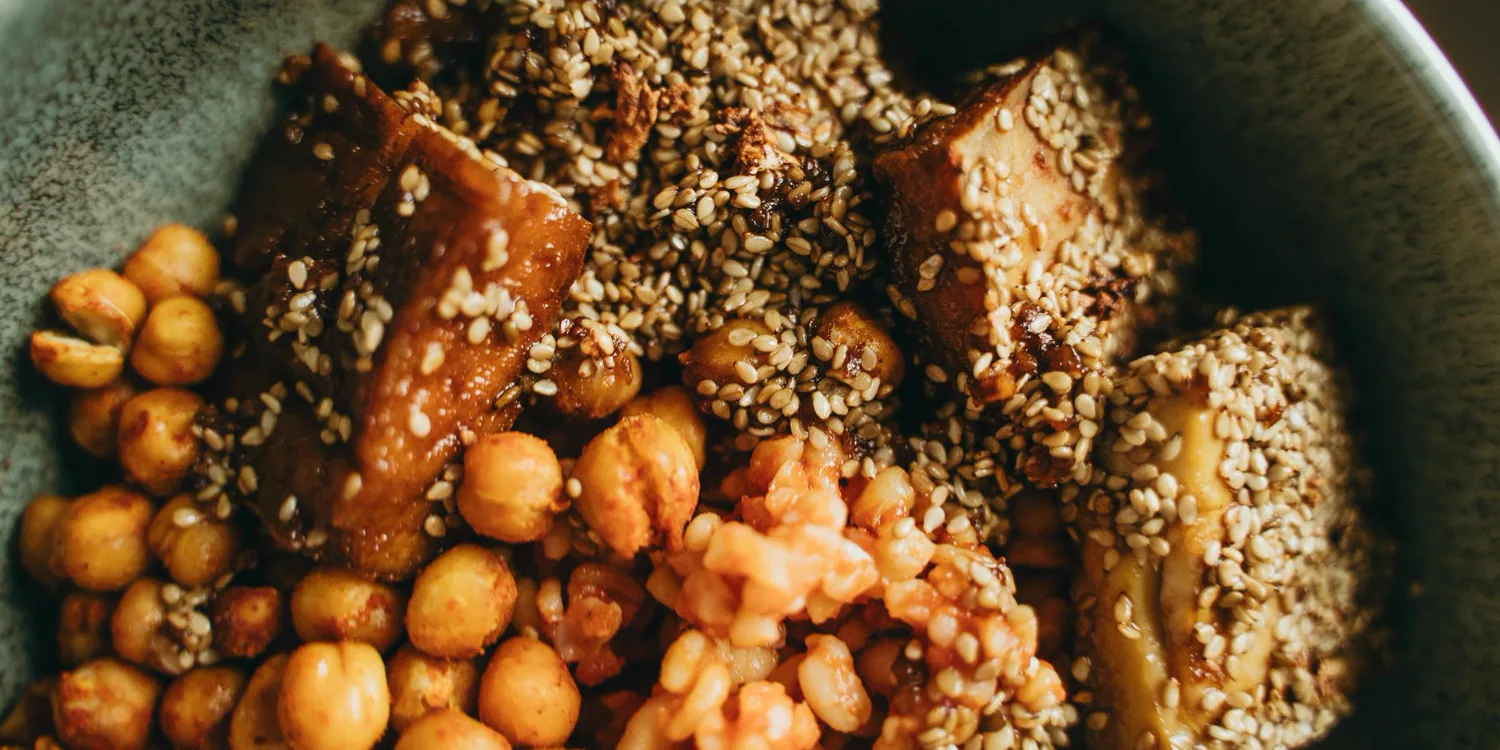
Vegetarian protein after menopause is mostly a planning problem. MedlinePlus says plainly that you do not need to eat animal products to get all the protein you need. The trouble is that a meat-free day can drift into toast, soup and a vegetable pasta, each one fine on its own and each one light on protein. The steps below put numbers on the day, then on each meal, then on which foods to mix so the muscle you are training for has what it needs.
How much protein a vegetarian woman needs after 50
The US recommended amount, 0.8 g of protein per kilo of body weight, is a floor set to prevent shortfall. It was never meant as a target for keeping muscle in later life. The longer case for eating more is on the page about protein after menopause, including how many older adults fall below even that floor.
The expert group most often quoted for older adults is PROT-AGE. It recommends an average of at least 1.0 to 1.2 g per kilo a day for healthy people over 65, and at least 1.2 g per kilo for those who exercise. It also names the exception: people with severe kidney disease who are not on dialysis need their protein limit set by their own clinician, and nothing here applies to them. For women between 50 and 64 there is no NHS gram target of this kind. The same 1.0 to 1.2 band is the one often cited for active midlife adults, and it is the band the site's daily protein calculator for women after menopause uses.
For a woman who weighs 65 kg, the arithmetic is short. At 0.8 g per kilo she needs 52 g a day. At 1.0 g it is 65 g, and at 1.2 g it is 78 g. The calculator does this for your own weight and activity, so you are not doing sums at the fridge.
A second way to sanity-check a day is by share of energy. MedlinePlus puts the healthy adult range at 10% to 35% of total calories from protein. Most vegetarian plates sit at the low end of that range until someone moves them up on purpose.
Protein matters for bone too. The National Institute of Arthritis and Musculoskeletal and Skin Diseases lists poor protein intake, along with heavy dieting, among the habits that may raise the risk of bone loss and osteoporosis. That makes protein part of lowering risk. It does not treat low bone density.
Per meal: what to put on the plate
A daily total can hide a lopsided day. PROT-AGE puts the amount that switches on muscle building in older people at about 25 to 30 g of protein per meal, carrying about 2.5 to 2.8 g of leucine. An editorial by Elena Volpi lands in the same place, with 3 to 4 g of leucine in that 25 to 30 g. A 2026 review of plant protein in older adults frames it by body weight, at about 0.4 g per kilo per meal, which for that 65 kg woman comes to 26 g.
Volpi also describes the usual pattern from US survey data. Older adults tend to reach that amount at dinner only. Breakfast and lunch hover near 15 g of protein with under 2 g of leucine. So the first fix is rarely the evening meal. It is the morning bowl and the midday sandwich.
MedlinePlus gives a handy scale for building a plate. About 7 g of protein comes from one large egg, a quarter cup of tofu or half a cup of cooked beans, the same as an ounce of meat or fish. By that scale, reaching 25 g at one meal takes about three quarters of a cup of tofu plus an egg, or close to two cups of cooked beans on their own. Firm tofu, tempeh and pulses can get there, but the portion has to be larger than a side dish.
The NHS vegetarian diet page names milk, cheese and yoghurt as good sources of protein, calcium and vitamins A and B12. For a lacto-ovo vegetarian, that is the easiest lever. Some meal shapes that tend to reach the mark:
- Greek or high-protein yoghurt with seeds at breakfast, or eggs on wholegrain toast
- A thick lentil soup with bread and a piece of cheese at lunch, instead of soup and bread alone
- A tofu or tempeh stir-fry with rice, the tofu portion bigger than the rice
- Cottage cheese with fruit or crackers as a snack between two light meals
Grams for each of these, sortable and filtered to vegetarian foods, are on the high-protein foods list. Whole meals are on the pages for high-protein breakfast ideas, high-protein lunch ideas, high-protein dinner ideas and high-protein snacks for women over 50. A full week with a vegetarian version is in the menopause diet plan.
Plant protein for women over 50: combining sources
The NHS advice is to eat a variety of protein sources to get the right mixture of amino acids, which the body uses to build and repair cells. It singles out pulses (beans, lentils, peas, chickpeas) as particularly important for people who get no protein from meat, fish or dairy.
The reason is the amino acid make-up. Gorissen and colleagues, 2018, measured protein isolates side by side. Essential amino acids made up about 26% of the protein in the plant sources and about 37% in the animal sources. Different plants fall short on different ones. Grains tend to be low in lysine, and some legumes are low in methionine, which is why grains and pulses cover each other. The same paper found that combinations of plant proteins, or blends of plant and animal proteins, can come close to the profile of animal protein.
You do not have to pair them at every sitting. MedlinePlus says the essential amino acids do not need to be eaten at every meal, and the balance over the whole day matters more. Rice at lunch and lentils at dinner still count as a combination.
The two vegetarian paths differ here. If you are lacto-ovo, an egg, a pot of yoghurt or a slice of cheese beside a grain or pulse dish closes the gap quickly, because those are the animal-protein half of the blend Gorissen describes. If you are vegan, soy foods such as tofu, tempeh and edamame are the higher-quality plant proteins to build around, with pea and other pulses beside them, and a grain with beans or lentils somewhere in the same day. The portions run larger, which is the price of a fully plant-based plate.
Vegetarian protein for muscle over 50
Gram for gram, plant protein does less in the short term. The 2026 review sums up the tracer studies: in older adults, animal proteins, whey and dairy above all, stimulate more muscle protein building than the same amount of plant protein. It puts that down to more leucine, better digestibility and a faster rise of amino acids in the blood, and notes the gap is wider in older people whose muscles already respond less. The same review says plant eaters can catch up with a larger dose, a blend of sources, or fortified foods, as long as the day's total and the spread across meals are right. It sets the training target at no less than 1.0 to 1.2 g per kilo a day.
Over months, the gap looks smaller. A meta-analysis by Messina and colleagues, 2018, pooled nine resistance-training trials covering 266 people aged 18 to 70, and its title states the finding: no difference in gains in muscle mass or strength between soy and animal protein supplements. The authors still note that whey tends to beat soy in short laboratory windows, and they put most of that difference down to whey's higher leucine. None of these trials was limited to vegetarian women around menopause, so the result is borrowed from a wider group of adults.
All of this assumes the muscle is being asked to work. The protein findings above come from people who were also lifting, and the case for training is on the pages about sarcopenia in women and how to start strength training after menopause. If you want something short to begin with, the four-minute strength routine fits around a day.
Leucine pills are the shortcut people ask about. Volpi notes that adding leucine raises muscle building in short studies, but trials of leucine or essential amino acid supplements over several months have given disappointing results for muscle mass and strength. Food is the better route: soy, eggs and dairy carry more leucine per meal, and a bigger pulse or tofu portion makes up the rest.
B12 and iron on a vegetarian plate
Two nutrients travel with protein in meat and need their own plan without it. The NHS says vitamin B12, needed for growth, repair and general health, is only found naturally in animal products. Eggs, milk, cheese and yoghurt supply it for a lacto-ovo vegetarian. A vegan needs a reliable fortified food or a supplement, and which one suits you is a question for a GP or dietitian, especially if you are already tired or have been told your level is low.
Iron is the other. The NHS iron guidance for women aged 50 and over is 8.7 mg a day, a figure that applies once periods have stopped. Pulses, tofu and wholegrains all carry some, but the NHS notes that iron from plants is harder for the body to absorb, and suggests including some vitamin C with the meal to help. In practice, that means peppers or tomatoes in the lentil dish, or fruit after the tofu stir-fry.
Calcium and vitamin D are the bone partners to protein, and dairy-free plates need a plan for those as well. They are covered in calcium and vitamin D after menopause.
My take
I would start with the number, then the weakest meal. Put your weight into the calculator, take the figure at 1.0 or 1.2 g per kilo, and divide it by three. For most readers the meal that falls short is breakfast or lunch, the pattern Volpi describes, so I would fix that one first and leave dinner alone for a fortnight. If lunch is bread and soup, I would add a second protein group to it (a pulse and an egg, or a pulse and some cheese) and serve the iron-rich part with something carrying vitamin C.
I would keep lifting twice a week while doing it, because none of the muscle findings here came from protein on its own. If you want a marker you can repeat, the 30-second chair stand test shows whether your leg strength is improving over the months. Weight questions that sit beside this, such as eating more protein while trying to lose fat, are on menopause, weight and muscle. The rest of the food guides are in the food and protein section.
Sources
- NHS, the vegetarian diet
- NHS, iron
- MedlinePlus, protein in diet
- NIAMS, osteoporosis
- Bauer and colleagues, 2013, PROT-AGE recommendations
- Volpi, 2018, protein and leucine in older adults
- Gorissen and colleagues, 2018, amino acid content of plant protein isolates
- 2026 review, plant protein and muscle in older adults
- Messina and colleagues, 2018, soy versus animal protein with resistance exercise