Strength training
Strength session builder
Choose what kit you have and how many minutes you can spare, and get a full-body session that works all seven major muscle groups, with an easier version of every move.
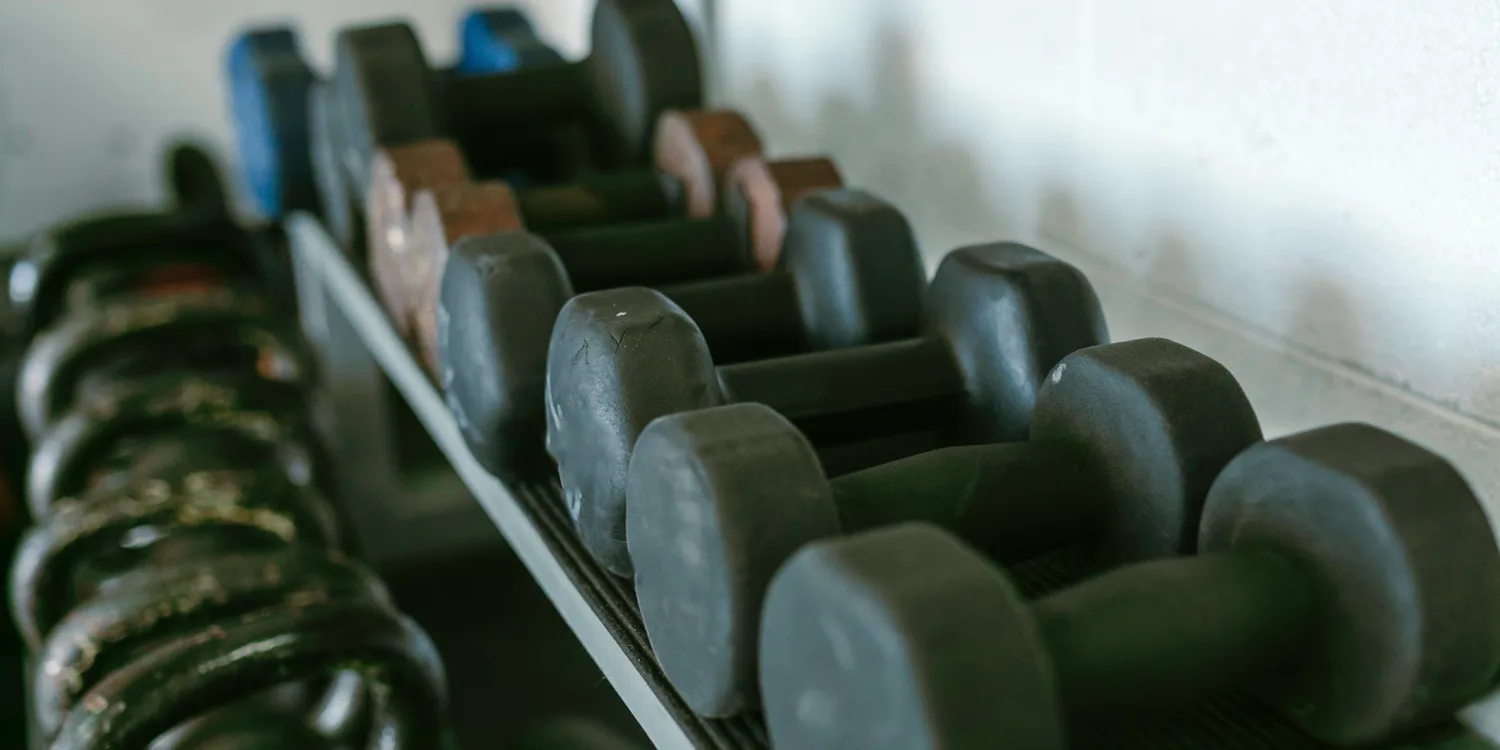
A full-body strength workout for a woman over 50 can be seven moves, one each for the legs, hips, back, abdomen, chest, shoulders and arms, done for 8 to 12 repetitions a set on two days a week. That is the NHS guideline for adults (NHS physical activity guidelines). The builder below turns it into a session for the kit you own and the minutes you have: no equipment, resistance bands, dumbbells, a kettlebell or gym machines, in 10, 20 or 30 minutes.
Each move links to the page on this site that shows how to do it. Treat the result as a planning aid: it is built from published guidance, and it knows nothing about your health. If you have not exercised for some time, or you have a medical condition or a worry, the NHS asks you to speak to your GP first, and our pre-exercise health check for women over 40 lists the questions that matter.
Build your session
Example: dumbbells, 20 minutes
Warm up by marching on the spot for 3 minutes. Then do 2 sets of each move in order, resting about 45 seconds after each set.
Menopause Lift strength session builder. An estimate from NHS and NIA guidance, not a personal prescription.
| Muscle group | Move | Sets and reps | Rest | Easier swap |
|---|---|---|---|---|
| Legs | Goblet squat | 2 × 8 to 12 | 45 s | Sit-to-stand from a chair |
| Hips | Romanian deadlift | 2 × 8 to 12 | 45 s | Bridge on the floor |
| Back | One-arm row | 2 × 8 to 12 each side | 45 s | One-arm row with a lighter dumbbell |
| Abdomen | Suitcase carry | 2 × 10 to 20 m each hand | 45 s | Worktop plank |
| Chest | Wall press-up | 2 × 8 to 12 | 45 s | Wall press-up, feet closer to the wall |
| Shoulders | Seated shoulder press | 2 × 8 to 12 | 45 s | Seated shoulder press with lighter dumbbells |
| Arms | Biceps curl | 2 × 8 to 12 | 45 s | Seated biceps curl with full water bottles |
The rest times and minutes are our estimates for pacing. Breathe out on the effort, never hold your breath, and keep elbows and knees soft at the end of each move.
How the builder sets your session
It starts from the NHS list of major muscle groups and keeps it in the same order: legs, hips, back, abdomen, chest, shoulders and arms. The US National Institute on Aging names the same seven and the same two days a week (NIA, three types of exercise). Big leg and hip moves come first, while you are fresh, and the smaller arm and shoulder muscles come last.
Repetitions follow the NHS page on how to improve strength and flexibility: 8 to 12 repetitions count as one set, and it asks for at least two sets, with three giving more benefit. NIA puts it a little more gently. One set of 8 to 12 of each exercise is effective, it says, though two or three may do more. The 10-minute session leans on that NIA line. Two sets of seven moves with sensible rest rarely fit into ten minutes, so the short version gives every group one honest set instead of rushing two.
How hard each set should feel also comes from the NHS: carry on until another repetition would be difficult without help, to the point where you may need a short rest before going again. That is why the table gives a range. If you reach 12 and could easily do more, the weight or band is too light. If you stall before 8, it is too heavy, or the easier swap is the better choice for now. NIA adds that a beginner can learn the moves with no weights or bands at all until they feel comfortable, which is what the "None" option is for.
The rest times are ours. NHS guidance asks for a short rest, without a number of seconds, so the builder uses about 30 seconds in the 10-minute session and about 45 seconds in the longer two, which keeps the whole session close to the minutes you picked. Moves done one side at a time, such as the row or the step-up, take longer, so allow a minute or two more or trim the rest. If you have the time, a longer rest does no harm, and our first gym session on the machines uses up to two minutes between machines.
Two NIA safety rules run through every move. Breathe out as you push or pull and breathe in as you relax, without holding your breath, and stop just short of locking your elbows or knees straight. A full-body session works every group, so the next one waits a day: NIA asks you to avoid working the same muscle group on two days in a row. The strength week planner places two sessions in your week with that gap built in.
Which moves it picks for each kind of kit
Every move comes from an exercise page this site already publishes, so the link beside it shows the set-up, the cues and what to watch for. When one type of equipment has no move for a muscle group, the builder borrows one from another list and says so.
- No equipment starts from the chair and wall in our no-equipment home workout: sit-to-stand and a wall press-up, a bridge from the hip guide, bird dog and a worktop plank from the core guide, and an overhead press and curl with full water bottles in your hands.
- Bands take six moves from our resistance band routine: band sit-to-stand, loop glute bridge, seated row, chest press, pull-apart and biceps curl, with bird dog for the abdomen.
- Dumbbells pair a squat and a Romanian deadlift from the lower-body workout with the row, press and curl from our arm and shoulder moves, and the suitcase carry for the abdomen.
- A kettlebell covers four groups with a squat holding the bell at your chest, a deadlift from a block, a one-arm row and a suitcase carry, all from our five kettlebell moves for beginners. That page has nothing for the chest, shoulders or arms, so the builder adds the wall press-up and two upper-body moves from the arm page, using water bottles if a second weight is not to hand.
- Gym machines follow the gym guide: leg press, seated leg curl, seated row, chest press and lat pull-down, with the shoulder press machine added and bird dog on a mat for the abdomen. The guide suggests leaving the shoulder press until the other machines feel familiar, so its easier swap is the band pull-apart.
The easier swaps are the seated or supported versions those pages already describe: a sit-to-stand in place of a goblet squat, a bridge in place of a hinge, feet closer to the wall for the press-up, a lighter band or bell. Tick the box in the builder and each easier version moves into the main column, with the full move shown as the next step up.
A worked example: dumbbells, 20 minutes
This is the session the table shows before you pick anything. Start with three minutes of marching on the spot. Then hold one dumbbell upright against your chest for the goblet squat, sitting back until you lightly touch a chair, for 8 to 12 repetitions. Rest about 45 seconds, do a second set, and move on. The Romanian deadlift comes next, with a dumbbell in each hand sliding down the front of your thighs as your hips push back.
For the back, rest one hand and knee on a chair seat for the one-arm row, finishing one side before you swap. The abdomen gets a suitcase carry: one dumbbell at your side, walking 10 to 20 metres without leaning towards it, then back with the other hand. A wall press-up covers the chest, then a seated press overhead and a curl finish the upper body. Two sets of each, at a steady pace, come to roughly twenty minutes with the warm-up.
Say your knees do not like the squat yet. Tick the easier box and the first line becomes a sit-to-stand from the same chair, with the weighted squat listed as the move to work towards. Everything else in the session stays as it was.
This session is one of the two strength days the NHS asks for in a week. It does not count towards the separate target of 150 minutes of moderate activity such as brisk walking. On a day with no room for twenty minutes, the four-minute daily strength timer keeps the legs and arms ticking over until the next full session.
Who this suits, and when to adjust it
The builder is written for women in their forties, fifties and sixties who are starting strength work, or coming back to it, at home or in a gym. If you are brand new, read how to start strength training in menopause first, and use how many sets and reps for beginners over 40 to decide when to add weight. To choose a starting weight, try the dumbbell weight finder.
With osteoporosis or low bone density, read exercise for women with osteoporosis before you add load. The abdomen and back moves here keep the spine long, and our guide to core and back exercises after menopause lists the trunk moves to leave out. With sore or arthritic knees, the knee arthritis exercises suggest squat depths and swaps, and the hip strengthening exercises help when the outer hip is the problem.
On a day when hot flushes are moderate or severe, our guide to training through a hot flush covers a cooler set-up, and the perimenopause exercise routine shows where a lighter session fits in a week. On those days I would tick the easier box and pick the 10-minute version, so every muscle group still gets one set.
My take
I'd start with the 20-minute session and whichever kit you already own, even if that is two water bottles, and keep the same seven moves for three or four weeks before changing anything. Changing the moves every week makes it harder to see progress, while the same session repeated shows you clearly when 12 repetitions have become easy. I'd keep the 10-minute version for the busy weeks rather than treat it as the plan, since two sets is what the NHS asks for. And I'd print the result and pin it somewhere you will see it, because a session written down is easier to start than one you have to remember.
Sources
- NHS: physical activity guidelines for adults aged 19 to 64
- NHS: how to improve strength and flexibility
- National Institute on Aging: three types of exercise
More on lifting through these years is under the strength training topic hub.